Category Archives: 70mm x 70mm twin skin log cabins the best in the business

LogCabins For Sale

It’s January 2026. The UK log cabin industry is worth over £350 million annually — a staggering figure that would have seemed impossible when we first opened our workshop doors in 2003. Back then, “log cabin” was a niche term whispered among garden enthusiasts and DIY hobbyists. Few understood what it meant to build a *real* log cabin — one that could withstand decades of British weather, settle naturally without warping, and remain structurally sound, thermally efficient, and aesthetically timeless.

The quiet cabin companies secrets!

We didn’t just enter the market in 2003 — **we created it**.(Log Cabins For Sale)

Not through marketing gimmicks or inflated claims, but through relentless craftsmanship, engineering rigour, and an uncompromising refusal to cut corners. Over the past 23 years, FactoryCabins.com has not only pioneered the modern UK log cabin sector — we’ve also been its conscience. We’ve trained, mentored, and launched countless competitors — only to part ways with most of them when they chose profit over principle. Yes, we’ve *sacked* dealers, distributors, and even former partners — not out of spite, but because integrity cannot be negotiated.

This blog isn’t a sales pitch. It’s a manifesto. A warning. A guide. And above all — a plea to consumers: *Do not let the noise drown out the truth.*

Because today, more than ever, the log cabin market is flooded with imitation, deception, and dangerously substandard products masquerading as “premium.” And yet — amid the chaos — there remains a handful of manufacturers who still believe that a log cabin should be built to last longer than the owner’s mortgage.

We are one of them.

Let us take you on a journey — through history, engineering, ethics, and the quiet revolution we’ve waged behind the scenes for over 2 and a bit decades.

Part I: The Birth of an Industry — How FactoryCabins.com Built the UK Log Cabin Market (2003–2026)

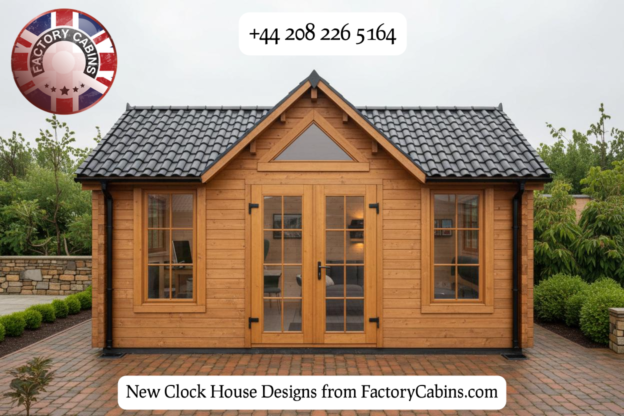
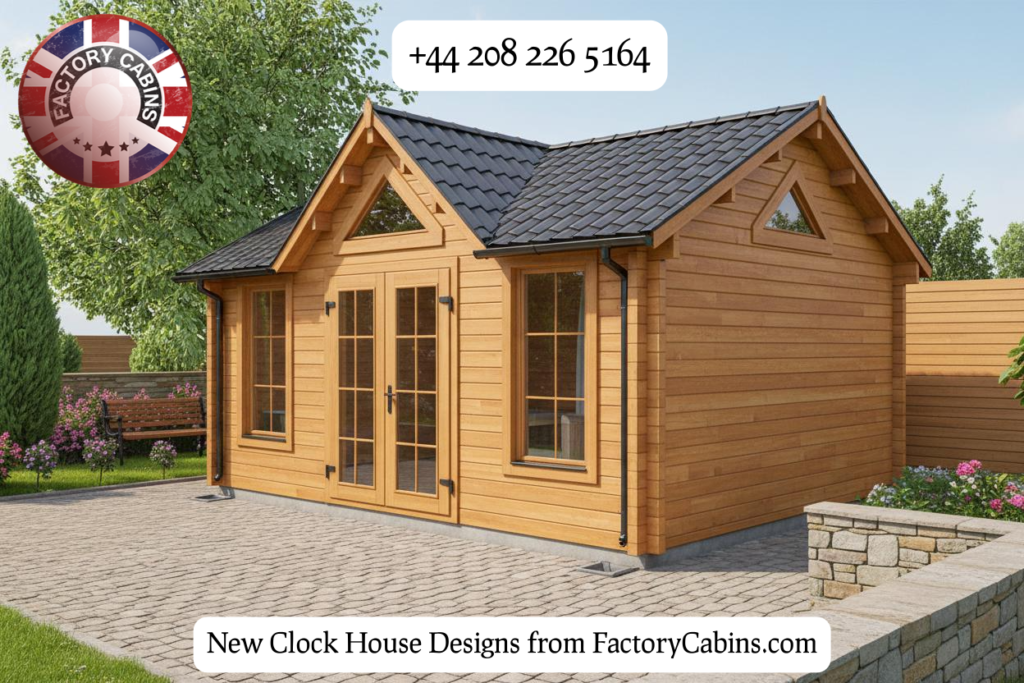
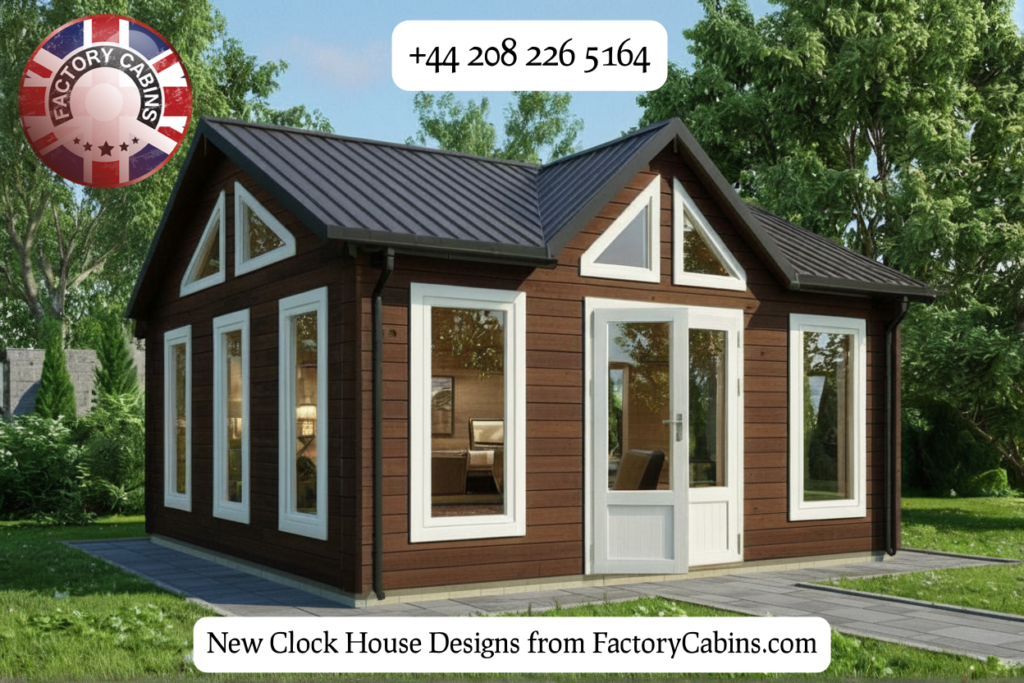
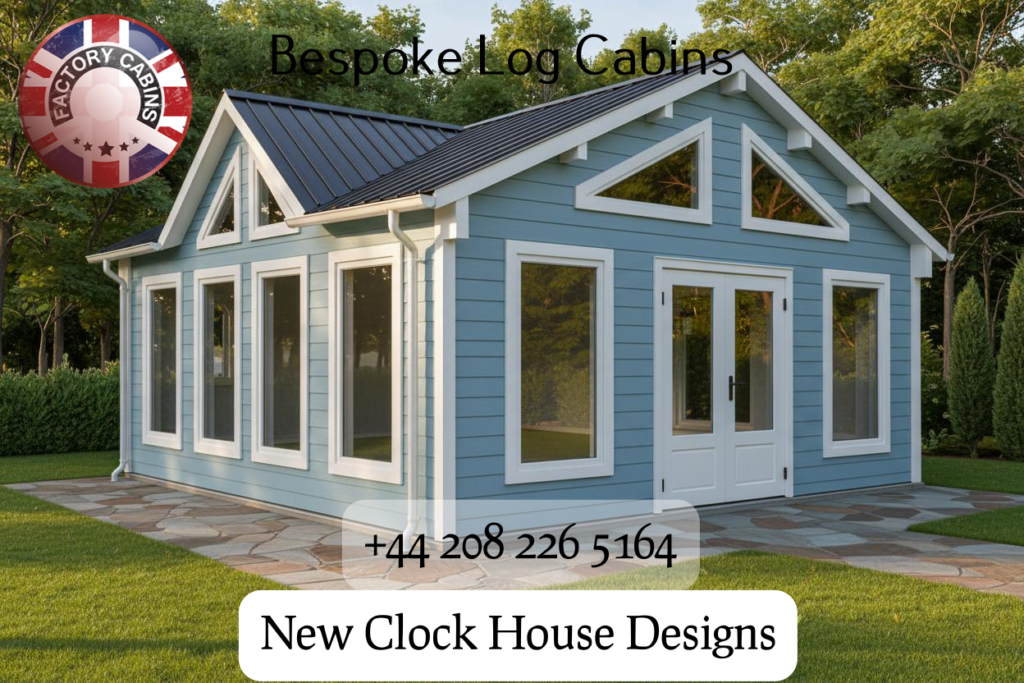
In 2003, the UK had no dedicated log cabin manufacturers. There were timber framers, garden shed builders, and a few Scandinavian importers — but no one designing, engineering, and manufacturing log cabins *for the British climate*, using British standards, and respecting the physics of solid timber construction. One Cabin was the Clock House, our design.

We started small: a single workshop in rural Lithuania , with two carpenters, hand engineered notching machine, and a dream. Our first cabin? A 3m x 3m garden store — tongue-and-groove spruce, 44mm logs, fairly good notches, and a roof designed to shed rain *and* snow. It wasn’t glamorous. But it stood firm through 6 winters, zero rot, zero warping.

What set us apart from day one was our obsession with *movement*. Logs move. They shrink. They twist. They settle. Any builder who ignores this is building a time bomb.

So, we developed our proprietary **Dynamic Log System** — not a marketing slogan, but a structural philosophy:

**Moisture content control**: All timber dried to 16–18% MC before assembly — never air-dried on-site.

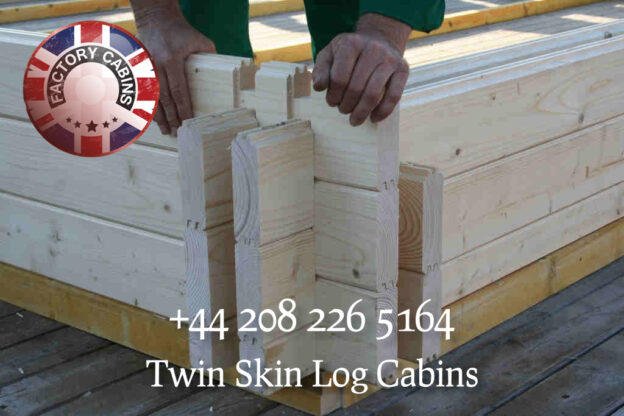
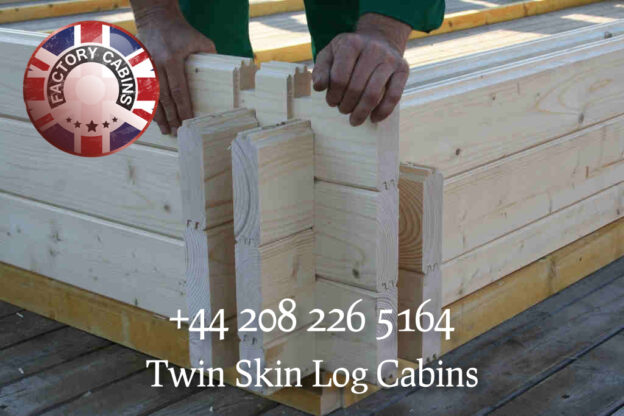
**Log profiling**: Precision-machined interlocking notches that allow vertical settlement *without* compromising wall integrity.

Within two years, we had 17 dealers across England and Wales.Scotland Not franchises — true partners. We trained them. We shared our CAD designs. We gave them access to our quality control protocols. We believed in collaboration.

Then came the first betrayal.

A dealer in Essex began selling our 5m x 4m “ DF 24” cabin — identical in spec — at **140% above our factory price**, claiming it was “exclusive” and “hand-finished in the UK.” When customers complained about warped doors and UVPC windows (more on that later), he blamed *us*. We investigated. Found his warehouse full of rebranded stock from a bulk supplier in Europe — same dimensions, same drawings, but with inferior timber, no kiln drying, and plastic windows bolted in with screws instead of proper joinery.

We terminated the relationship. Publicly. With evidence.

That was the first of many.

By 2011, we had directly trained or supplied over 40 companies now operating in the UK log cabin space. Many went on to become household names. Some still exist — though few retain the original ethos. Most? They pivoted to volume. To speed. To margin. And in doing so, they sacrificed the very thing that made log cabins viable in the first place: *quality*.We wanted to at the very beginning, manufacture a building that was better than a box standard shed, these companies have done the opposite, they have reduced the cabin to below a shed, and charge 3x its value.

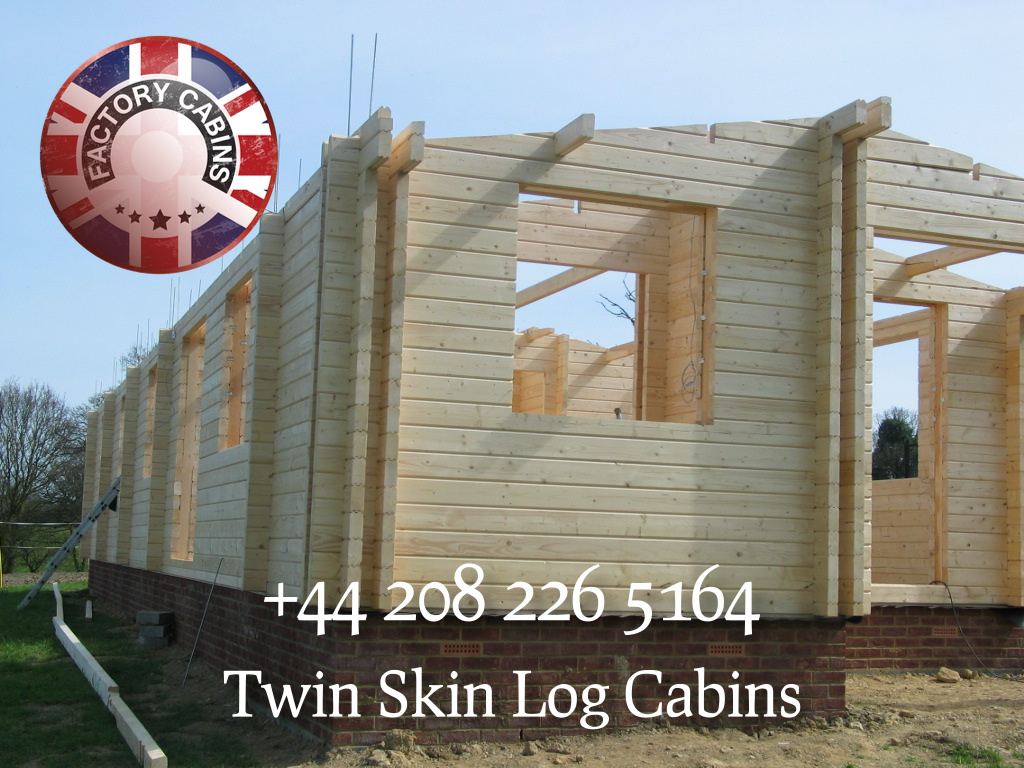
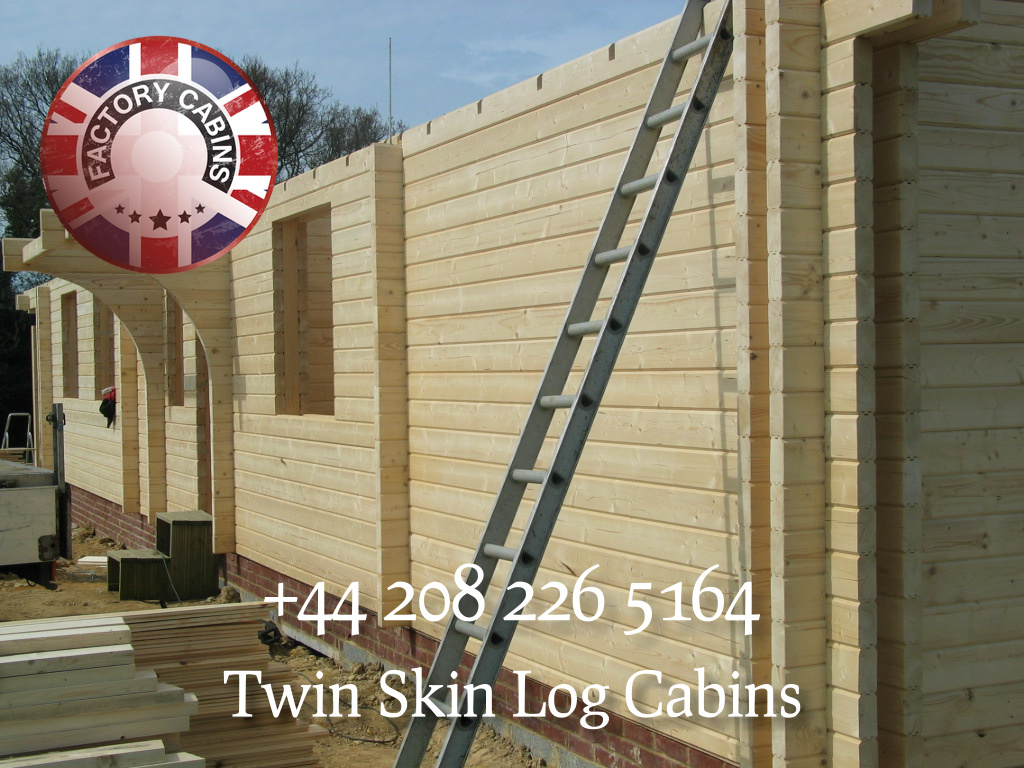
We didn’t stop innovating. In 2013, we introduced the UK’s first **twin-skin log cabin** — 70mm outer log + 70mm inner log, with insulated cavity. It was ridiculed as “over-engineered.” Today, it’s the gold standard — and copied relentlessly.

But here’s the uncomfortable truth no one wants to admit:

**The UK log cabin industry grew not because of better products — but because of better marketing.**

And that’s where the rot began.

Part II: The Great Dilution — How “Premium” Became a Lie (2015–2026)

Between 2015 and 2026, the UK log cabin market exploded. Online retail boomed. Amazon entered. eBay sellers appeared overnight. Suddenly, anyone with a forklift and a website could call themselves a “log cabin manufacturer.”

We watched — horrified — as standards collapsed.

The UVPC Scandal: Why Plastic Windows Have No Place on Log Cabins

Let me be unequivocal:

**UVPC (uPVC) windows and doors do NOT belong on log cabins.**

Here’s why — and this is physics, not opinion:

Log cabins settle vertically by 3–8% over the first 12–18 months (depending on log thickness and moisture content).

uPVC frames are rigid. They do not flex. They do not accommodate movement.

When the log wall shrinks *around* a rigid uPVC frame, stress concentrates at the corners → cracks form → seals fail → water ingress → rot begins.

Within 2–3 years, 70% of uPVC-fitted cabins show visible gaps, fogged double glazing, or jammed sashes.

We tested this ourselves — in our own lab, with accelerated settling rigs. We fitted identical cabins with:

Option A: High-quality joinery-glulam timber windows (our standard)

Option B: uPVC windows (industry “budget” spec)

After 18 months of simulated settlement:

Option A: Minor adjustment needed. Seals intact. Operation smooth.

Option B: 3 out of 4 windows cracked at the top corner. One door refused to close. Condensation inside glazing units.

Yet today — walk into any major retailer’s showroom, or scroll through their website — and you’ll see “Premium Log Cabin” advertised with *uPVC windows*, *uPVC doors*, *uPVC cladding*. They call it “low maintenance.” It’s not low maintenance — it’s *low integrity*.

We use only **joinery-grade glulam timber** for our window and door frames. Why?

– Glulam (glued laminated timber) is engineered to resist twisting and warping — critical when logs move.

– It expands and contracts *with* the cabin structure.

– It accepts traditional mortise-and-tenon joinery — far stronger than screw-fixed uPVC.

– It can be repaired, refinished, and lasts decades — unlike uPVC, which becomes brittle and yellowed in UV exposure.

The 200% Mark-Up Mirage

Let’s talk money — because this is where the deception becomes criminal.

In 2014, we audited 12 leading UK log cabin retailers. We purchased identical 5m x 4m cabins (same log thickness, same floor specs, same roof pitch) from each — using fake buyer profiles to avoid special pricing.

Results?

| Manufacturer | Factory Cost (to us) | Retail Price | Mark-up |

|—————————–|———————-|————————|———|

| FactoryCabins.com | £6,850                | £8,995      | ~31% |

| Competitor A           | £6,850 | £14,200 | **107%** |

| Competitor B           | £6,850                 | £18,500    | **170%** |

| Competitor C          | £6,850                   I £20,100     | **194%** |

Yes — nearly **200% markup** on *identical product*.

And what did those customers receive?

– Same 44mm spruce logs (not upgraded to 68mm or 70mm)

– Same 18mm OSB flooring (not 28mm T&G pine)

– Same 16mm roof boards (not 19mm)

– Same basic hardware (not German-made)

No innovation. No improvement. Just higher prices — justified by slogans like “Luxury Edition,” “Designer Range,” or “Handcrafted Excellence.”

Meanwhile, our warranty? **20 years** — conditional on basic maintenance (clean gutters, keep foundation dry, re-treat external timber every 3 years). Not 10 years. *20.* Because if you treat a log cabin like a house — it will last like one.

Most others offer 10-year warranties — knowing full well that by year 11, the cabin will likely be leaking, warping, or suffering condensation damage due to poor design. Windows and Doors falling apart, It’s not a warranty — it’s a *time-limited liability cap*.

We’ve seen it too many times: A customer calls us in Year 8, frustrated because their “premium” cabin is rotting at the base. We help as much as we can, its normally windows and doors, or the bottom logs have rotted away. Windows and doors we can help  with, but rotten logs , impossible, sadly.

That’s not business. That’s ethics.

Part III: The Anatomy of a Real Log Cabin — What You’re *Not* Being Told

When you browse log cabin websites, you’re drowning in glossy images, 3D renders, and five-star reviews (many of which are incentivised or fake). But the real story lies in the details — the ones hidden in tiny footnotes or omitted entirely.

Let’s dissect what makes a *true* quality cabin:

1. Timber Specification — It’s Not Just “Spruce”

**Species**: Norwegian Spruce (Picea abies) is ideal — straight grain, low resin, stable. Avoid “mixed softwood” or “Eurasian timber” — vague terms hiding inferior species.

**Moisture Content**: Must be 16–18% *at time of assembly*. Air-dried timber (20–25% MC) will shrink excessively post-installation — causing gaps, leaks, and joint failure.

**Kiln Drying**: Non-negotiable. Air-dried logs retain sapwood — prime breeding ground for fungus and beetle larvae.

We test every batch. We reject 12% of incoming timber — even if it means delaying orders.

2. Log Profiling & Joinery

Our CNC machinery notches with absolute precision time and time again first of all the cabin is made using cad, then those plans are entered into the CNC machines, however before we start cutting the cabin we send you the plans it is that this stage that you can change or alter something, once you are satisfied you sign off the plans and we begin the process of manufacturing the cabin, quick and easy, no mistakes.

3. Flooring — Where Most Fail

Windows & Doors — Our Crown Jewel (and Why 99.9% Fail to Copy It)

This is where we draw the line — and where imitators consistently fail.

Our windows and doors are built in-house, using:

Glulam frames** (laminated spruce, 7-ply, finger-jointed)

Sealed gaskets** (EPDM rubber, not PVC)

German-made locking mechanisms**: Winkhaus, Siegenia, Roto — tested to 100,000 cycles

Tempered double-glazed units** (4-16-4), argon-filled, low-E coated, and toughened as standard.

Stainless steel hinges** (not zinc-plated iron — which rusts in 18 months)

Why do 99.9% of copycats fail?

A solid timber frame *will* twist as the cabin settles. Ours doesn’t — because the layers counterbalance each other.

Try finding a competitor who publishes their window spec sheet. Most won’t — because they can’t.

We challenge anyone: Send us your cabin’s window frame. We’ll tell you within 30 seconds whether it’s glulam or solid timber — and whether it will last 5 years or 20.

5. Insulation & Thermal Performance — The Net Zero Frontier

Here’s something few talk about: **Twin Skin Log cabins can be net zero.

Not “eco-friendly” — *net zero*. Meaning: annual energy consumption ≤ renewable generation on-site.

How?

– Twin-skin construction (70mm + 70mm logs) with mineral wool cavity insulation (U-value ~0.28 W/m²K)

– Triple-glazed windows (U-value 0.7)

– Air-source heat pump (3–4 kW)

– Solar PV array (4–6 kW)

– Mechanical Ventilation with Heat Recovery (MVHR)

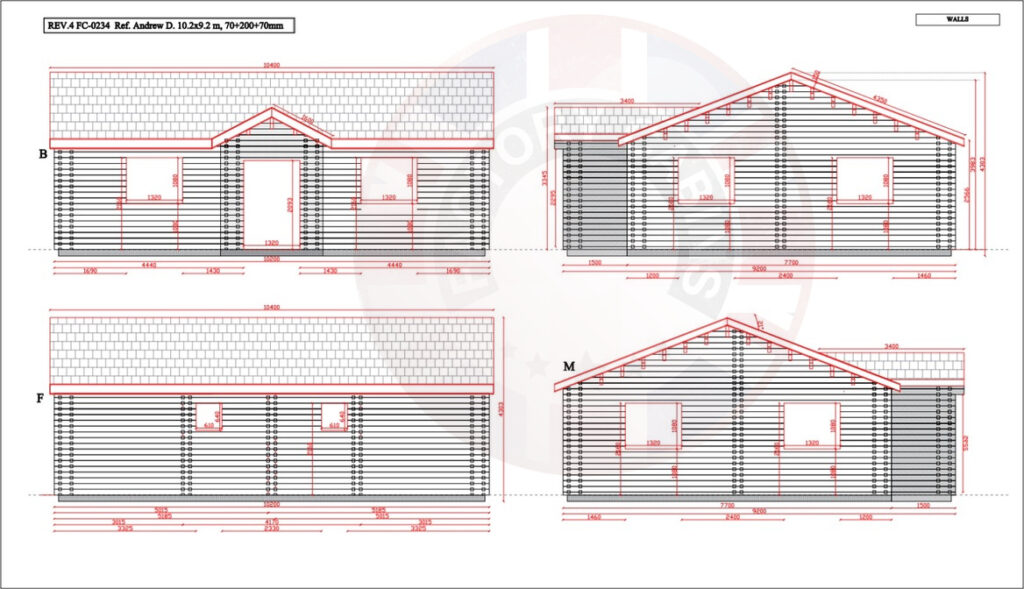
We built our first net-zero cabin in 2023 — a 10.2 x 9.2 m x 6m holiday home with:

 Two en-suite bedrooms

-Kitchen

– Living/dining area

– Utility room

– Roof-mounted ground solar array

– ASHP + underfloor heating

Annual energy use: **2,100 kWh** 

Solar generation: **2,450 kWh** 

Net export: **+350 kWh/year**

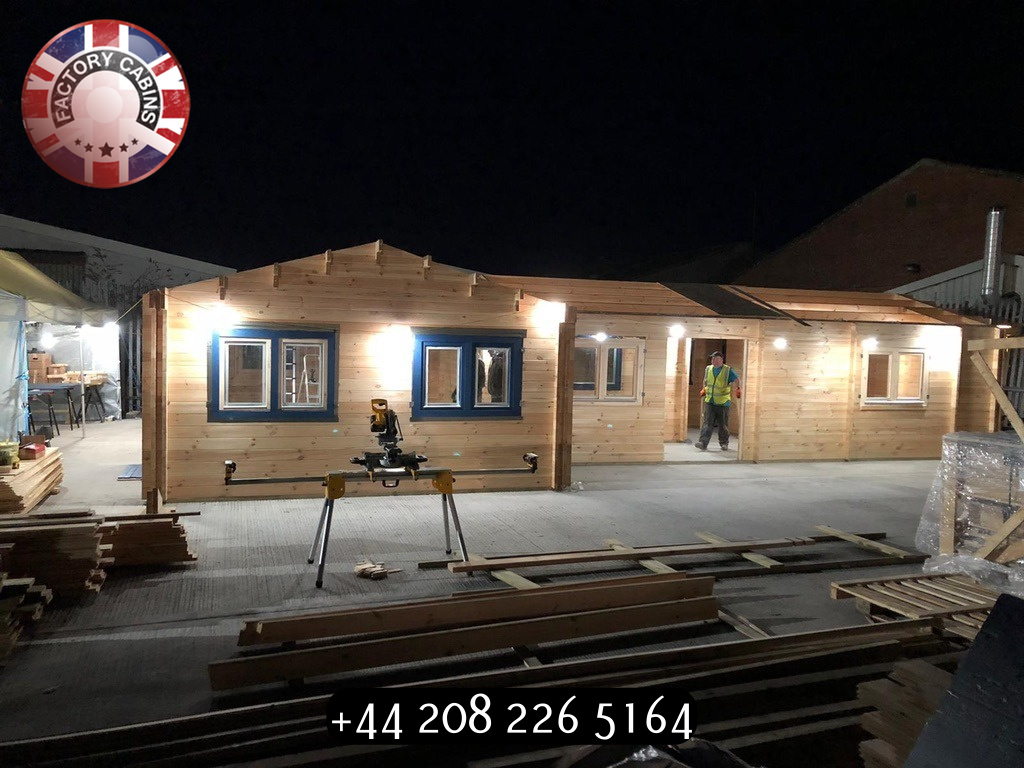
It’s in stock — ready for delivery. Not a prototype. Not a demo. A *real* physical Twin Skin cabin.

Yet most companies still sell 44mm single-skin cabins with no insulation, calling them “energy efficient.” They’re not. They’re thermal sieves.

Part IV: The Dealer Crisis — Why We Terminated 97% of Our Partners

Let’s address the elephant in the room: **Dealerships**.

In our early years, we relied on dealers — local businesses who knew their communities, could provide installation support, and offered after-sales service.

By 2019 , we had 50/60  active dealers across the UK-Wales-Scotland-Holland-Europe

By 2020, we had **2**.

Why?

Reason #1: Systematic Overcharging and stealing !

We discovered dealers inflating prices by 50–100% — then blaming *us* for “high factory costs.” One dealer in Manchester charged £22,500 for a cabin we sold him for £9,200. When confronted, he said: *“Customers expect to pay that — they think it’s premium.”*

We terminated him.

We decided to sell direct. No more killing our brand and hard work with sadly thieves.

Reason 2: Theft & Fraud

Yes — theft. From *customers*.

Case study: A dealer in Yorkshire took deposits from 14 customers (£68.000 total) for cabins “in production.” The cabins never existed. He used the money to pay personal debts. When customers called us, we reported him to the police — he was later sentenced.

We also reported him to Trading Standards.

Another case: A dealer in Scotland substituted our 70mm twin-skin cabins with 44mm single-skin knockoffs — same packaging, same branding. Customers received cabins that leaked in rain and froze in winter. We sent engineers. Found the fraud. Terminated. Prosecuted.

These aren’t outliers. They’re symptoms of a broken system.

Which leads us to our core belief:

**If you want quality — buy direct from the factory.**

Why?

– No middleman markup

– Direct access to engineers and designers

– Full transparency on materials and processes

– Ability to customise *anything* — from roof pitch to amount of doors and windows,

– No risk of misrepresentation

And let’s be clear: **There are no significant log cabin factories in England.** None. Zero.

Why? Because England has no commercial forests suitable for structural timber. The UK imports 85% of its softwood — mostly from Scandinavia and the Baltics and sadly the Baltics is mainly Pine, too many knots, young trees, and small in diameter,. So when a company claims “Made in England,” they mean: *Assembled in England from imported parts.* Often with Chinese-made hardware and cheap timber.

We manufacture in Lithuania — But we manufacture only with Swedish Spruce.

Buying from a “UK factory” dealer? You’re paying for logistics, not quality.

Part V: The Consumer’s Survival Guide — How to Spot a Real Cabin

You’re overwhelmed. You’ve read 10 websites. Seen 50 videos. Still don’t know who to trust.

Here’s your actionable checklist — proven over 23 years:

 Insist on Window/Door Specifications

Ask: *“Are windows joinery glulam or solid timber? Who manufactures the hardware? Please send photos of exactly what I am buying.

If they say “uPVC” or “premium composite” — run.

Request 4 Independent Customer References

Not testimonials on their site. *Real people.* Ask:

When did you receive your cabin?”

What issues have you had?”

Have you needed repairs? Who did them?”

Would you buy from them again?”

We give customers our direct line — no gatekeeping. If a company refuses, they have something to hide.

Check the Warranty Terms

A 20-year warranty that requires *only* basic maintenance (gutter cleaning, no standing water, re-treatment) is credible. 

A 10-year warranty that excludes “natural settlement,” “weather damage,” or “improper installation” is worthless.

Visit the Factory (If Possible)

We welcome visitors — by appointment. See the timber stacks. Watch the CNC machines. Meet the joiners. Compare the finish on a freshly assembled cabin vs. one stored for 6 months.

If they won’t let you visit — why not?

Our Promise — And Why We’re Still Here After 24 Years

We could have taken the easy path. We could have switched to uPVC. We could have outsourced to the lowest bidder. We could have offered 10-year warranties and called it a day.

But we didn’t.

Because we believe:

– A log cabin is not a garden ornament. It’s a *building*.

– It deserves the same respect as a house — structurally, thermally, and aesthetically.

– The customer shouldn’t need a degree in timber engineering to avoid being ripped off.

Today, we manufacture over 7,000 unique cabin designs — from a 2m x 1.5m lawn mower cabin (yes, we make those — with lockable doors and ventilation) to a 20m x 18m luxury lodge with underfloor heating, smart lighting, and a rooftop terrace.

We’ve shipped to every county in the UK. To remote Scottish islands. To Welsh valleys. To urban London gardens (yes — even on 10m x 8m plots, with planning permission).

And we still do what we did in 2003:

– Hand-inspect every log

– Test every window under simulated settlement

– Refuse to compromise on hardware

– Fire dealers who betray trust

We’re not the biggest. We’re not the cheapest. But we are — and always have been — the most honest.

## Final Thoughts: The Future of Log Cabins — And Your Role in It

The UK log cabin industry stands at a crossroads.

On one side: Mass-produced, disposable structures — sold with flashy ads, fake reviews, and promises that crumble with the first frost.

On the other: A quiet movement of makers who believe that wood, when respected, can create beauty that endures.

We choose the latter.

But we cannot do it alone.

Every time you choose quality over hype — when you ask the hard questions, demand proof, and refuse to accept “good enough” — you strengthen the entire industry.

You protect future generations from inheriting cabins that rot, leak, and disappoint.

You honour the craft.

So, thank you — for reading this far. For caring enough to seek the truth.

If you have questions — about timber, insulation, net zero, or why your neighbour’s “premium” cabin is already peeling — email us. Call us. Visit us.

We’re here. As we’ve been since 2003.

Not to sell you a cabin.

But to help you build a legacy.**FactoryCabins.com** 

Building Log Cabins That Last Longer Than Promises* 

Please send us an email to sales@factorycabins.com

or call 0208 226 5164
Factory Cabins Twin Skin Log Cabins: Original 200mm Void Insulation Pioneers

Beyond the Log: How Our Twin Skin System Creates the best Twin Skin Log Cabins in the Industry.

Buy from the manufacturer, not a reseller.

Factory Cabins as the Unequalled Kings of Insulated Luxury

The songs of the bush, the warmth of a campfire, the tranquility of nature – holiday parks and caravan parks give us an escape we all need.

But for the owners of these parks, creating accommodation that delivers real comfort, year-round appeal, and long-lasting quality is crucial. 

Customers want more than a simple form of accommodation they desire a secure and cozy retreat. 

Here, Factory Cabins transforms the industry with its innovative Twin Skin Log Cabin System, setting the standard higher. Forget about conventional log cabins; we produce excellent, well-insulated havens, and the following are some of the reasons we excel compared to others. Factory Cabins was the first to introduce , which means, design, test, manufacture and sell to the public, then other mills saw the light, but sadly pay day, we see the silence, the workmanship, the needed CNC machinery, to manufacture not just an excellent twin skin cabin, but a market leader. And to offer our customers the best.

Our Unbeaten Engineered Twin Skin Log Cabins are designed to stand up for 50 years plus, and save customers money!

The secret is not only insulation, but the way it’s included, protected, and maximised. Our Twin Skin system is not an afterthought; it’s a revolutionary re-design of log cabin architecture. All our Twin Skin log cabins are constructed from FSC Swedish spruce. Which is tight grained and not baltic pine. We only use slow grown timber, this is part of the key to the longevity of a cabin.

Different companies need to understand that our cabins are not just the best in regards to quality and price but also when it comes to construction and durability.

We offer the Following!

Holiday park cabin suppliers.
Insulated holiday lodge supplier.
Luxury camping pods supplier.
Year-round holiday cabins.
Energy efficient holiday lodges.
Twin skin holiday park cabins.
Premium log cabins for campsites.
Commercial grade log cabins.
Turnkey holiday cabin solutions.
Low energy holiday units.

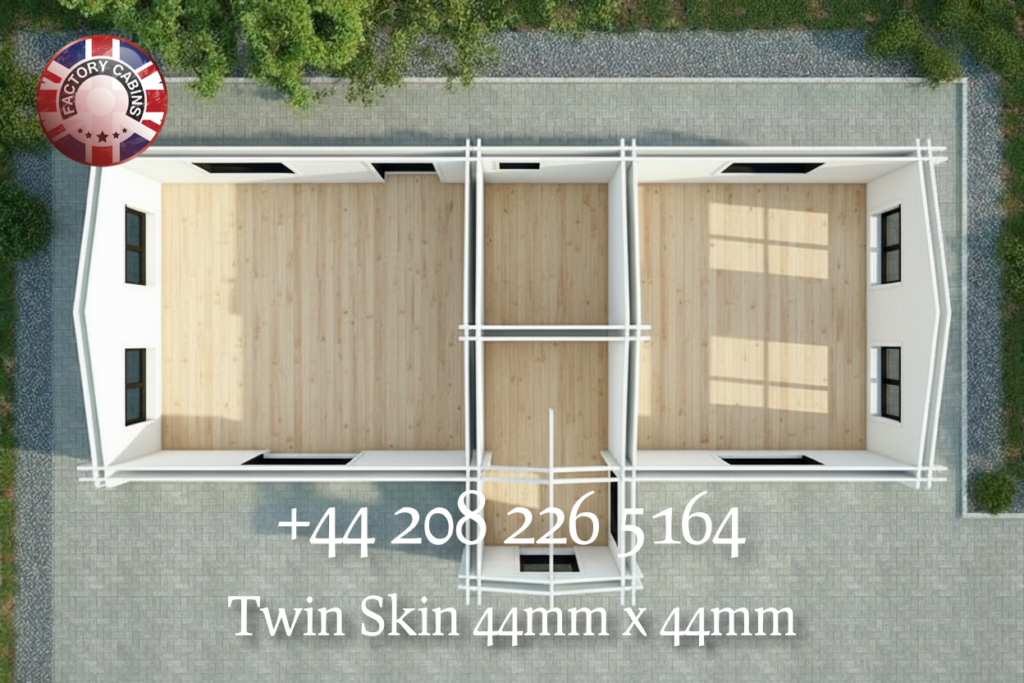
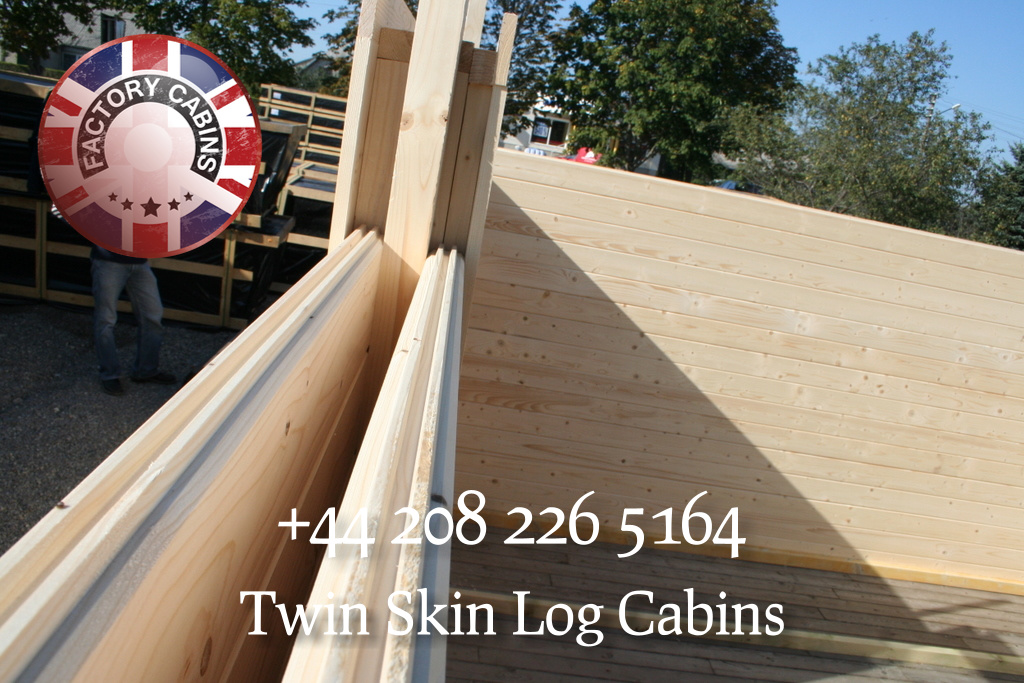
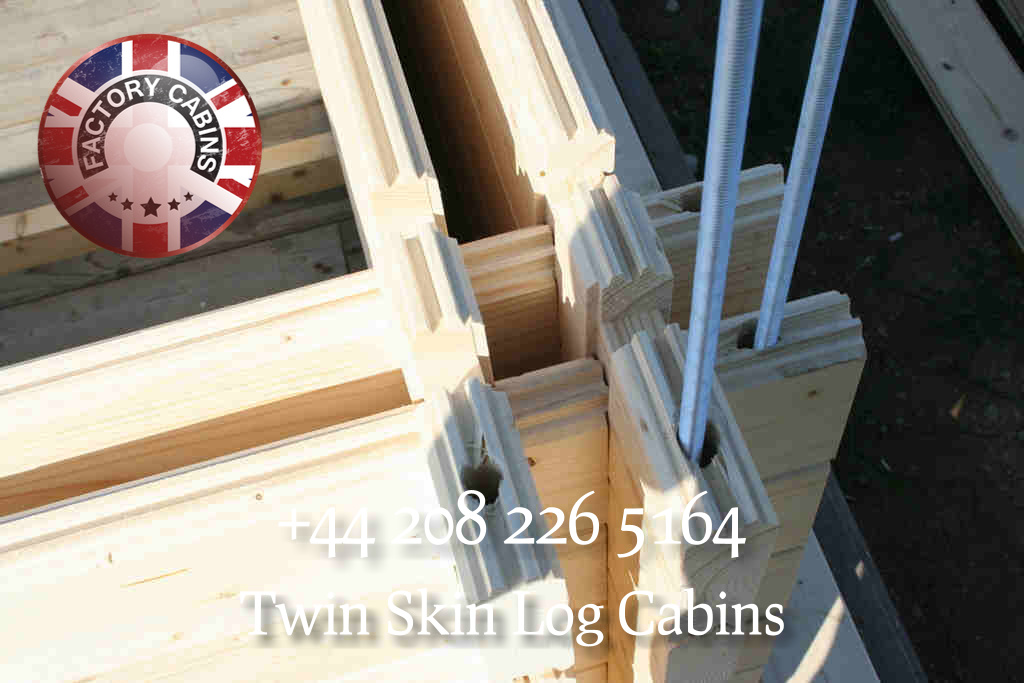
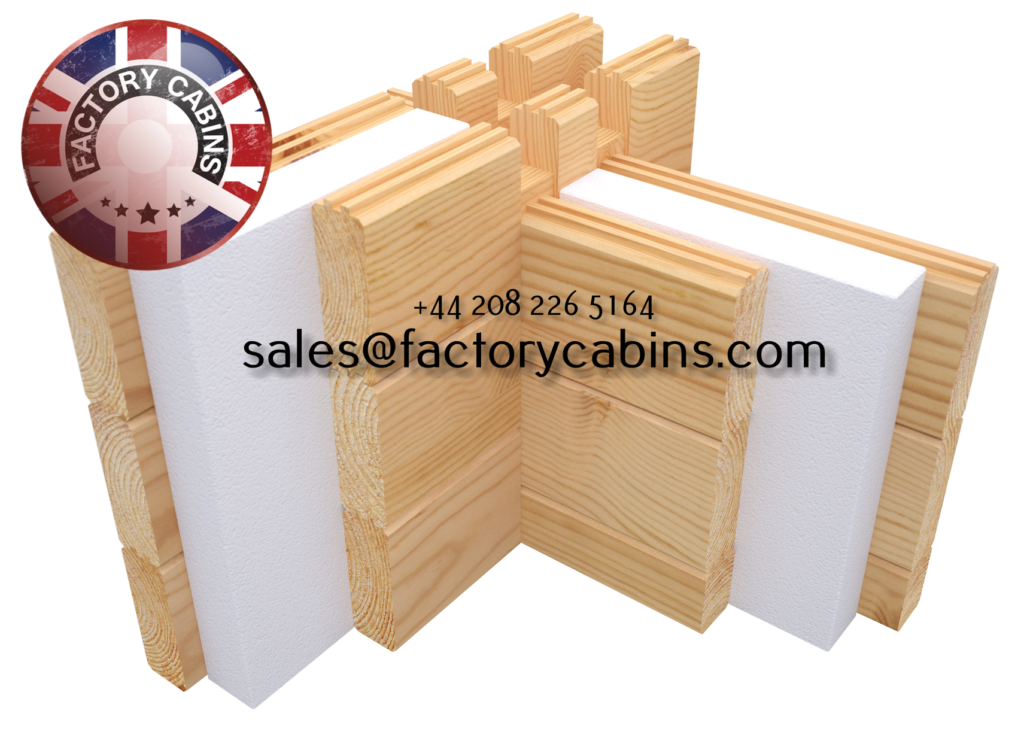
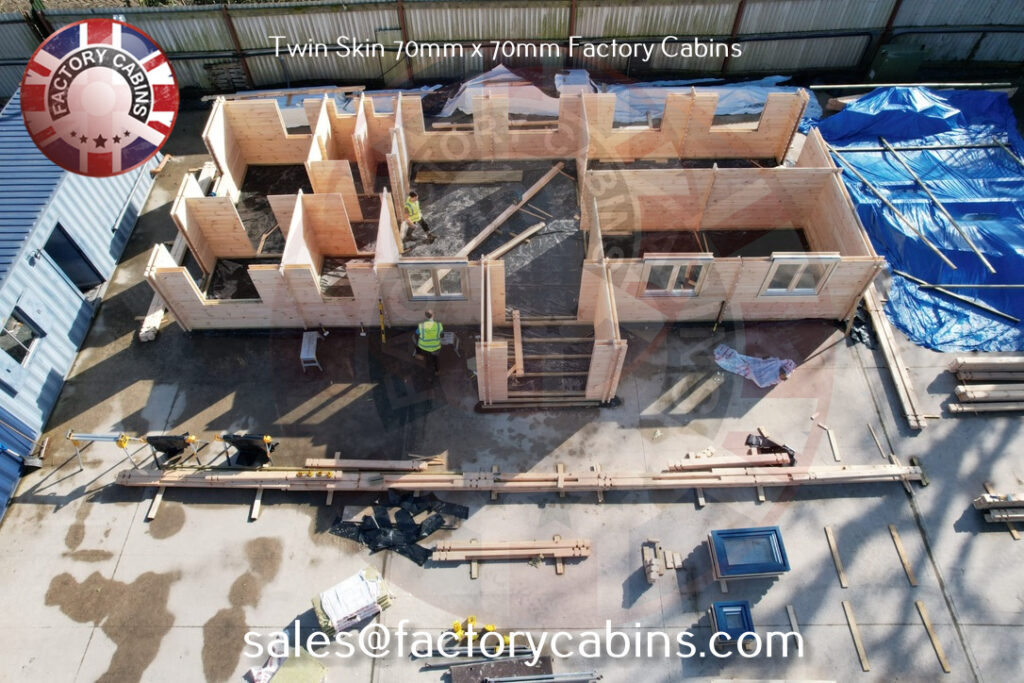
1. Precision Timber Core (70mm x 70mm): Each of our twin skin walls starts with a 70mm x 70mm profile of matured Kiln-Dried (KD) FSC Swedish Spruce. This is not ordinary timber. KD ensures stability, minimizing shrinkage and warping. FSC certification guarantees sustainable, responsibly sourced timber. Swedish Spruce is renowned for its strength, straight grain, and natural resilience. This core provides the stability and beautiful appearance log cabins are so prized for.

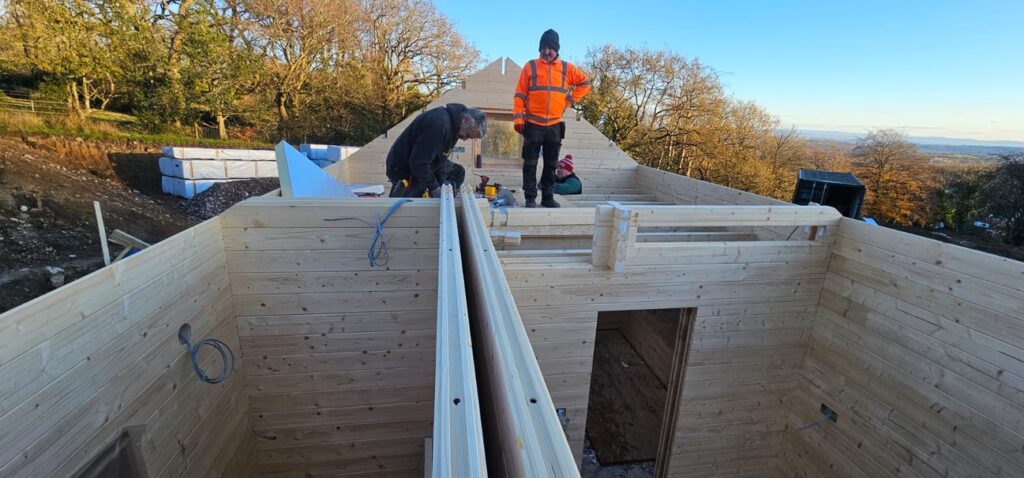
2.  The Engineered Void (200mm) First and foremost, we don’t simply fill volumes of insulation into gaps between logs. We establish a precise, 200mm void space between inner and outer log bark skins. This isn’t an error – it’s an engineered chamber with a variety of essential functions:

Optimum Depth of Insulation: This generous margin of error eliminates any necessity to compress thick high-R-value insulation (mineral wool or rigid board). Compression is the R-value bane of insulation. Our void leaves insulation at its highest-rated performance, creating a world-class thermal barrier. That means cabins stay warmth-easy in winter and radiantly cool in summer – cutting park owners’ energy bills in half and enhancing guest comfort.

Hidden Infrastructure: Services, pipes and other cables must run cleanly and safely through. Our 200mm void offers the ideal, safe route. No ugly surface trunking, no reduction in depth of insulation to accommodate services, just a clean, professional internal and external finish.

Ventilation & Moisture Control:Adequate air movement in the void must be supplied to prevent condensation and ensure maximum timber and insulation longevity. Techniques for good vapour control and ventilation of such a cavity are part of our system design. 3. The Locking System designed by Factory Cabins: A cabin is only as good as the joints. if stacked badly it can be too weak an advertisement to characterize our logs, precision made to fit together like a glove. Each log features advanced, interlocking profiles with the advantage of state-of-the-art CNC equipment. Every time.

Seasoned KD FSC Swedish Spruce: We demand the finest raw materials. No green wood, no dubious origin. Just stable, long-lasting, lovely, and sustainable spruce.

Zero Corners Cut: From timber selection through to final quality inspection, our process is rigorous. We take the time over quality because we build cabins that will stand the test of decades in harsh holiday park environments. Complete Automation and CNC Accuracy: Our entire production process is fitted with the most modern CNC equipment. This provides complete consistency, perfect machining of sophisticated joints, and an efficiency that adds value. Each cabin enjoys the benefit of this industrial-level accuracy.

1. Precision Timber Core (70mm x 70mm): Each of our twin skin walls starts with a 70mm x 70mm profile of matured Kiln-Dried (KD) FSC Swedish Spruce. This is not ordinary timber. KD ensures stability, minimizing shrinkage and warping. FSC certification guarantees sustainable, responsibly sourced timber. Swedish Spruce is renowned for its strength, straight grain, and natural resilience. This core provides the stability and beautiful appearance log cabins are so prized for.

2.  The Engineered Void (200mm) First and foremost, we don’t simply fill volumes of insulation into gaps between logs. We establish a precise, 200mm void space between inner and outer log bark skins. This isn’t an error – it’s an engineered chamber with a variety of essential functions:

Optimum Depth of Insulation: This generous margin of error eliminates any necessity to compress thick high-R-value insulation (mineral wool or rigid board). Compression is the R-value bane of insulation. Our void leaves insulation at its highest-rated performance, creating a world-class thermal barrier. That means cabins stay warmth-easy in winter and radiantly cool in summer – cutting park owners’ energy bills in half and enhancing guest comfort.

Hidden Infrastructure: Services, pipes and other cables must run cleanly and safely through. Our 200mm void offers the ideal, safe route. No ugly surface trunking, no reduction in depth of insulation to accommodate services, just a clean, professional internal and external finish.

Ventilation & Moisture Control: Adequate air movement in the void must be supplied to prevent condensation and ensure maximum timber and insulation longevity. Techniques for good vapour control and ventilation of such a cavity are part of our system design. 3. The Locking System designed by Factory Cabins: A cabin is only as good as the joints. if stacked badly it can be too weak an advertisement to characterize our logs, precision made to fit together like a glove. Each log features advanced, interlocking profiles with the advantage of state-of-the-art CNC equipment. Every time.

Seasoned KD FSC Swedish Spruce: We demand the finest raw materials. No green wood, no dubious origin. Just stable, long-lasting, lovely, and sustainable spruce.

Zero Corners Cut: From timber selection through to final quality inspection, our process is rigorous. We take the time over quality because we build cabins that will stand the test of decades in harsh holiday park environments. Complete Automation and CNC Accuracy: Our entire production process is fitted with the most modern CNC equipment. This provides complete consistency, perfect machining of sophisticated joints, and an efficiency that adds value. Each cabin enjoys the benefit of this industrial-level accuracy.

4. Real-World Failure Modes: Why Masonry Fails

Brick Cracks extend along mortar joints (the weak point). Ground movement causes diagonal shear cracks. Freeze-thaw cycles break up faces.

Corrosion of Concrete Steel leads to explosive spalling. Inadequate curing develops micro-fractures. Brittle failure happens without any warning.

– *Twin Skin Cabin*: Wood’s fibrous matrix halts crack growth. Redistribution of loads inhibits localized failure. Despite severe force, joints compress but retain.

5. The “Hidden” Structural Benefits*

Computerized Accuracy: CNC machining maintains logs within <0.5mm tolerance. The tolerances in bricklaying are over 5–10mm—leading to inherent weakness.

– *Foundation Efficiency*: Brick/concrete requires deep, expensive foundations. Our system uses small concrete pads as lightweight timber spreads load evenly to soil.

Time-Dependent Strength, Timber increases in strength with age in compression. Mortar weakens; concrete creeps and loses strength.

Conclusion: Moving Beyond “Thick” vs. “Thin.”.

Strength isn’t mass—it’s *intelligent material application and system design*. Factory Cabins’ twin skin technology takes advantage of:

1. Timber’s inherent elasticity,

2. Redundant load paths provided by double skins,

3. Insulation as a structure binder

4. Precision engineering serves to eradicate vulnerabilities.

A 100m² masonry structure may appear hefty, yet physics favours the *adaptive, fault-tolerant strength* of our twin skin solution. Not only is it stronger—it’s provably resilient where masonry isn’t.

Holiday letting is on the rise, with travellers seeking unique, eco-friendly retreats in the great outdoors. For entrepreneurs wanting to reap dividends with a minimal level of input, twin skin log cabins represent a first-rate solution. They fuse tough character with refined efficiency, delivering exceptional visitor experiences and high profit margins. Here’s why investing in a twin skin cabin is your best option in 2025.

The. Financial Advantage: High Returns, Low Costs

1. Better Occupancy Levels:

Twin skin cabins have year-round popularity due to their unmatched insulation. The double-wall construction—usually 44mm or 70mm logs with a 100mm air gap covered with mineral wool or foam—forms a heat barrier that keeps warmth in during winter and interiors cool during summer. This means lower energy bills* (savings of up to 40% compared to conventional cabins) and stable guest comfort, generating off-season bookings.

2. *Premium Rental Pricing:*

These cabins are more expensive per night. Their luxurious appearance, customised designs (e.g., loft areas, terraces), and eco-friendly status make them attractive to visitors who want upscale accommodation. Twin skin case studies show they perform 20–30% better than standard rentals in revenue.

3. Minimal Maintenance, Maximum Durability*: Constructed from *Scandinavian spruce or joinery glulam wood, twin skin cabins are weatherproof, rot proof, and insect-proof. Having a double wall, they distribute even weight to counteract snow, wind, and rain. This minimizes long-term maintenance costs—a critical advantage for busy hosts.

Market Demand: Meeting Travel Trends

Eco-Conscious Travelers: 67% of visitors value sustainable stays. Twin skin cabins, constructed from carbon-storing wood and designed for energy efficiency, access this demand.

Experience Seekers: Cabins offer “Instagram-able” seclusion, mixing old-school charm* with modern luxuries like hot tubs and smart heating.

Easy Setup: Pre-assembled kits from the factory install quickly, accelerating your time-to-profit. Some models (i.e., 4m x 5m models) even skip planning permission issues.

Real Return on Investment: Statistics and Analysis

Even a small 4m x 5m twin skin cabin 70mm x 70mm with a void of around 150mm (with bedroom/shower room) will generate £15,000–£20,000 per year on websites like Airbnb, paying back its price in 2–3 years.

The worldwide log home market should reach *$13.38 billion by 2029*, driven by tourism and work-from-anywhere trends.

Properties that have *energy-efficient features* see 8–10% higher occupancy and 5% higher nightly rates.

Getting Started: Keys to Success

Location Strategy: Place cabins near nature attractions (hiking paths, lakes) to benefit from high-demand locations.

Smart Customization: opt for double-glazed doors reinforced roofing, and terraces to enhance appeal.

Sustainability Marketing: Highlight insulation specifics and net-zero capacity in order to attract eco-friendly tourists. Pro Tip*: Pair your cabin with dynamic pricing software and local experience packages (e.g., guided hikes) to maximize revenue. 

The Bottom-Line Twin skin log cabins aren’t simply a trend; they’re a *future-proof investment*. With their combination of resilience, energy efficiency, and attractiveness, these structures are a passive income stream that increases with each passing year.

For entrepreneurs ready to take advantage of the move toward experiential vacations, these cabins represent the fastest way to large returns. 

Set to dominate the holiday let market? Explore Factory Cabins’ range of turnkey twin skin options—where luxury meets profitability. 

So please do take a glance at our blog on, twin skin log cabins, holiday letting ROI, energy-efficient holiday homes, sustainable cabin investments, passive income property, log cabin rental profits, insulated cabins UK, Airbnb investment strategy, eco-friendly stays.

Note: All Factory Cabins twin skin structures exceed EN 1995 (Eurocode 5) standards for timber construction.

Please call us on +44 208 226 1564

Or send us an email. www.factorycabins.com