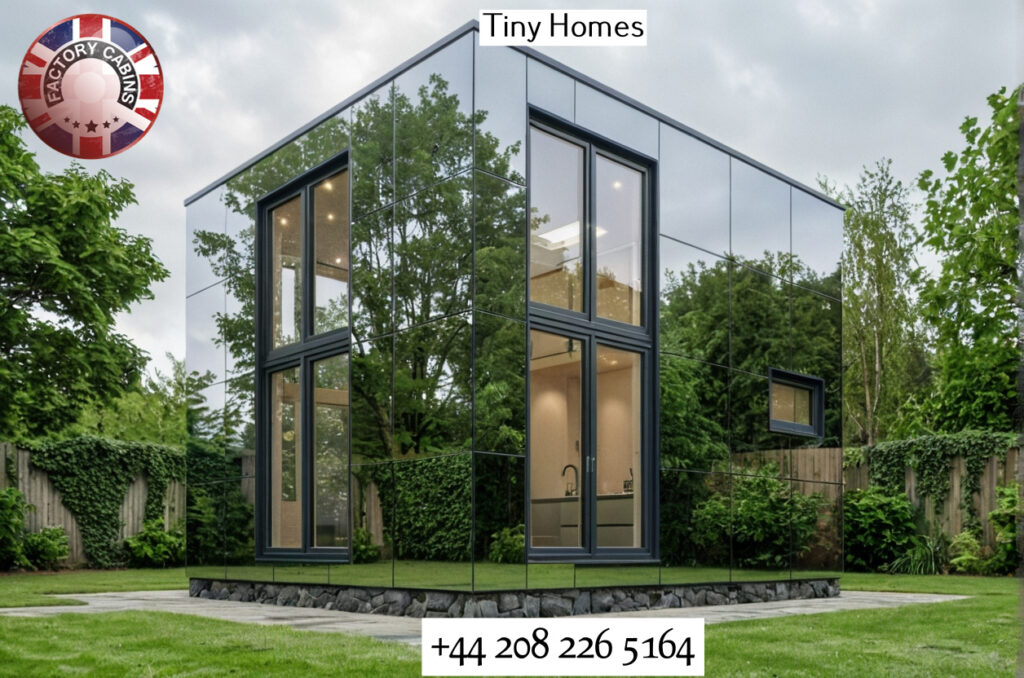
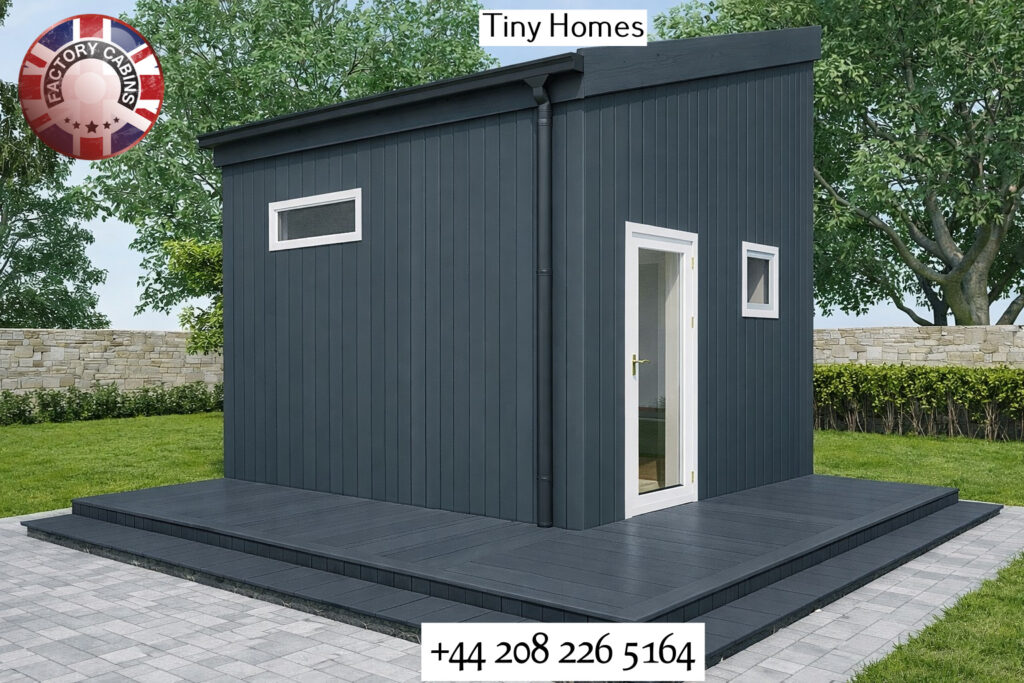
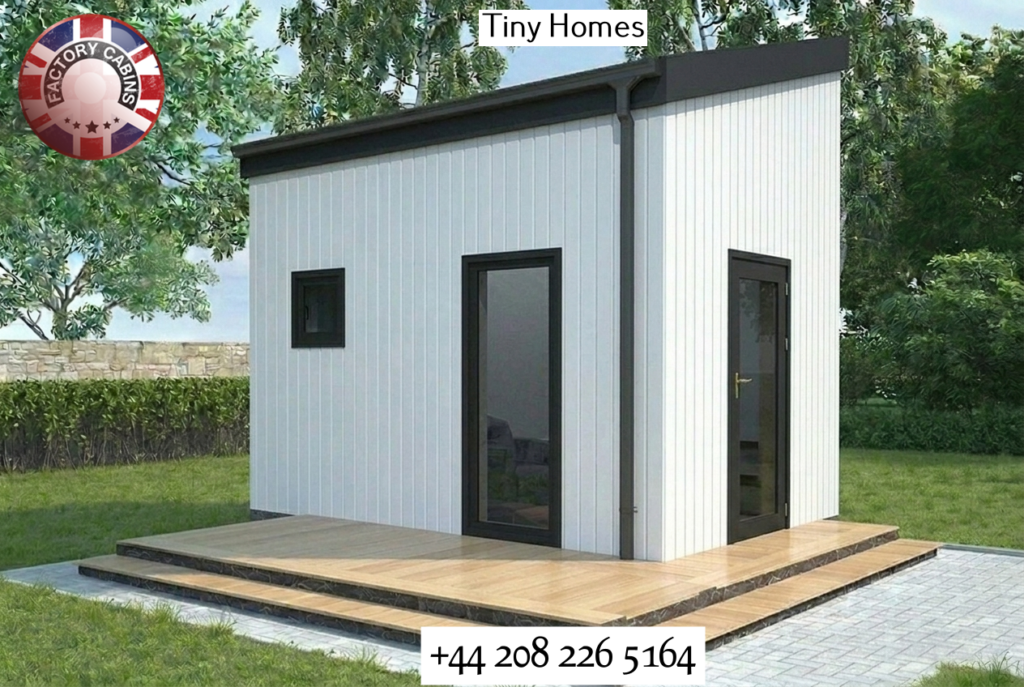
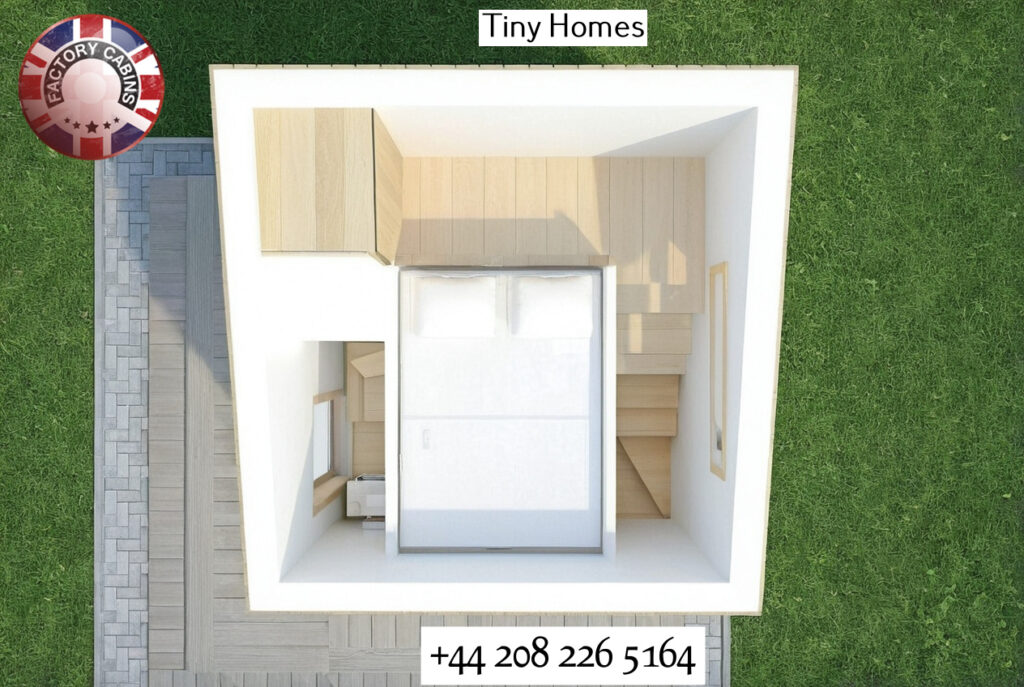
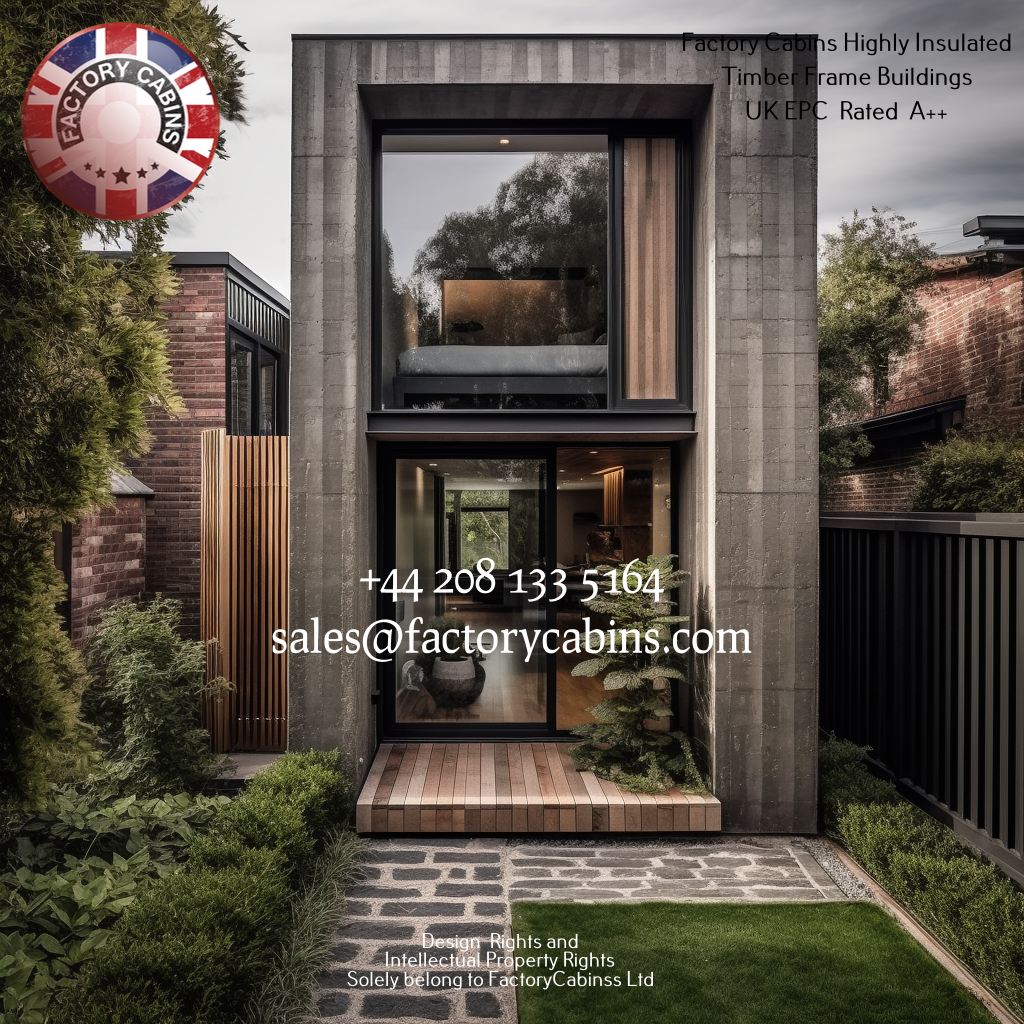
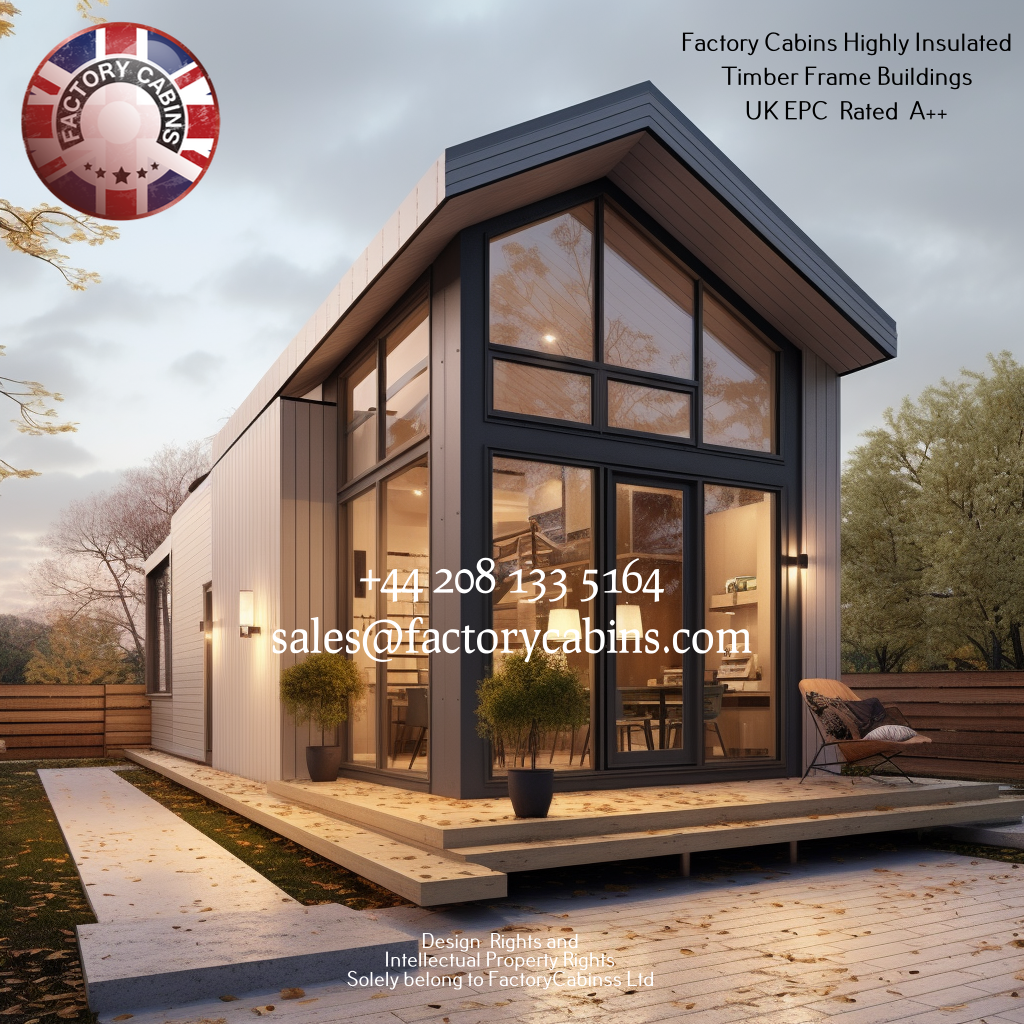
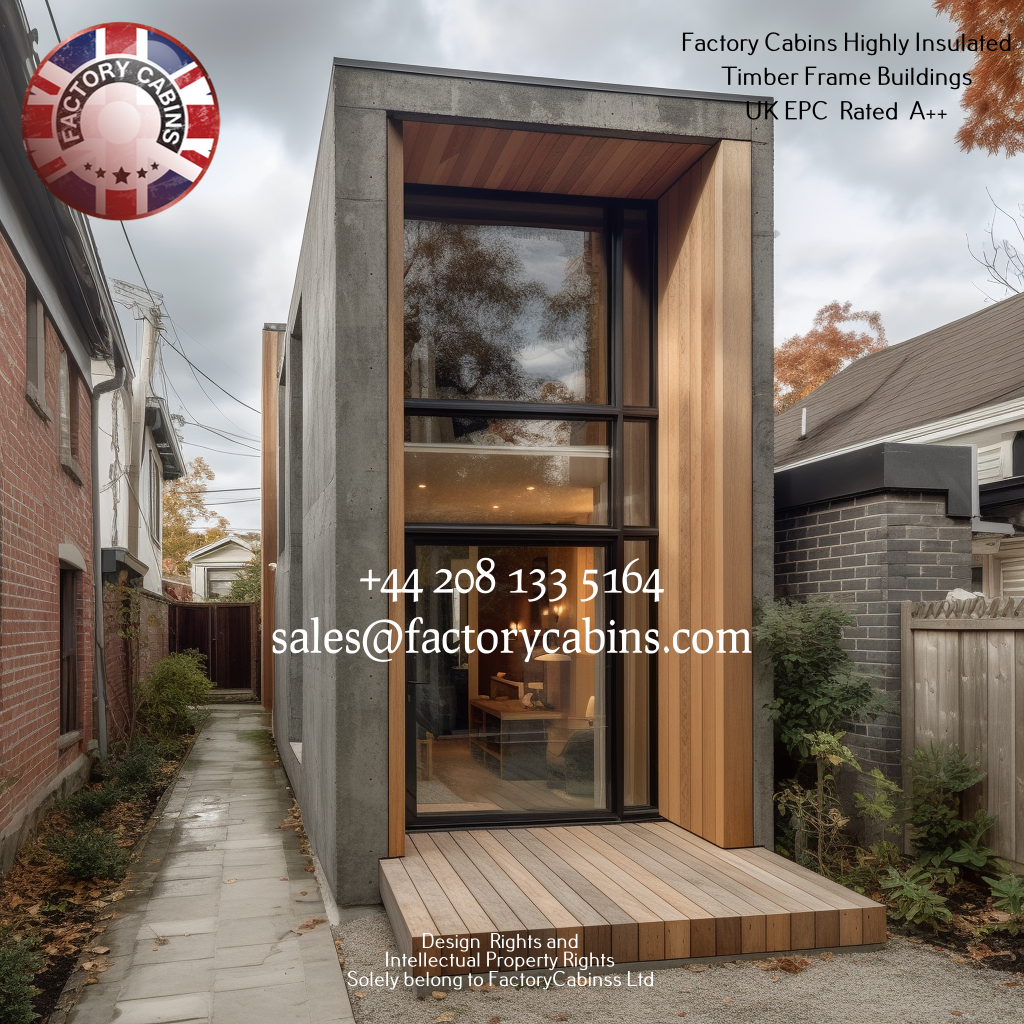
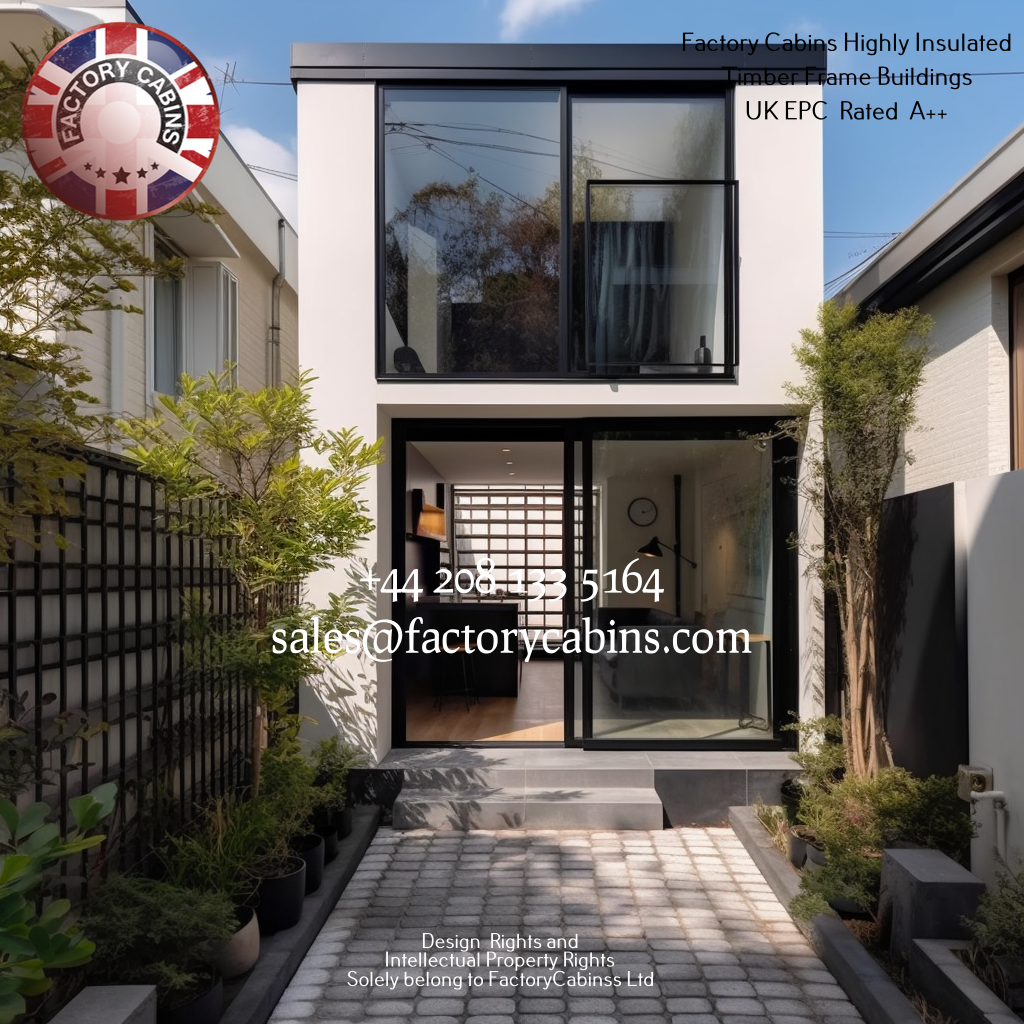
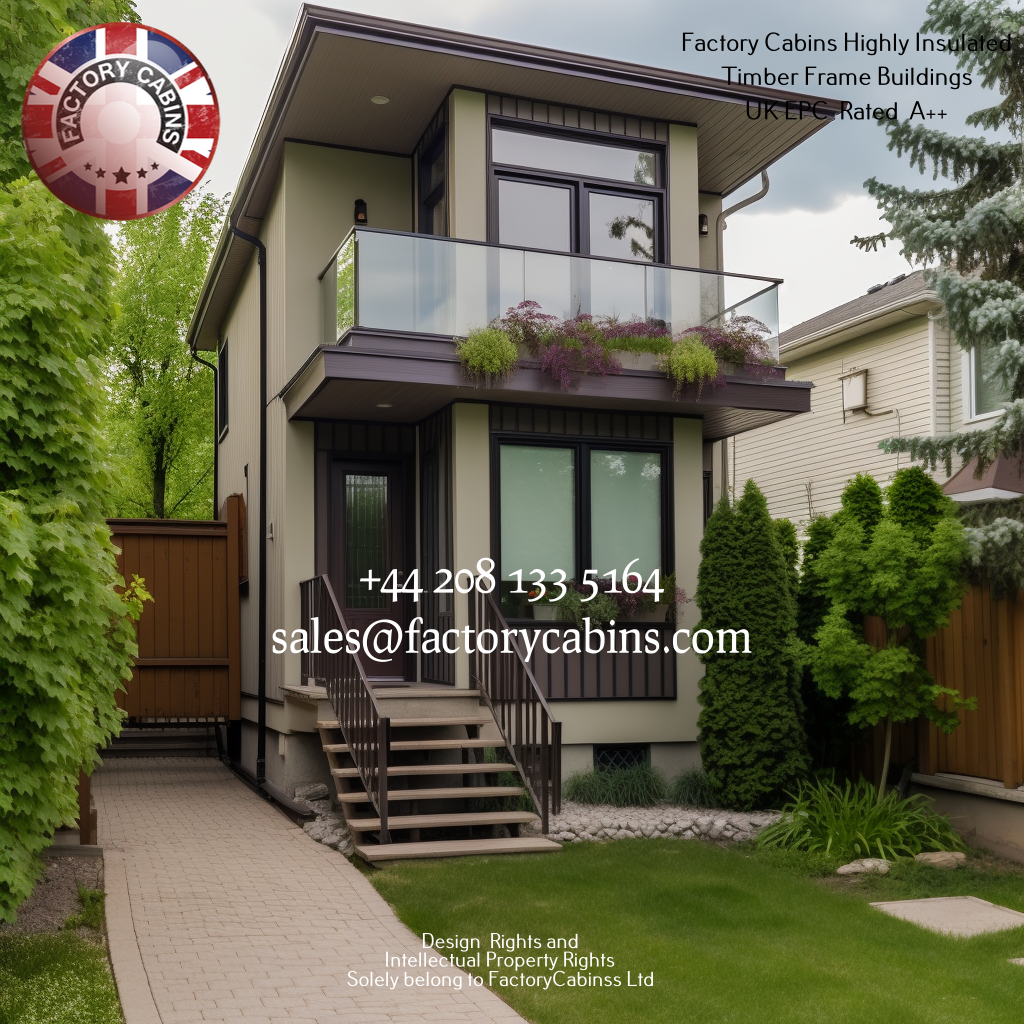
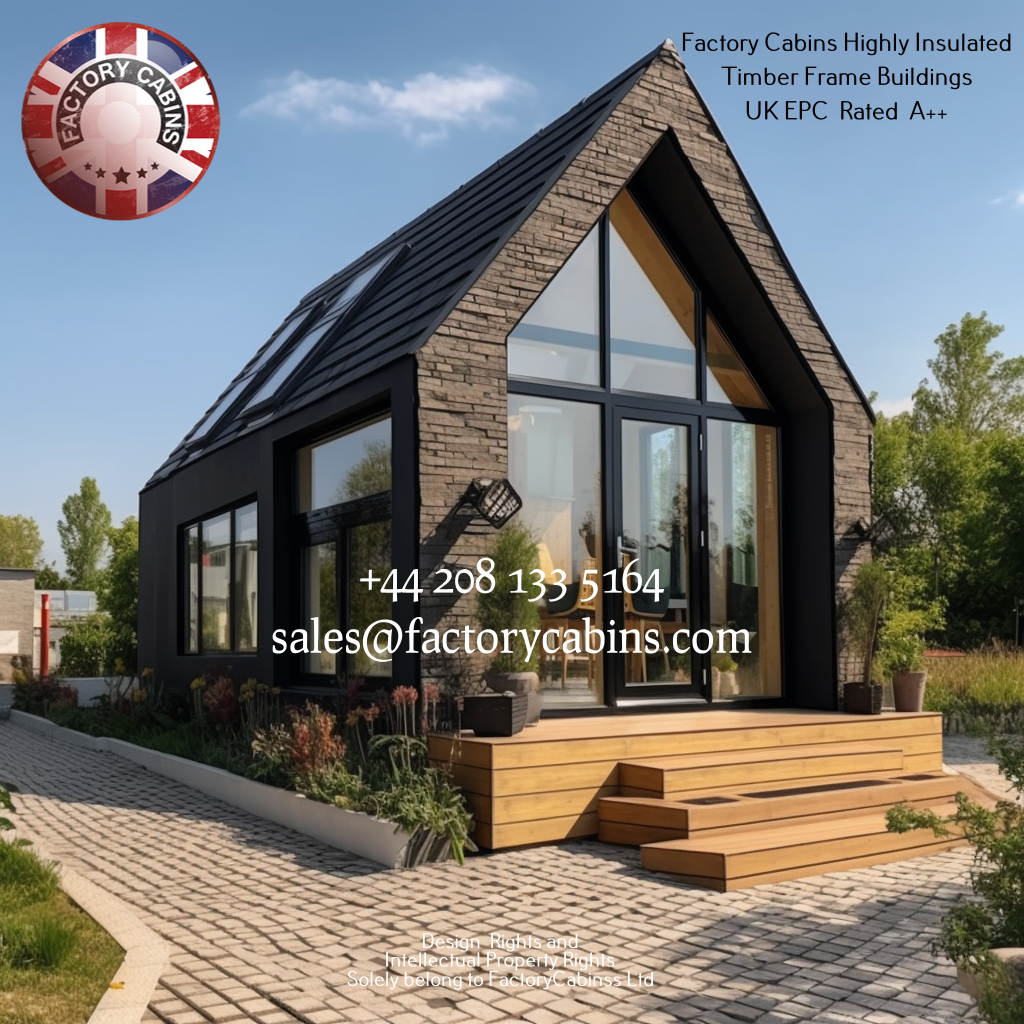
The Tiny Home Revolution: Sustainable, Stylish Living in England, Wales, Scotland, and Ireland
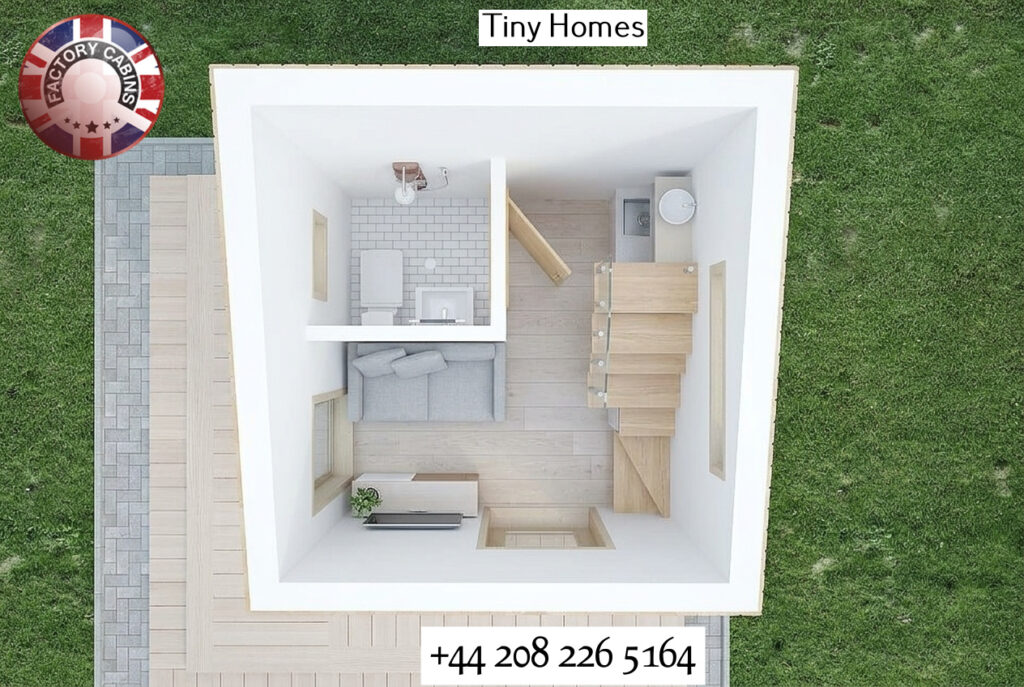
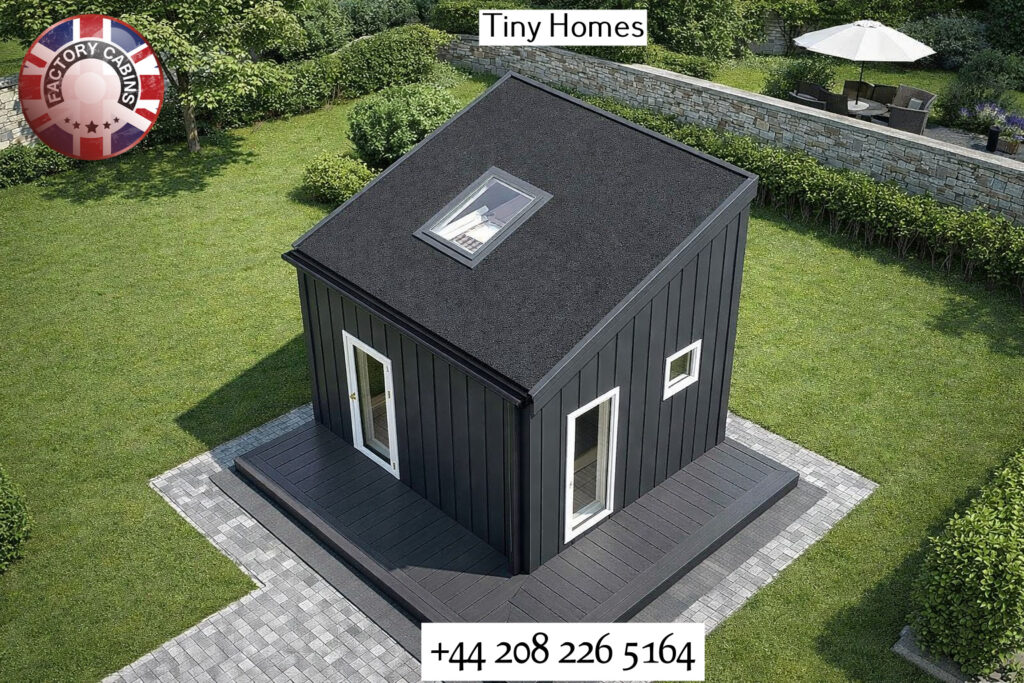
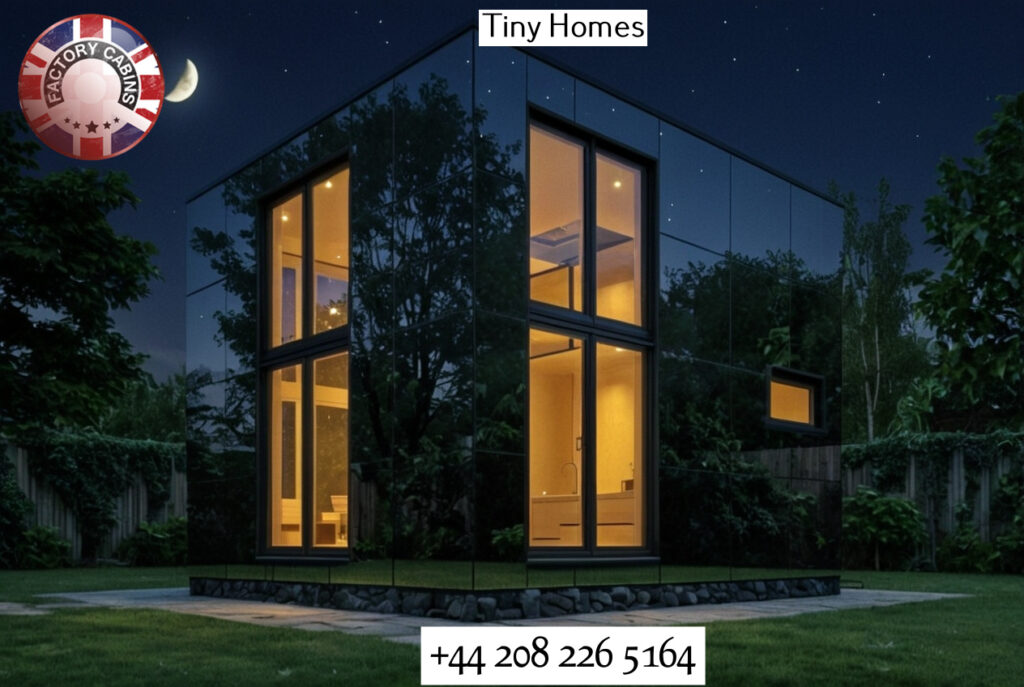
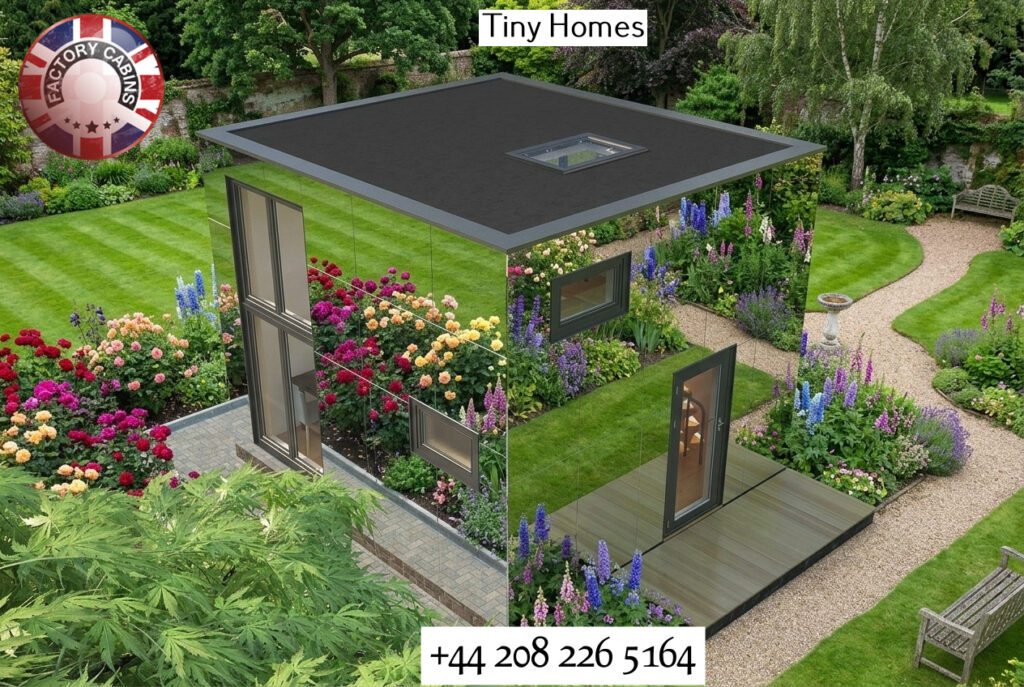
Right now, housing across the British Isles and Ireland is changing fast. House prices keep rising, and for a lot of people, buying a traditional home feels impossible. So, where do you go from there? For many, the answer is simple: go smaller, smarter, and greener. Tiny homes are popping up everywhere as a real solution that combines affordability, sharp design, and a lighter touch on the planet. And at Factory Cabins, we’re right in the thick of it—building timber-framed tiny homes that show just how good “small” can look and feel.
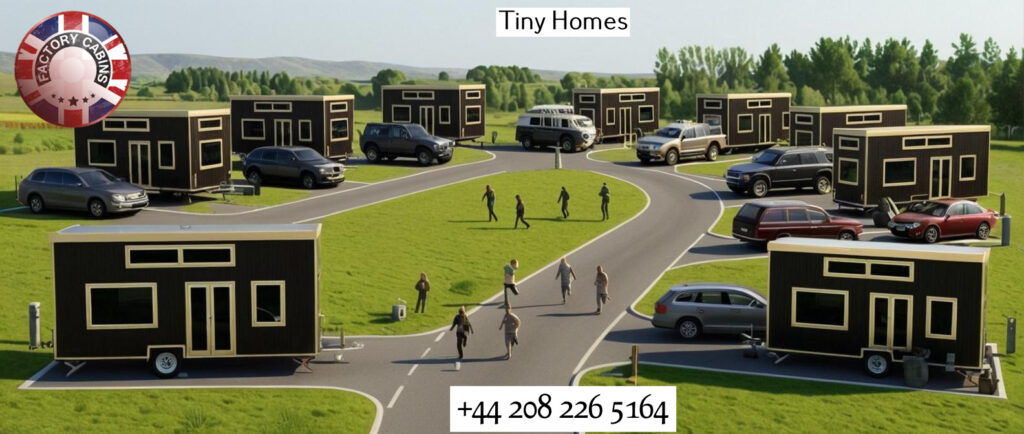
Drive across Ireland’s emerald hills, wander the Scottish coastline, visit Welsh villages, or head through England’s countryside—our tiny homes fit right in. They aren’t just places to sleep; they’re personal retreats where you can live well, enjoy real freedom, and seriously cut down your environmental footprint without giving up on comfort or style.
Tiny Home Living: Why It Works
There’s a whole list of reasons people across England, Wales, Scotland, and Ireland are jumping on the tiny home train—and space is only the beginning.
Let’s talk money first. Homeownership has never been more out of reach. With prices as high as they are, a lot of us face never-ending mortgage debt and massive upfront deposits. Our tiny homes break that deadlock. You pay less, you spend less to run your home, and you free up your money for travel, savings, or whatever makes your life richer.
Then there’s the planet. Most of us care, but traditional homes aren’t exactly easy on the environment. Tiny homes use fewer resources, both to build and to heat. We’ve pushed it further at Factory Cabins—we build for net-zero carbon. When you don’t have as much house to heat, light, or maintain, your impact drops fast. People notice. Whether you’re in the Lake District or stuck in an Irish rainstorm, you know you’re doing your bit.
And honestly, life gets less stressful when you own less stuff. Every square inch matters, so you keep what counts and let go of the rest. Without endless rooms to clean or giant lawns to mow, you spend more time living. It just feels good.
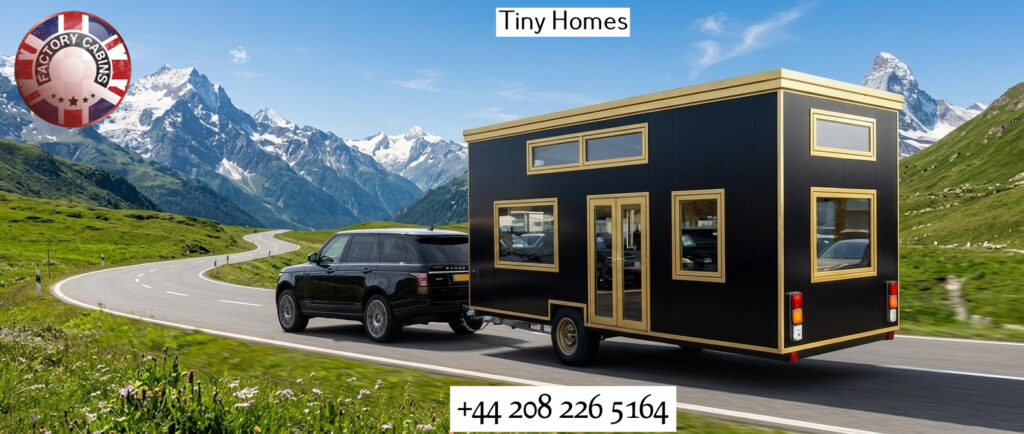
Flexibility is maybe the best part. Our homes have wheels—really. Want the Highlands in summer? Sure. Fancy a spot on the Welsh coast for autumn? Go for it. Staying with family in Cork? No problem. Your house comes with you, opening up new options that bricks and mortar can’t match.
Designed for You—Not Just Anyone
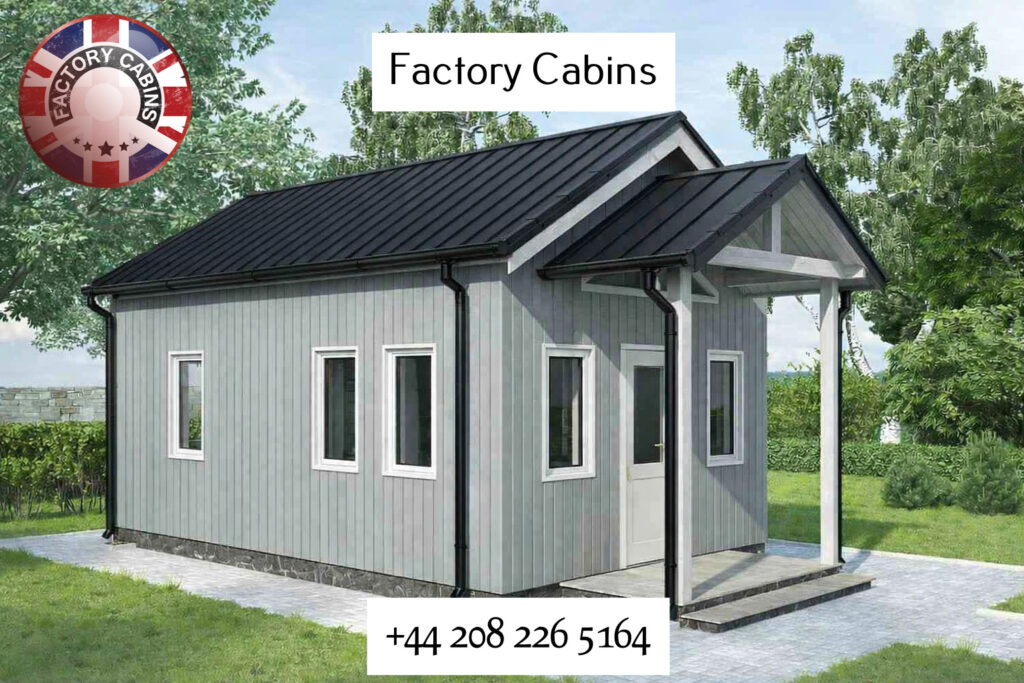
One thing we never forget at Factory Cabins: no two lives are the same. That’s why every house we build is custom. Timber framing isn’t just a building technique for us—it’s our craft. We use high-strength, sustainable wood, so your home is both tough and light, perfect for moving. Plus, it keeps the heat in, which means you’re not wasting money on energy bills.
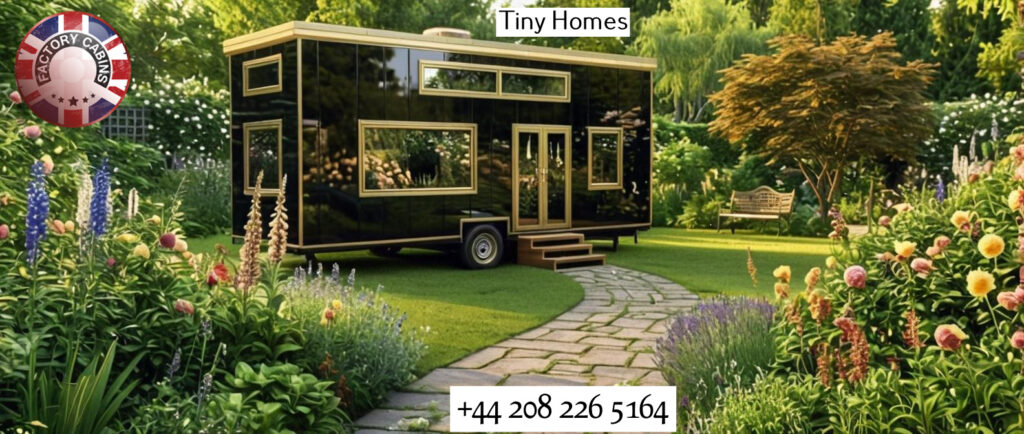
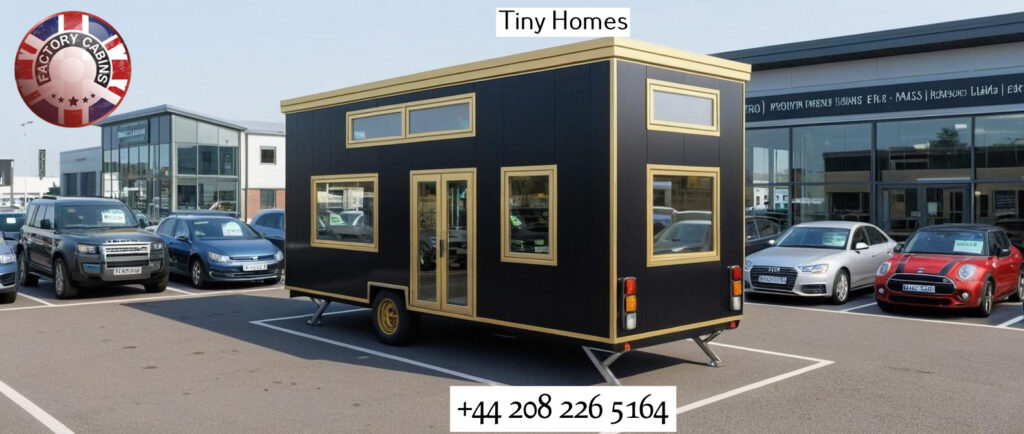
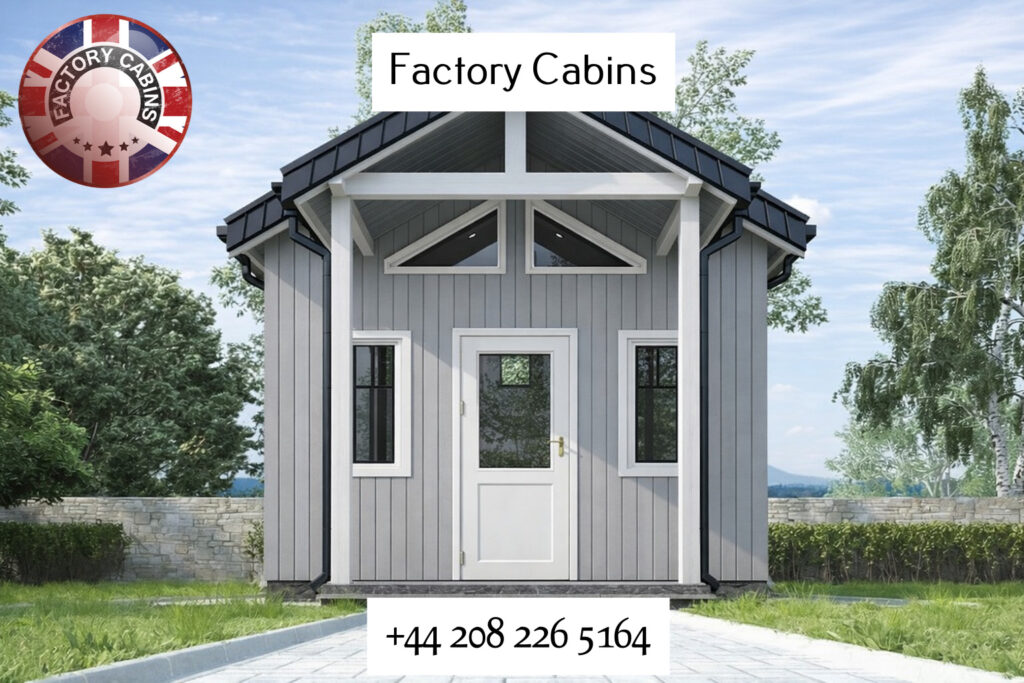
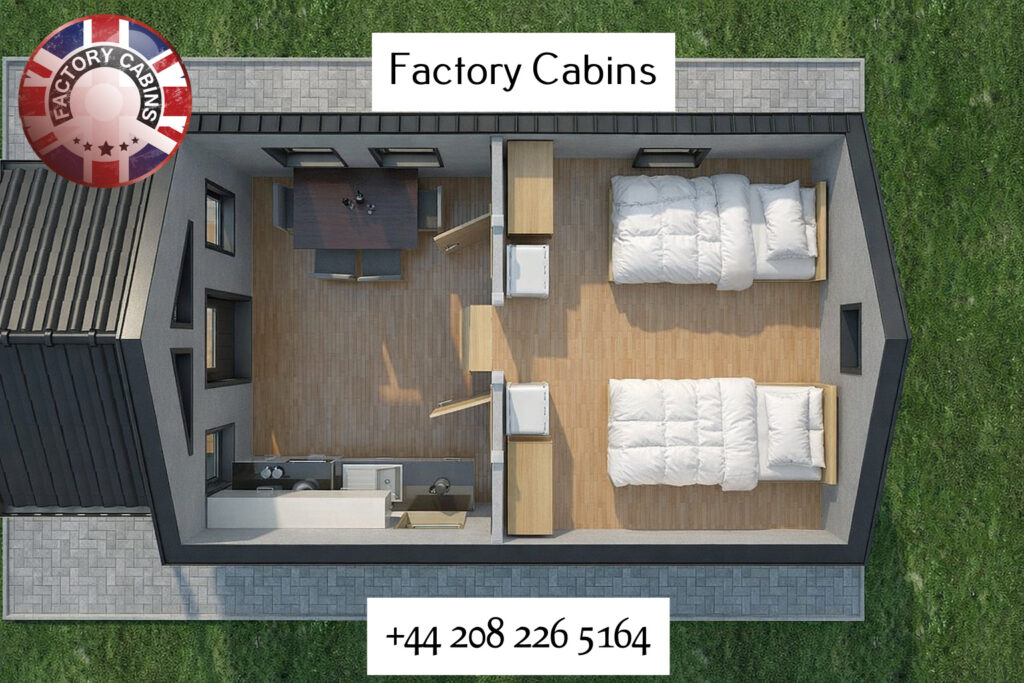
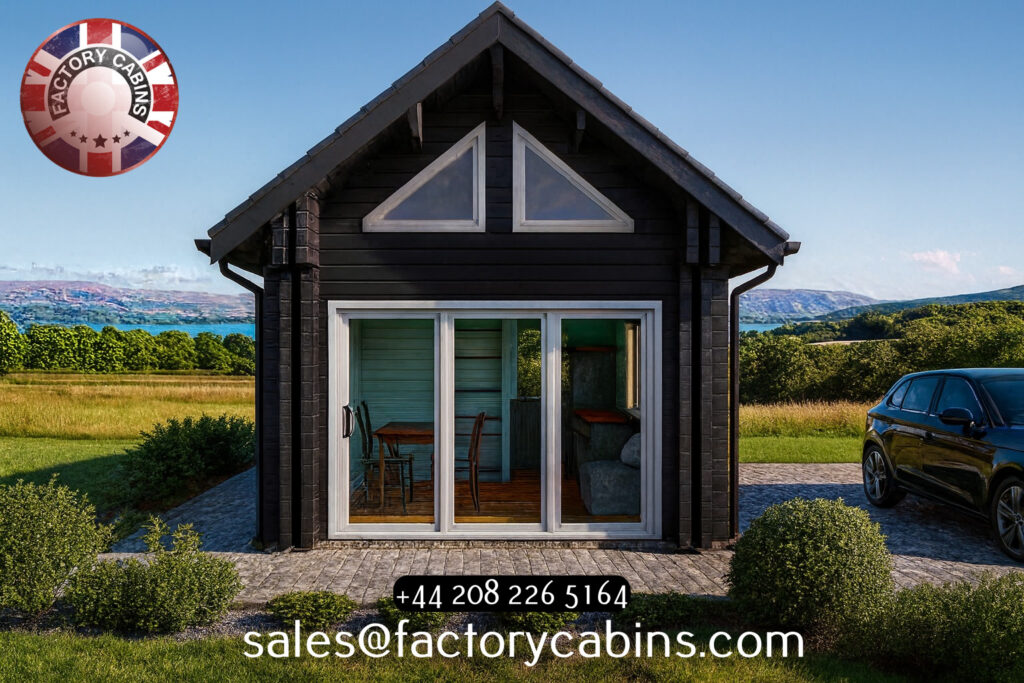
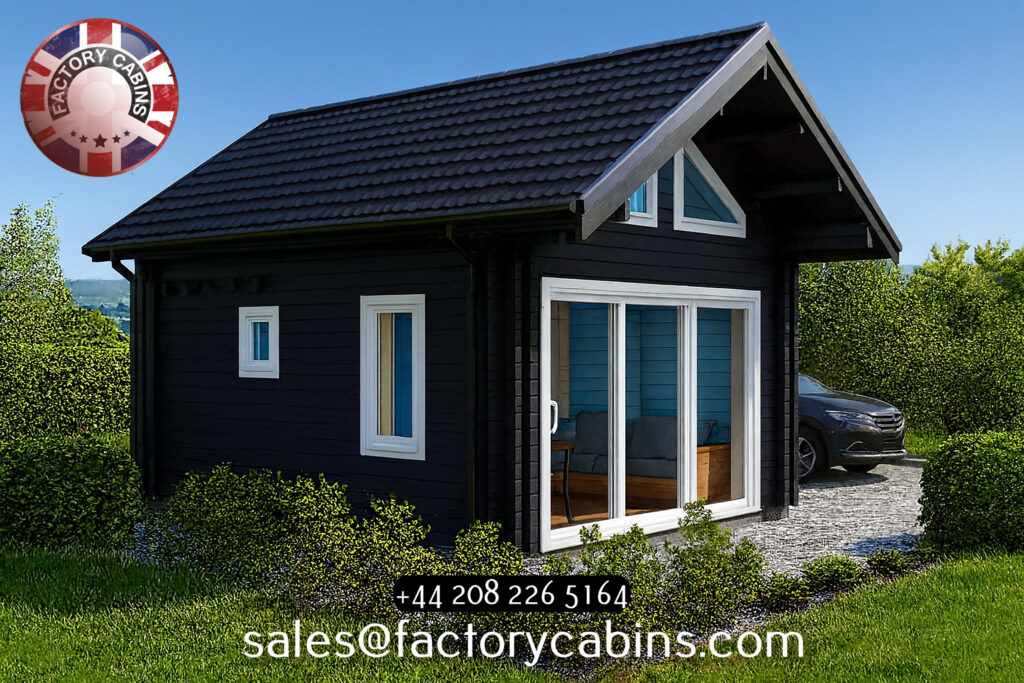
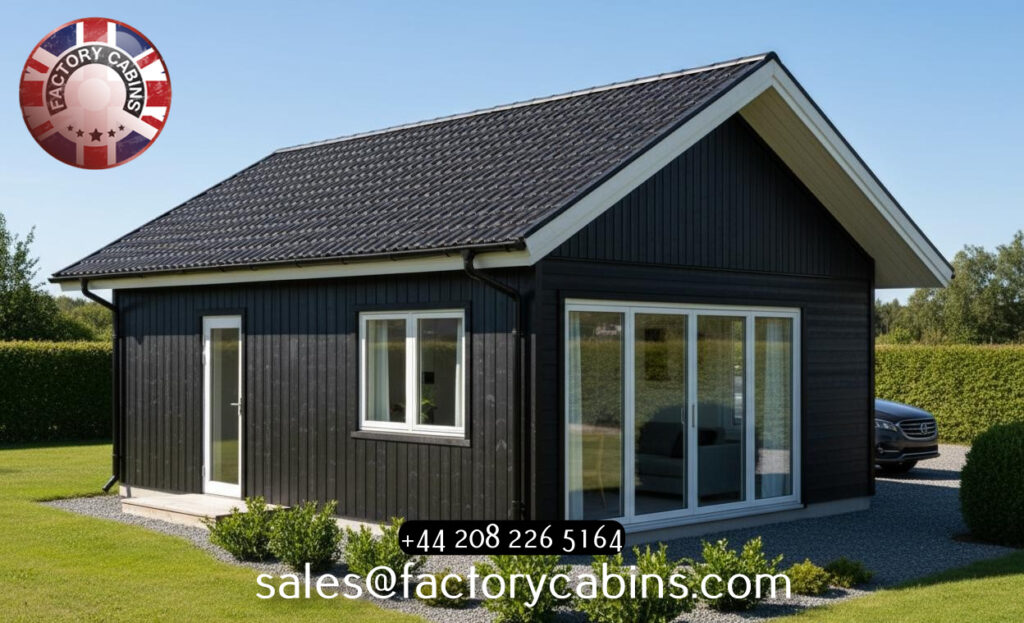
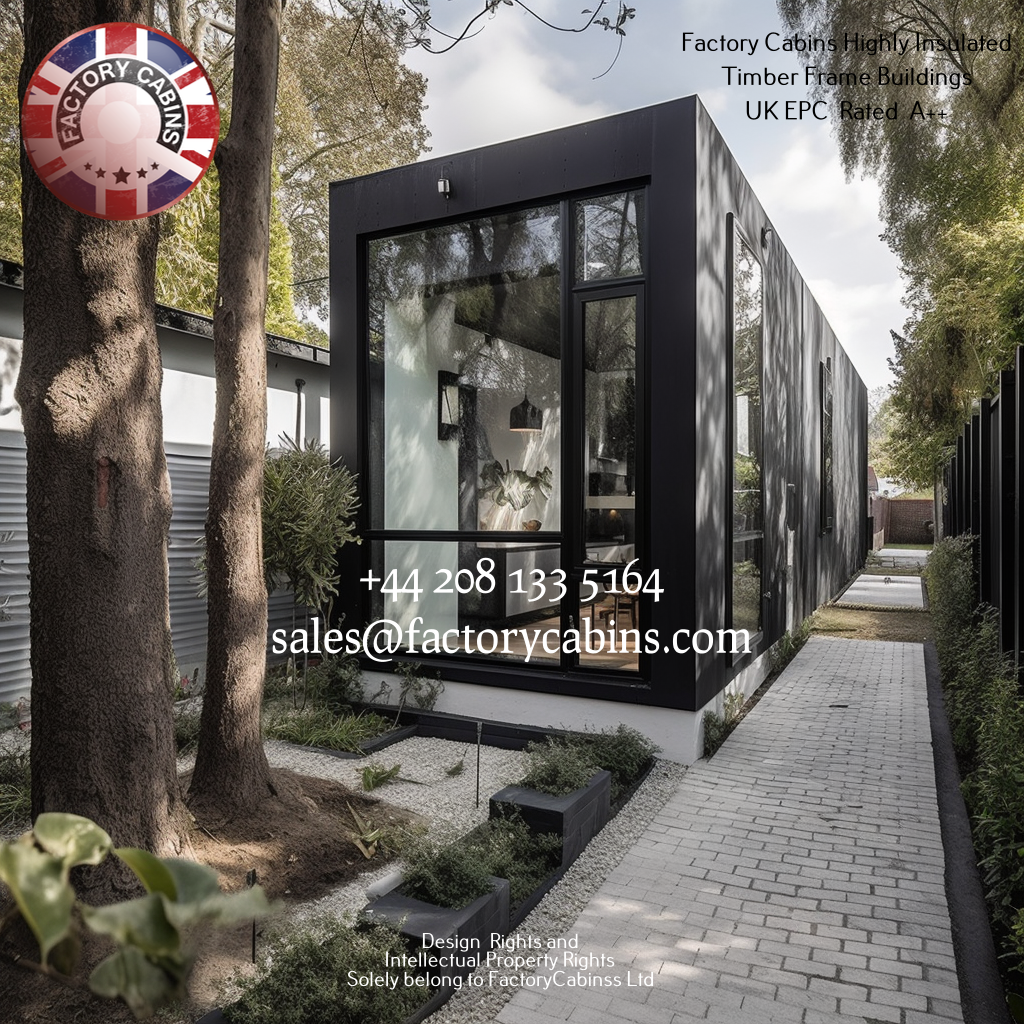
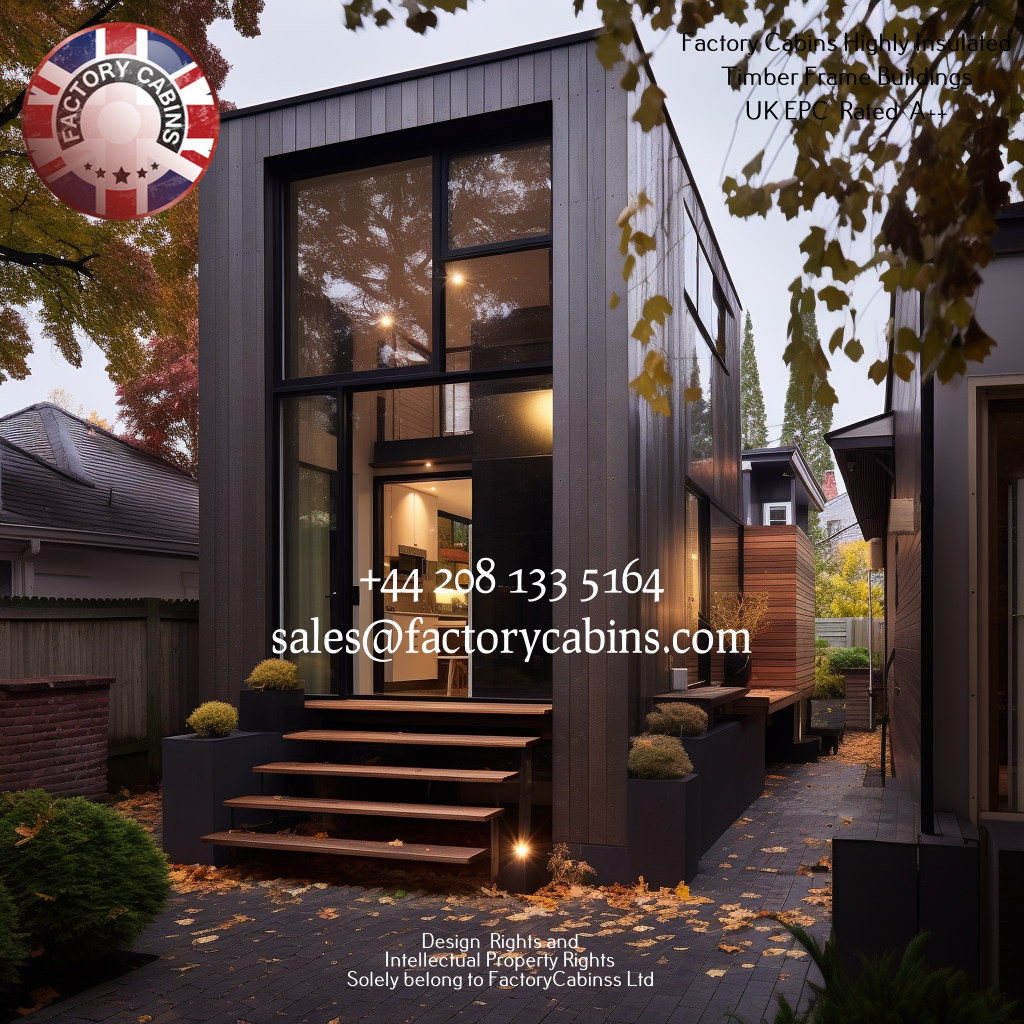
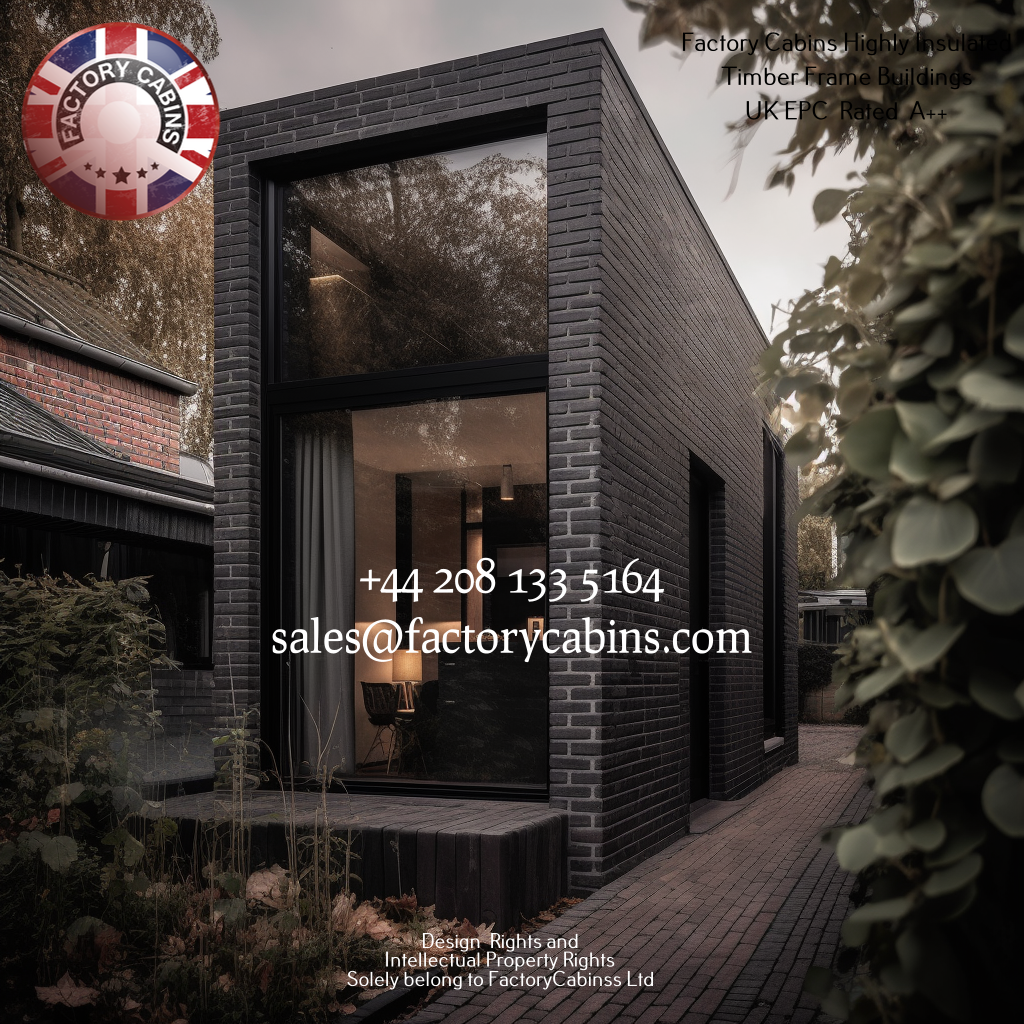
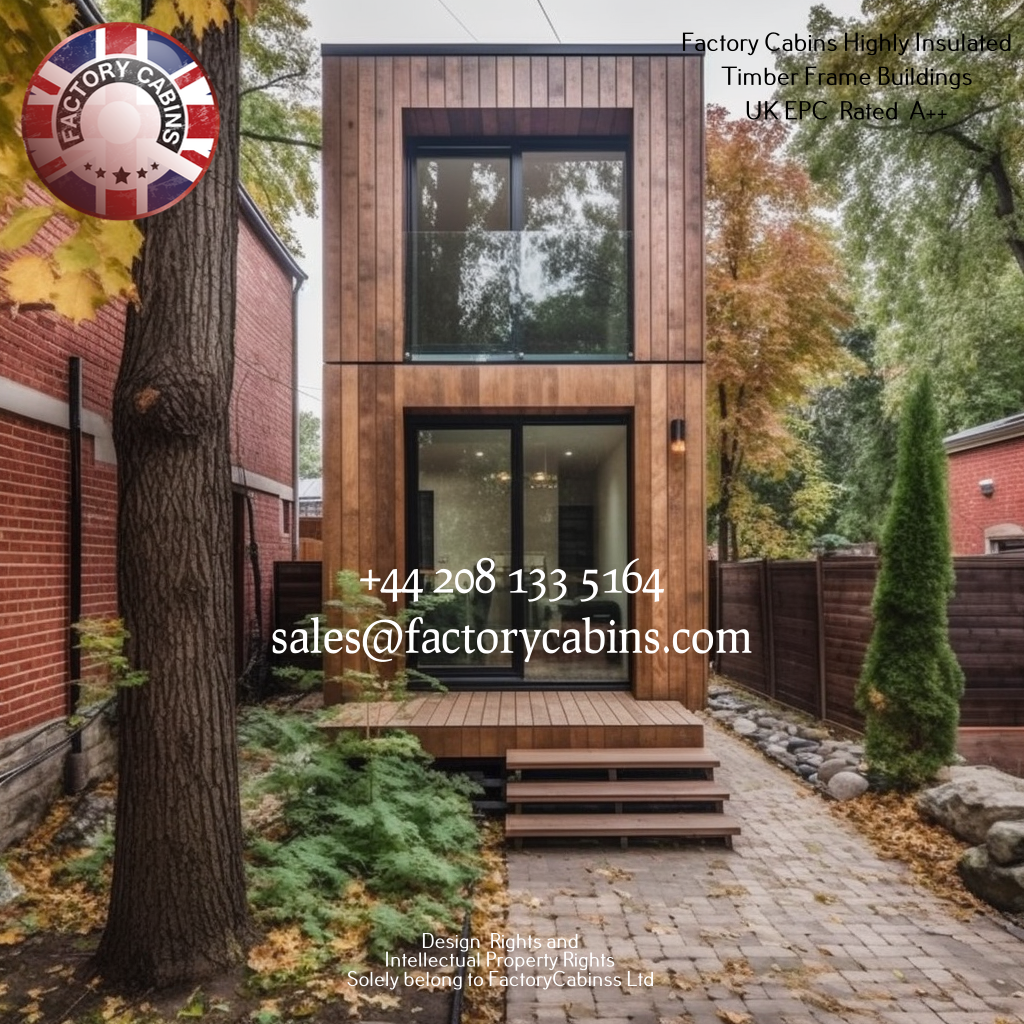
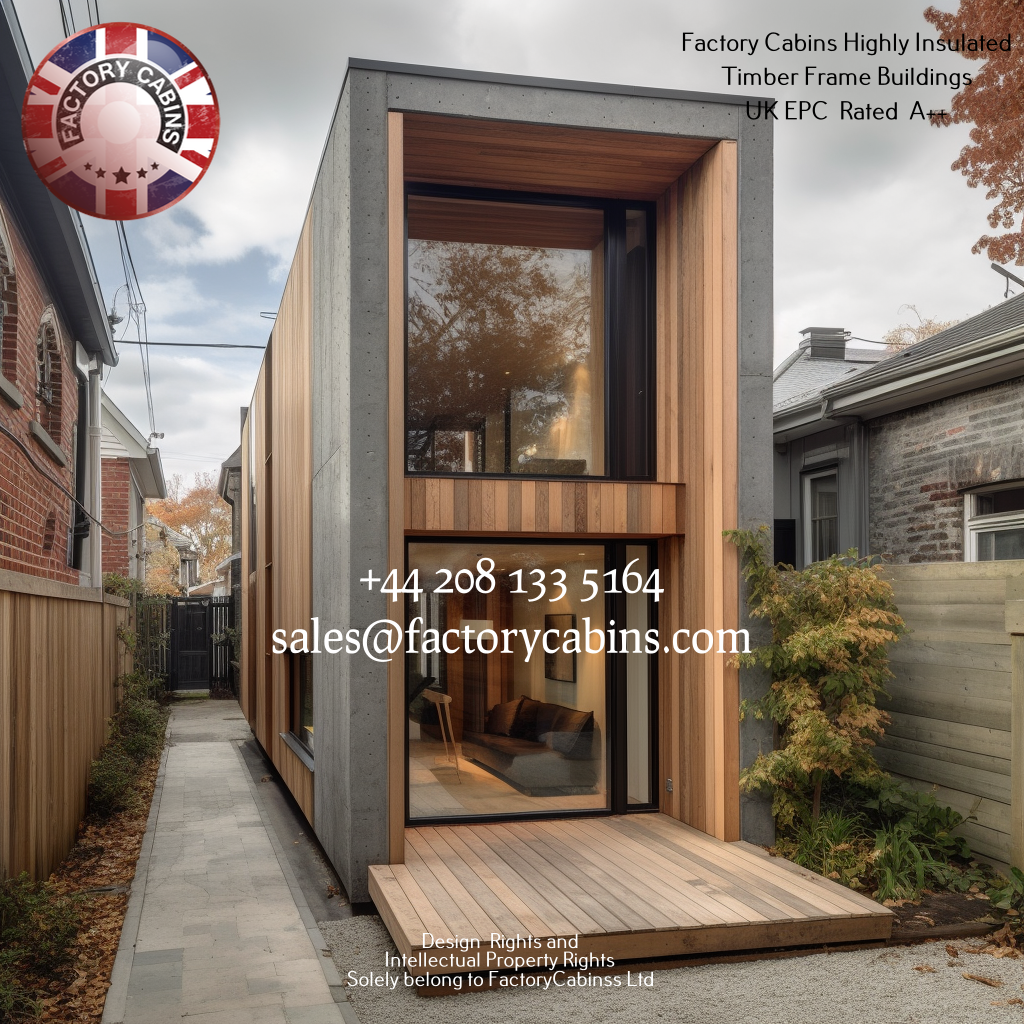
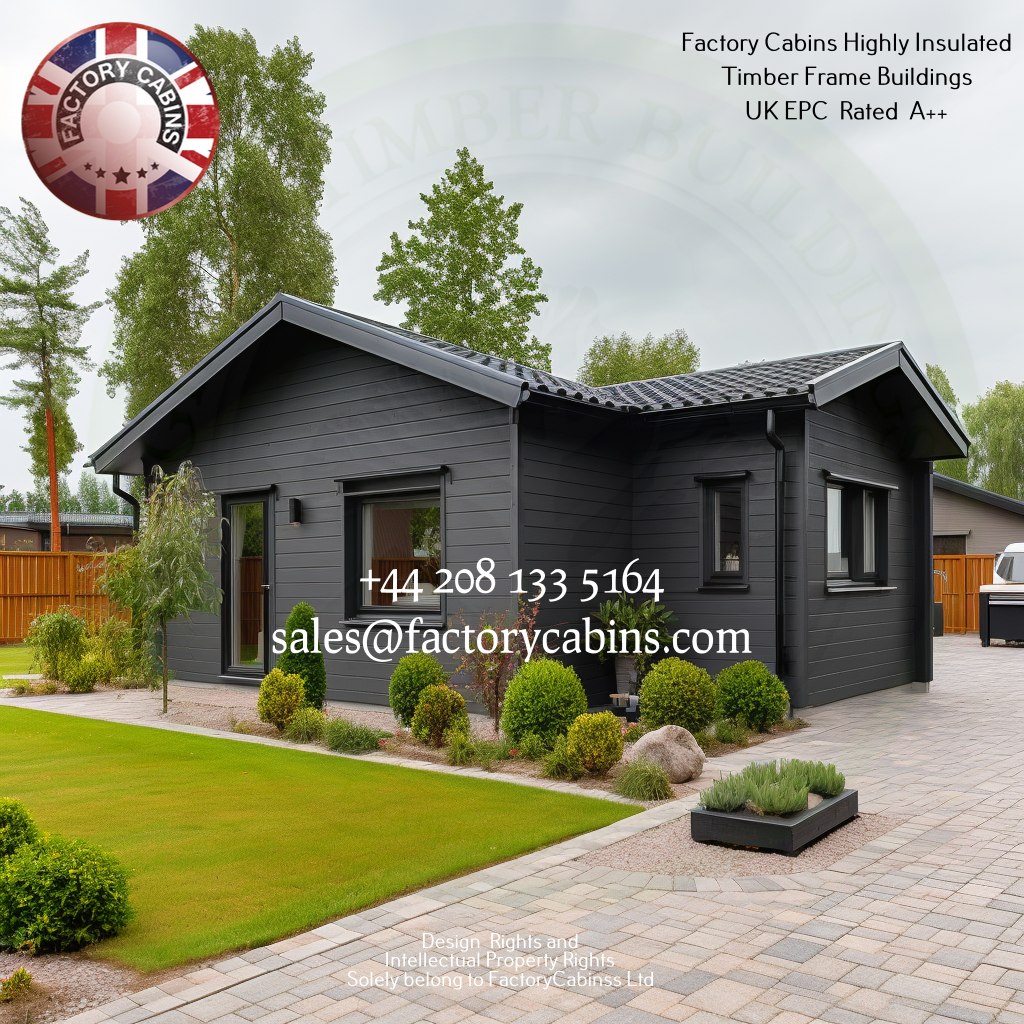
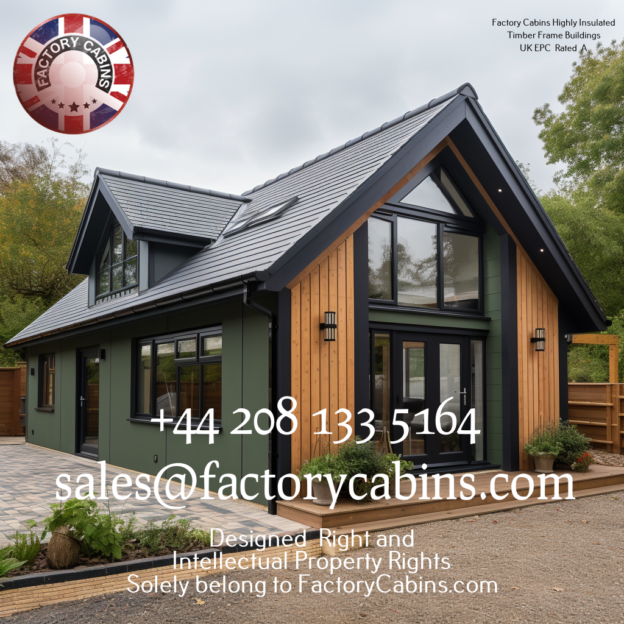
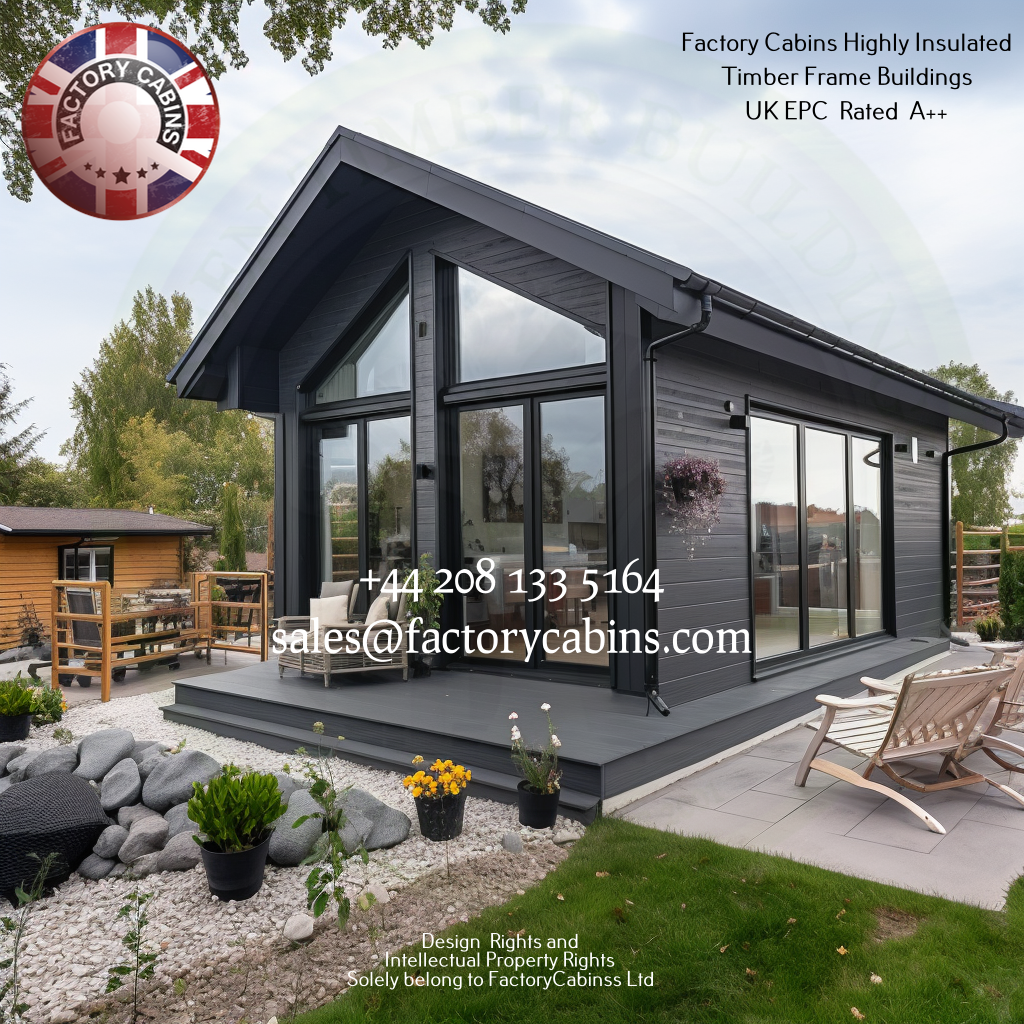
You’ve got choices, too. Maybe you love the bold look—black exteriors, brass fittings, sleek lines that stand out. Or, if something softer suits you, we can do cedar cladding that melts into the landscape. Inside is even more personal. Dream of a full chef’s kitchen? Want a minimalist retreat with hidden storage? Need a home office with a sweeping view? Maybe a big, relaxing bath? You decide everything, from where the windows go to which kind of floor feels right.
And outside, we’ll tailor the look to wherever you want to live. A tiny home for the Peak District might blend into the hills. One for Cornwall’s coast will resist rough weather. Bringing one into the city? We’ll make it fit—with a contrast or a complement to your main home.
Mobility, Mastered
Here’s the real difference: your home moves with you. We build on solid trailer chassis with the right wheels and brakes. So if you’re a young pro working near Dublin now but want to settle by a Welsh lake later, your house comes along. Retired? Spend the summer in the Highlands, then head south when winter bites.
If you work seasonally, dream of changing the view regularly, or want to stay close to different family members, this is huge. You’re never stuck the way you are with a permanent house. And if you’re thinking of extra income, you’ve got options—use your home yourself, or let it earn cash parked at the beach in summer or in the mountains during ski season.
Real Net-Zero Living
Building for net-zero isn’t just about slapping solar panels on the roof. It starts in the factory. Every piece fits exactly. No gaps, no cold bridges, no leaks. The frames are precise, the joints are sealed and tight, and it all works as a system.
Insulation is where it all starts. We go above legal requirements, so heat stays in and chills stay out, all year. Heating and cooling take a minimum of energy.
We build for renewables, not as an afterthought. Our roofs are ready for solar panels, wherever you park. We’ll add batteries for saving extra power, and heat pumps if you want to warm the house even in a cold snap.
Your home is smart, too. The tech inside learns how you live, balancing comfort and efficiency. You get feedback, real savings, and lower bills—without sacrificing comfort.
Water systems are next-level: low-flow fixtures, rainwater capture, greywater recycling if you want it. It’s not just greener; it’s cheaper. Imagine not caring about utility bills going up because you barely have them.
Every Comfort, No Compromise
A lot of folks think “tiny” means “cramped” or “basic”, but it doesn’t have to—especially with the right design.
Our weather in Britain and Ireland is, well, unpredictable. So, every home gets full waterproofing: cladding that laughs at storms, layers that breathe but don’t let water in, barriers to stop condensation. Your home stays dry. No mould, no mess.
For heat, air-source heat pumps keep you warm without eating up power, and backup options like wood stoves or electric radiators run smoothly on your solar supply.
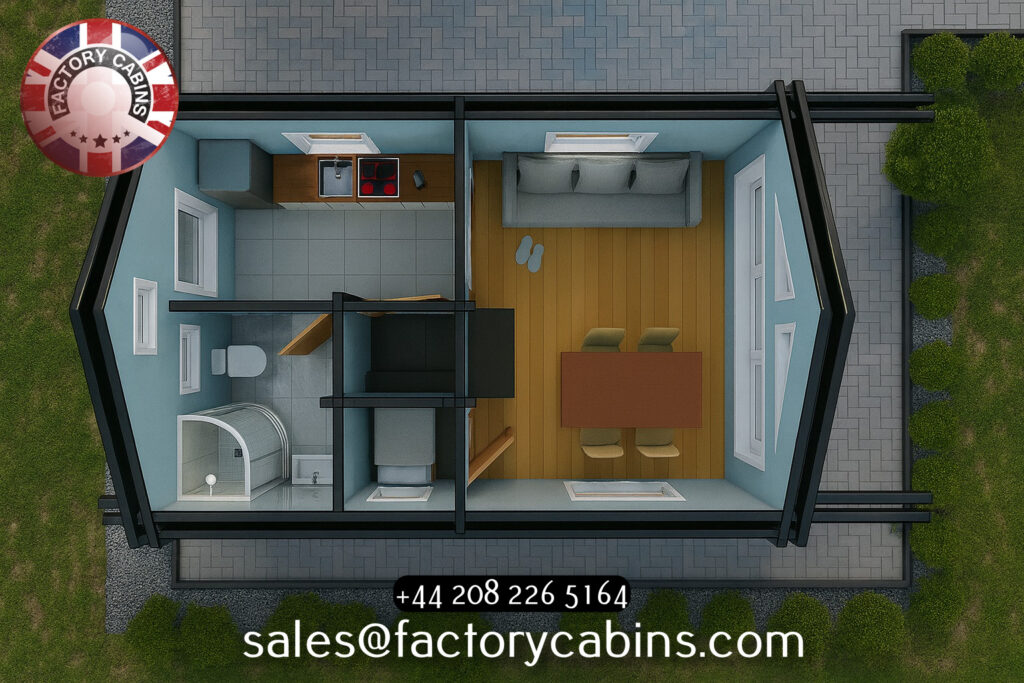
Bathrooms? They’re complete. Decent showers, proper toilets (including composting ones if you’re off-grid), storage, and good ventilation. Deep soaker tub or big shower? Your choice.
Love to cook? We’ll fit a real kitchen, sized to match your space—full- or apartment-sized gear, smart storage, and nice worktops. You don’t miss out just because your home is smaller.
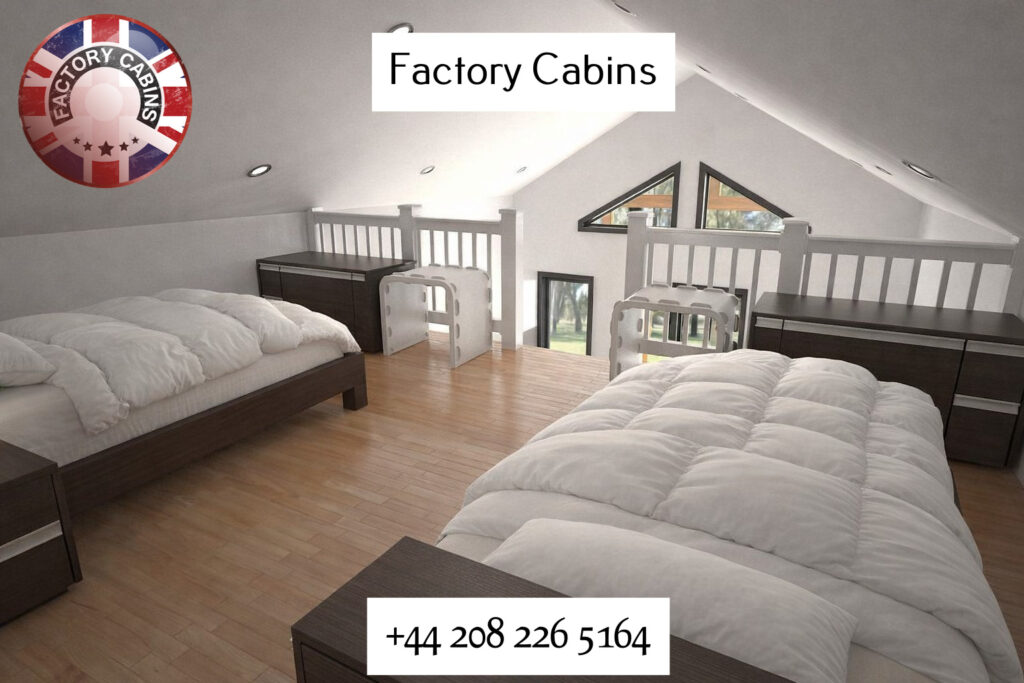
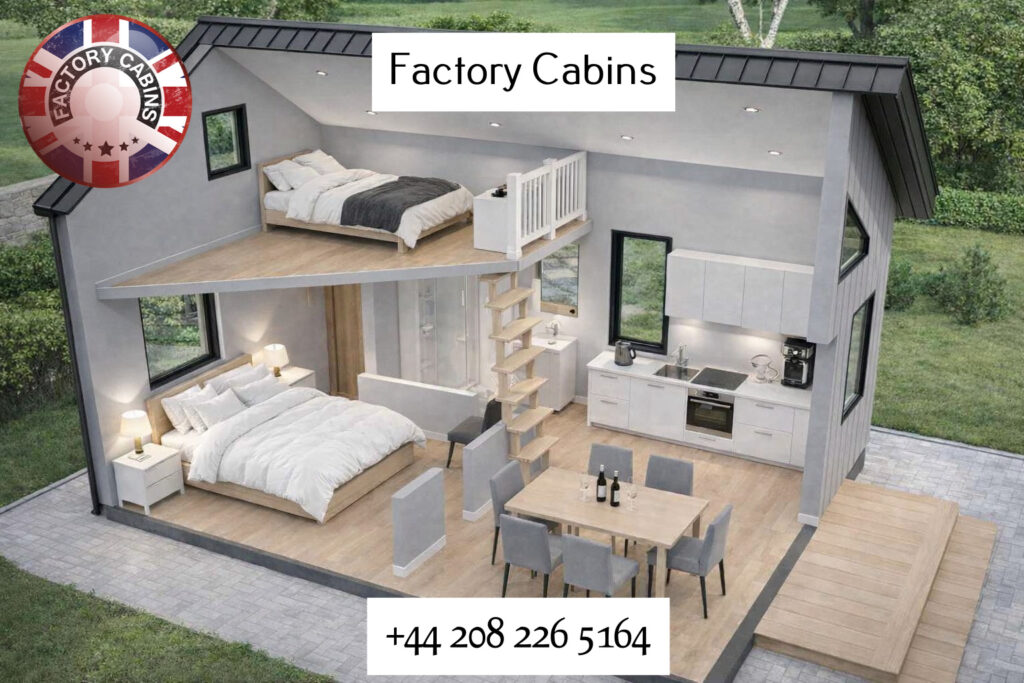
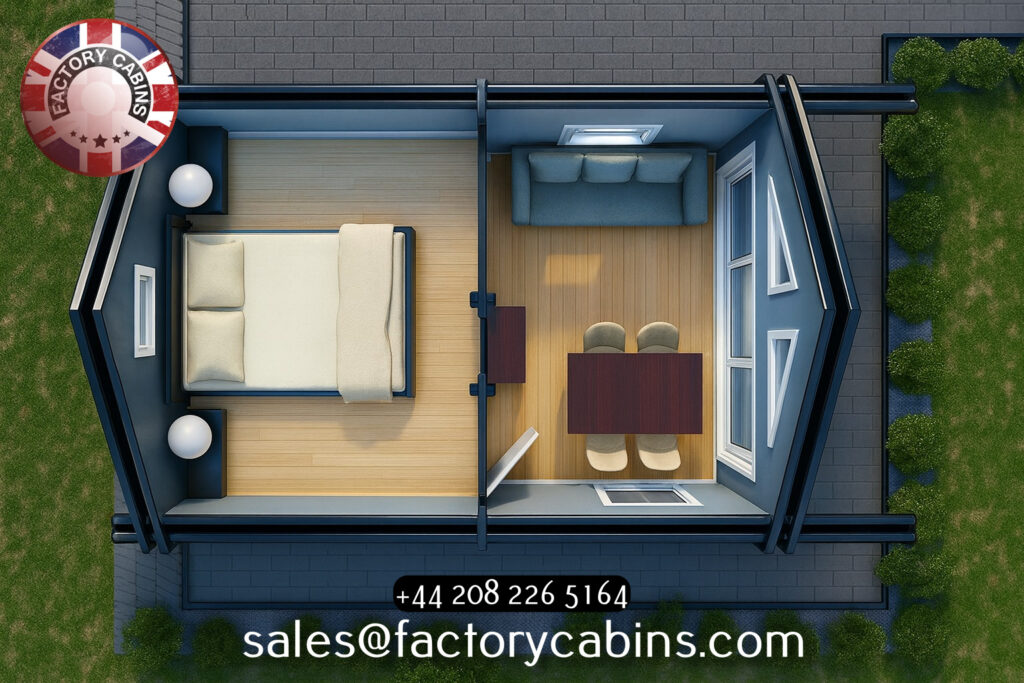
Living rooms are bright and comfortable, with lots of natural light. Flexible tables and seats mean you can host, work, or wind down. Beds are proper, too—ground-floor bedrooms with plenty of storage or lofts with character. Sleeping in a tiny home feels just as restful, wherever you park.
Live Where You Want
The most exciting thing? You don’t have to choose just one kind of spot. Put your tiny home in a back garden—it’s great for family or guests or as an office or studio. Regulations vary, but many installations go ahead with minimum fuss.
Campsites and holiday parks get it; they want quality, eco-friendly homes and residents who care. There are also rural plots for those who want real privacy or even a bit of smallholding. You might need planning permission to stay long-term, but for daily living or weekends, it’s freedom.
Communities all over—eco-villages, city plots, and intentional groups—are building around tiny homes, too. Cities are using them to solve big challenges, from affordable housing to homelessness.
Anywhere you want to live, we’ll find the way forward. Our team keeps up with all the planning differences—Scotland isn’t the same as Wales or Ireland, after all.
Start Your Tiny Home Story
Tiny homes aren’t just a passing fad—they’re a new way to beat the challenges of modern life. We mix time-tested buildings with the latest tech and listen closely to what you actually want.
Maybe you want out from under your mortgage. Maybe you want a lighter footprint. Maybe you’re just after the joy of simple, well-designed living. There’s a tiny home that fits your vision.
Picture waking up knowing your bills are low, your impact is light, and your home is exactly what you dreamed up. And if you get tired of the scenery, you just move on—with all the comforts you’re used to.
If you’re curious, let’s talk—seriously, we’ll listen. Bring us your ideas, big or small. We’ll bring the expertise and work together to build something that’s truly yours.
Ready to see where a tiny home can take you? Call Factory Cabins at +44 208 226 5164. Whether it’s a cottage in England, a hillside spot in Wales, a hideaway in Scotland, or a meadow home in Ireland, we’re here to help you build the future you want—small, sustainable, and full of possibility.
Please send us an email to sales@factorycabins.com
All bespoke designs are welcome. PLEASE call 020 8226 5164

The idea of living small is everywhere now. Scroll through Instagram, flip through a magazine, or listen to a podcast, and you’ll see these dreamy promises: step into a tiny, perfectly designed cube, sphere, or pod—embrace radical simplicity, toss out the mortgage, and forget about endless maintenance chores and wasted space. The “micro house” movement, as it’s sold today, is all about looks. It’s more about the aesthetic than the actual lifestyle. Once you get past those cinematic drone shots and minimalist setups, there’s a problem buyers are starting to notice: a lot of what claims to be “micro housing” isn’t anything of the sort. It’s expensive, overdesigned, and crammed into a small box, but it falls apart when real life moves in.
Highly Insulated Tiny Houses cost pennies to heat!
Strip away the marketing, and what you get is this: How should we really build small? Should we chase flashy shapes and custom everything, or stick to proven construction methods and simply size them down? More and more, the answer is timber-frame. When you do timber-frame right, a micro house isn’t a sacrifice. It feels like precision—it’s just a smaller, legitimate home that meets standards and keeps you comfy year after year. Unlike those geometric pods that only look good online, timber-frame micro homes survive daily life, time and time again.
The Illusion of “Micro” Housing
“Micro” used to mean something practical—a scaled-down home to lower costs, cut environmental impact, and make maintenance easier. Early pioneers figured out that downsizing meant rethinking storage, flow, and how the space could multitask. Then the movement went mainstream. Now “micro” is more about branding than actual design.
Tons of companies push structures between 200 and 400 square feet as “affordable micro homes,” but price them at $80,000, $150,000, or even higher. Add in prepping the land, utility hookups, permits, and delivery, and your total is often just as high—or higher—than an ordinary starter home. Many of these so-called micro homes come loaded with fancy appliances, custom woodwork, and designer fixtures, which totally contradict the whole “affordable” angle. They’re built for photos, not for real people.
And if you look closer, you’ll notice these designs ignore how folks actually live in a tiny space. Open layouts, perfect for an 800-square-foot apartment, turn chaotic in 250 square feet. Sleeping lofts with ladders aren’t ideal as you age. Thin walls and bad insulation make these places miserable in harsh weather. So what looks innovative on paper turns into a headache in day-to-day life. Buyers soon realize that living in a space designed only for looks means sacrificing comfort, storage, and functionality—constantly.
The Problem with Novelty Shapes
Maybe the biggest mistake in the micro-house scene is this obsession with weird footprints. Cubes, hexagons, cylinders, domes—these geometric pods are everywhere. Designers call these shapes “cutting edge,” “green,” or “space-saving.” But honestly, they create a bunch of issues nobody talks about until after you buy.
Furniture is the first big headache. The entire world of furniture, appliances, and building materials runs on rectangles and squares. Beds, cabinets, fridges, sofas, desks—even dry wall—all are sized for normal walls. Stick a standard bed next to a curved wall or a cube’s weird corner, and boom, you lose usable floor space. Corners die. You need custom furniture, which costs more and takes longer. What was sold as super-efficient ends up being anything but.
Thermal performance tanks, too. Curved or angled walls make insulation hard to install, create gaps, and make air sealing a nightmare. With rectangles, you get straightforward vapor barriers, continuous insulation, and HVAC that makes sense. Odd shapes need special climate controls—expensive, inefficient, and full of headaches. Cold areas? Condensation collects in curved walls. Hot climates? Weird roofs cook the interior. Building science rewards simplicity, not novelty.
Maintenance and construction just make things worse. Materials for those funky shapes mean long waits, more waste, and extra labor. Roofing, siding, windows, doors—they’re all custom, not off the shelf. If something breaks, you’re not popping over to the hardware store—you’re contacting the manufacturer, waiting weeks for a part, and paying more for the fix. Micro houses are supposed to simplify life—not pile on complexity.
Timber-Frame: Timeless Engineering, Scaled Down
Timber-frame stands out as the quiet solution, ignoring trends. It’s an old-school method, refined over centuries. Heavy wood beams connect with precise mortise-and-tenon joints, pegged together to make a self-supporting skeleton. The spaces between the beams get filled with insulated panels, SIPs, straw bale, or modern walls—but the wood does all the real work.
Timber-frame is perfect for micro housing because it’s honest. There’s nothing hidden behind drywall—the structure is the design. Shrink a timber-frame house to 200–400 square feet, and you don’t make it “cute” by removing features. You keep the proportional logic of real homebuilding and just reduce the excess. It’s a grounded, intentional, and highly functional space.
Timber-frame micro houses crush novelty pods in several key ways:
Structural Integrity: Heavy timber beams are great at handling wind, snow, earthquakes. You don’t need interior load-bearing walls, so layouts are flexible—even when the footprint’s small.
Thermal Efficiency: Because wood is doing the heavy lifting, exterior walls become thick insulation and weather shields. Modern timber-frame micro homes use SIPs or advanced infill that beat code requirements. You’re left with a tight envelope—comfortable all year, minimal energy needed.
Natural Material Benefits: Wood keeps indoor humidity steady, absorbs noise, and ages well. Steel pods sweat in humidity; concrete shells feel cold. Timber interiors are warm and breathable, making tiny spaces feel brighter and more welcoming.
Adaptability and Longevity: Timber-frame lasts forever. Tons of old timber buildings survive centuries with little maintenance. Build a micro house with solid joinery, moisture management, and good finishes, and you’ve got a long-term asset—not a short-lived trend.
Shrink a timber-frame house and you don’t lose what makes it feel like home—you concentrate it. Ceiling height stays right. Windows line up with your vision and sunlight. Roof sheds rain and snow well. The layout flows from entrance to living to sleep, no weird corners or dead spaces.
Building to Code vs. Building for Instagram
Here’s something people miss: codes. A lot of designer micro homes are pitched as “portable,” “temporary,” or “accessory units,” hoping to dodge residential building codes. But once you connect to water, sewer, electricity, or put the house on a foundation, the codes matter. For a reason.
Building codes aren’t just red tape—they’re the collected wisdom about fire safety, structure, electrical, plumbing, ventilation, and emergency exits. Ignoring these standards isn’t clever—it’s dangerous. Bad window placement can kill in a fire. Low ceilings or steep stairs cause daily hazards. Undersized electric panels trip with normal use. These aren’t abstract—they’re what owners of “almost legal” pods deal with every day.
Timber-frame micro homes, properly designed and built to code, sidestep these issues. They have safe windows for escape, correctly sized electrical, vented roofs, moisture-proof foundations, and insulation that beats local energy standards. They can be permitted, financed, insured, and appraised just like any regular home. That’s not just about legality—it’s about making life safe, livable, and secure.
Look at resale and financing. Banks and appraisers have a hard time with funky micro houses. Lenders often say no—forcing buyers into cash or high-interest loans. Insurance companies call them “alternative structures” or “park models”—leaving owners underinsured. A timber-frame micro home to code fits into standard lending and appraisal. It holds value because it meets quality, safety, and durability standards.
The Real Investment: Practicality Over Novelty
Buying a home isn’t just about the sticker price—it’s about the total cost over time, how well it works, and whether you can sell it later. Novelty micro homes fail on all three points. Custom parts bump up maintenance. Inefficient layouts mean furniture break down faster. If it doesn’t meet code, it’s tough to resell. Owners often find themselves spending more energy wrestling with the space than living in it—usually within two or three years.
A well-built timber-frame micro house plays a different game. Construction might cost more than a prefab pod, but over its lifetime you save. Standard windows, doors, fixtures—easy to replace. Good insulation and sealing keep energy bills steady. Strong joinery and finishes age nicely—not fast decay. The rectangular, code-compliant layout means furniture fits, storage works, and daily life flows without constant fixes.
Most important, timber-frame micro houses understand the psychology of living small. People don’t do well in experimental spaces—they do well in ones that feel reliable, comfortable, and organized. A proper 300-square-foot timber-frame design has an entry, kitchen with counter space, a well-ventilated bathroom, a living area big enough for everyday seating, and a restful sleeping zone. It makes smart use of vertical space—no daily circus tricks required. Windows are placed for daylight and breeze. There’s room for real life—laundry, groceries, books, shoes, seasonal stuff, and visitors.
That’s not giving up anything. That’s exactly what matters.
How to Choose or Build a Real Micro House
Thinking about a micro home? Slow down and be picky. Look past pretty pictures and marketing buzzwords—ask the tough questions:
Is it rectangular or close to it? Right angles aren’t dull—they’re practical. They fit furniture and maximize living space.
Does it follow residential building codes? Check for compliance—structure, electrical, plumbing, egress. If someone says “codes don’t matter,” just walk away.
Can you fit normal furniture? Get the floor plan with actual sizes. Try placing a real bed, sofa, table, wardrobe—if it doesn’t work, the design is broken.
What’s the insulation and sealing plan? Ask for R-values, vapor barrier details, HVAC specs. Tiny spaces make bad thermal planning obvious—and miserable fast.
Who designed it, and are they experienced? Look for licensed architects or engineers with a track record in small residential projects—not just exhibition booths or art installations.
Is it financeable and insurable? If lenders and insurers treat it like a novelty, you’re in for trouble later on.
When you look at timber-frame micro houses this way, the perks pile up. You’re not just buying a talking point—you’re buying a real home. Tiny, sure—but legitimate.
So!
The micro house movement doesn’t need more weird shapes or luxury finishes squeezed into 250 square feet. It needs honesty, practicality, and respect for real life. Timber-frame construction delivers all that: a method tested by time, scaled down, built to perform, and aging gracefully. It shows that small doesn’t mean fantasy—it means improvement.
As housing costs explode and we all care more about the environment, people will want sensible small homes. The winners won’t be the ones selling Instagram-worthy pods with hidden flaws. They’ll be the ones making timber-frame micro houses to code, ready to live in from day one, decade one, and beyond. Because a home isn’t just decoration. It’s shelter, sanctuary, and the foundation for life. Build it right, keep it small, and let the design work for you—not the other way around.
Please send us an email to sales@factorycabins.com
All bespoke designs are welcome. PLEASE call 0208 226 5164
Beyond Compromise: Why Your Next Insulated Log Cabin Should Come Direct from the Source FactoryCabins.com
For two plus decades, the British garden building market has maintained on the quiet, pure deception.
Behind the glossy brochures and “factory-direct” claims lies an uncomfortable truth: 98% of most log cabins sold across Sussex and Kent aren’t manufactured locally at all.
They’re mass-produced in anonymous Baltic factories, shipped by trucks, and rebranded, by UK, Irish middlemen who add 40–60% markups without adding a single thought, not all images and photos you see on the web truly represent exactly what you think you are purchasing, please just check out our blog.
Worse still, many of these suppliers are offering designs they never created and can never truly stand behind their integrity or longevity, as purchasing a log cabin, in whatever shape or size from a mass cabin manufacture producer, that offer always low-quality, mass-produced rubbish, that will 99.9% have missing parts, awful windows and doors, and manufactured using quick grown pine! FACT!
“We pioneered the interlocking log cabin designs that define the industry—and we continue to innovate with cutting-edge twin-skin solutions you can truly trust. Quality and integrity always come first.
There is a different path. One that honours craftsmanship, respects the customer’s intelligence, and delivers genuine value by cutting out the rebranding layers entirely.
This path leads not to a UK warehouse, but to Lithuania—where Factorycabins.com has been engineering precision interlocking log structures since before the term “log cabin” became a garden centre cliché.
From Brighton to Margate, to discerning homeowners are discovering that the finest insulated cabins for sale in Sussex and Kent don’t come from British soil—they come directly from the European source that invented many of the designs now copied across the internet. Like the clock house, and twin skin system, and so much more.
This isn’t about geography. It’s about integrity. When you buy direct from the original designers and manufacturers—not resellers—you receive more than a building. You receive accountability, authenticity, and engineering honed over years of genuine innovation and not forgetting, lower pricing.
The Design Legacy: How Lithuania Shaped the Modern Log Cabin Market
Before “log cabin” became synonymous with flimsy garden sheds, a quiet revolution was unfolding in the Baltic states.
While UK suppliers focused on importing basic timber kits, English -Lithuanian engineers—including our team at Factorycabins.com which is a group of English Guys—were pioneering the interlocking corner systems, precision-milled profiles, and structural innovations that now define quality log construction worldwide.
We were among the first European manufacturers to perfect the true interlocking log system—where each timber profile locks mechanically with its neighbour without relying on nails or brackets for structural integrity.
This wasn’t a minor refinement; it was a fundamental reimagining of how timber buildings withstand wind load, thermal movement, and decades of British weather. The tight-fitting saddle notch, the double-tongue wall profile, the self-aligning window rebates—all these features now commonplace online originated in workshops like ours, where engineers understood that a log cabin’s longevity depends entirely on joinery precision.
Today, scroll through any UK garden building log cabin websites and you’ll see strikingly similar designs: cabins with porches, the panoramic window studio, the L-shaped corner configuration with integrated veranda. clock house log Cabins, twin skin log cabins, and to manufacture a Twin Skin properly so that it moves as one, and shrinks as one, our first attempt at manufacturing a twin skin was very much like trial and error, and testing went on for about 4 months, till we understood, how joining two separate logs with notching could work, and last the test of time, this is where using the latest CNC machines, and common sense worked well together.
We don’t claim every design—but we do claim authenticity. When you order from Factorycabins.com, you’re not buying a copy. You’re acquiring the original engineering, manufactured by its creators, delivered without the markup of three distribution layers.
This matters profoundly for performance. A copied design loses nuance in translation. Wall thicknesses get reduced. Corner tolerances get widened for “easier assembly.” Insulation cavities get omitted to cut shipping weight. The original engineering intent erodes. But when you buy from the source—from the team that solved these challenges years ago—you receive the complete vision: every millimetre calibrated, every joint engineered for longevity.
Twin-Skin Technology: Perfected for British Climates
What transforms a seasonal novelty into a year-round living space? Insulation—but not the superficial kind added as an afterthought to single-skin walls. True thermal performance demands integrated engineering. This is where our Lithuanian manufacturing advantage becomes undeniable.
Since the ban on Northern Russian timber has come into effect our seasoned Spruce now comes from the Northern most Finnish-Swedish forests, Sweden, and Finland experiences continental winters far harsher than Britain’s maritime climate.
Our engineers design for -25°C—not for occasional frost. This rigorous standard creates twin skin log cabins that perform effortlessly across Sussex and Kent’s milder seasons while remaining comfortable during unexpected cold snaps.
Our twin-skin log cabin system 44mm + 44mm or 70mm + 70mm walls with a precision cavity filled with high-grade insulation delivers U-values as low as 0.18 W/m²K. To contextualise: standard UK building regulations for new homes require 0.30 W/m²K. Our garden cabins exceed residential standards because they were engineered for Lithuanian-Russian-Swiss-Finish-Swedish-Norwegian winters.
The physics is uncompromising.
Single-skin cabins—even at 70mm thickness—cannot match this performance. Timber alone provides limited insulation; beyond 44mm, additional thickness yields diminishing thermal returns while increasing weight, cost, and settlement risk.
Our twin-skin approach solves this elegantly: two structural skins separated by a dedicated insulation zone. Heat cannot bridge the cavity. Moisture cannot penetrate the vapour barrier which is attached to most quality insulation slabs.
The result is a building that stays warm in January and cool in July—with minimal energy input.
For homeowners in coastal Kent or the clay soils of the Weald, this isn’t luxury—it’s necessity. Condensation destroys timber from within. Mould compromises air quality.
Seasonal usability wastes your garden’s potential. Our cabins eliminate these failures at the design stage because we learned these lessons decades ago. What British suppliers now market as “innovative insulation” has been standard practice in our workshop since the early 2003.
Scandinavian Spruce: Sourced Responsibly, Processed with Precision
Timber quality separates enduring structures from disposable kits. While mass-market suppliers use fast-grown pine with high resin content and unpredictable shrinkage, we specify only slow-grown Scandinavian Spruce—sourced from FSC-certified forests in Sweden and Finland, then precision-milled in our Lithuanian facility.
Why spruce? Density and stability. Spruce’s tight growth rings—formed during harsh Nordic growing seasons—deliver superior dimensional stability compared to pine. When humidity shifts between Sussex’s damp autumns and dry summers, spruce moves minimally.
Pine warps. Spruce endures. This stability is non-negotiable for twin-skin construction, where alignment between inner and outer walls must remain perfect for decades. A warped log compromises the entire insulation system. We refuse that risk.
Our CNC machinery—calibrated daily to ±0.1mm tolerances—transforms this premium timber into precision components. Every notch, every rebate, every window aperture is milled to exacting specifications. This isn’t automated cutting alone; it’s automated craftsmanship. The same engineering team that designed our interlocking systems oversees production, ensuring digital precision serves structural intent. When your cabin arrives in Kent or Sussex, every log fits as intended—no forcing, no gaps, no “settling adjustments” required after assembly.
Glulam Joinery: Windows and Doors Engineered for Coastal Realities
A cabin is only as insulated as its weakest point. For most imported kits, that weakness is the glazing—thin single-pane units with plastic hardware that corrodes within months near Brighton or Margate’s salt-laden air.
Our solution: joinery-grade glulam (glued laminated timber) windows and doors, manufactured to German standards and fitted with toughened double glazing as standard. Glulam’s engineered layers counteract natural timber movement, maintaining perfect alignment through humidity cycles that warp solid timber frames.
Multi-point locking systems use stainless steel components resistant to coastal corrosion. Tilt-and-turn functionality—standard on every aperture—provides secure ventilation during summer storms or when leaving your garden office unattended.
These aren’t “cabin windows.” They’re the same specification used in Scandinavian residential construction. When you close one, you hear a solid seal—not a rattle. You feel smooth operation through seasons of use.
Most importantly, you experience genuine thermal continuity: the window’s U-value matches the wall’s performance, eliminating cold bridging at the most vulnerable junction. In an insulated cabin, this integration isn’t optional—it’s essential.
Direct From Source: Eliminating the UK Middleman Markup
Let’s address the geography question honestly: we manufacture in Lithuania. We do not operate a UK factory. And this transparency is your advantage.
UK-based “manufacturers” often function as importers—they buy container loads of generic cabins from Baltic factories (was a time 80% was ours), add their branding, and sell at inflated prices.
You pay for their showroom in Tunbridge Wells, their sales team’s commissions, their warehousing in Maidstone. None of this improves your cabin’s quality. It only increases your cost.
By ordering direct from Factorycabins.com:
You eliminate the importer’s margin: No UK company buying containers and rebranding
You eliminate the distributor’s markup: No regional warehouses adding handling fees
You eliminate the retailer’s overhead: No garden centre taking 50% to display a model
Instead, your investment flows directly into materials and craftsmanship. We handle logistics ourselves—shipping your bespoke cabin from our Lithuanian workshop to your property in Sussex or Kent with professional transport partners. Assembly can be arranged through vetted local teams who follow our precise protocols, or we provide comprehensive guidance for competent DIY installation.
This model delivers two benefits simultaneously: premium European engineering at prices that undercut UK-branded competitors. You receive the original design—not a degraded copy—without paying for British overheads that add cost without value. When suppliers claim “British-made,” ask whether they manufacture or merely import and rebrand. The distinction determines your cabin’s longevity.
Versatility Without Compromise: From Garden Office to Passive Income
What defines a building’s value? Usability across all seasons. Our twin-skin insulated cabins deliver this consistently—whether positioned on a coastal plot near Whitstable or nestled in the High Weald near Tunbridge Wells.
The Professional Garden Office Hybrid working demands genuine workspace—not a freezing shed you abandon each November. Our cabins maintain comfortable temperatures with minimal heating (typically 1.5kW suffices even in January). Position your desk to capture morning light through glulam tilt-and-turn windows. Run services through insulated cavities during installation. Create a workspace that enhances productivity 365 days a year.
The Holiday Let Investment Coastal Kent and East Sussex boast Britain’s strongest short-let markets. A high-quality insulated cabin often qualifies as permitted development—providing instant rental inventory without full planning permission. Our clients in Rye, Hastings, and Folkestone report earning £800–£1,500 monthly from cabins let year-round (not just summer peaks) thanks to genuine thermal performance. This is passive income resilience—impossible with single-skin seasonal structures.
The Multi-Generational Space Families evolve. Teenagers seek independence. Elderly parents require ground-floor accommodation. Our bespoke service creates cabins tailored to human needs: internal partitions with proper insulation, wet rooms with underfloor heating provisions, kitchenette integrations. These aren’t sheds—they’re functional living spaces enhancing family dynamics without costly home extensions.
Why Sussex and Kent Homeowners Choose Lithuanian Engineering
The Southeast presents unique demands: coastal corrosion near Margate, clay soil movement in the Weald, conservation area restrictions in historic towns. Success requires buildings engineered for resilience—not cosmetic appeal alone.
Lithuanian manufacturing delivers this resilience inherently:
Coastal durability: Stainless hardware and stable spruce withstand salt air better than pine alternatives
Structural integrity: Interlocking joinery resists ground movement better than nailed constructions
Thermal performance: Engineered for harsher climates than Britain experiences
Design authenticity: Original engineering—not degraded copies of our pioneering work
We understand UK planning nuances across 15+ district councils. We advise on permitted development rights specific to Kent and Sussex. We provide technical documentation accepted by local authorities. Geography doesn’t limit service—commitment does. And our commitment is to deliver source-direct quality to every UK customer who values authenticity over branding.
The True Cost of “British-Branded” Cabins: A Maidstone Case Study
Consider two homeowners in Maidstone seeking a 4m x 5m garden office:
Sarah buys a £3,800 “British-designed” cabin from a Tunbridge Wells supplier. Unbeknownst to her, it’s a generic Baltic import rebranded with a UK label. She pays £750 for assembly. By November, gaps appear at corners. Condensation damages her equipment. She spends £1,100 adding interior insulation (reducing usable space). After 24 months, window hardware corrodes; timber shows early rot. Total investment: £5,650 for a deteriorating seasonal structure.
David invests £8,200 direct from Factorycabins.com—Lithuanian-manufactured, twin-skin 44mm-44mm, delivered to his Maidstone property. From day one, the space remains comfortable year-round. No condensation. Hardware operates smoothly through two coastal winters. After three years, the cabin performs identically to day one—his primary workspace 365 days annually. Total investment: £8,200 for genuine utility.
Sarah paid a “British premium” for rebranded mediocrity. David invested in original engineering without middleman markups. His cabin costs less upfront than Sarah’s deteriorating structure will cost long-term—and delivers exponentially greater daily value. This pattern repeats across Sussex and Kent: the cheapest price today becomes the most expensive decision tomorrow.
Your Invitation: Experience Source-Direct Authenticity
We don’t operate showrooms in Brighton or Canterbury. We don’t employ commissioned sales staff. What we offer is more valuable: direct access to the engineers who design and manufacture your cabin. Full bespoke available.
We invite you to:
Review our design archive—the original interlocking systems copied across the internet
Request a bespoke quote based on your exact Sussex or Kent property requirements
Speak directly with our design team in Lithuania (fluent English speakers) to discuss integration with your site
Examine material samples shipped to your UK address before ordering
No pressure. No fabricated scarcity (“only 3 left!”). Just honest consultation about how authentic Lithuanian engineering can enhance your garden’s utility for decades.
Value Flows from Source to Site—Not from Branding to Buyer
The garden building industry thrives on obfuscation: hiding origins, inflating specifications, rebranding imports as “British.” This model serves suppliers—not customers. It creates a cycle of disappointment where structures fail quickly, forcing replacement rather than delivering decades of service.
We reject this entirely. By manufacturing twin-skin insulated cabins at the source—in Lithuania where interlocking log engineering matured decades ago—we deliver buildings that perform as living spaces, not seasonal novelties.
We can also manufacture a fully timber frame net zero version, which means, savings from day one.
(( A compact net zero cabin timber frame —two bedrooms, bath, living space, kitchen—delivers exceptional ROI. Generate year-round passive income as holiday lets across Sussex and Kent. Minimal energy costs. Often permitted development. Rising demand for sustainable stays. Appreciates while larger properties stagnate. Small footprint, maximum returns: the smartest garden investment you’ll make.))
By selling direct to UK customers without middlemen, we make this quality accessible at honest prices.
This isn’t about nationality. It’s about authenticity. When you order a log cabin for sale in Kent or Sussex, you deserve to know its origins.
You deserve engineering integrity—not rebranded copies. You deserve materials specified for longevity—not for container optimisation. You deserve pricing that reflects manufacturing cost—not layered markups.
From Brighton’s seafront to Margate’s coastline, from the orchards of Kent to the hills of Sussex, your garden deserves better than compromise. It deserves source-direct engineering: twin-skin insulated cabins conceived and crafted by the pioneers of interlocking design, delivered without intermediaries, priced with integrity.
The finest cabins for sale in Sussex and Kent don’t carry British labels. They carry Lithuanian engineering—and the quiet confidence of knowing you’ve bought from the source, not the seller.
Ready to acquire an insulated log cabin engineered at source—not rebranded by resellers? Contact Factorycabins.com today for a bespoke consultation. We manufacture in Lithuania. We deliver across Sussex and Kent. We answer directly to you—the customer—not to middlemen. Let’s build something authentic together.
Please send us an email to sales@factorycabins.com
Welcome to the future of tiny home designs. They do not have to be expensive; they do not have to be on a trailer; and they do not have to look like tea chests stuck and gluled together. Our tiny homes are the future; they are amazingly insulated, built to last and truly are the tiny house future designs for 2024 and beyond.
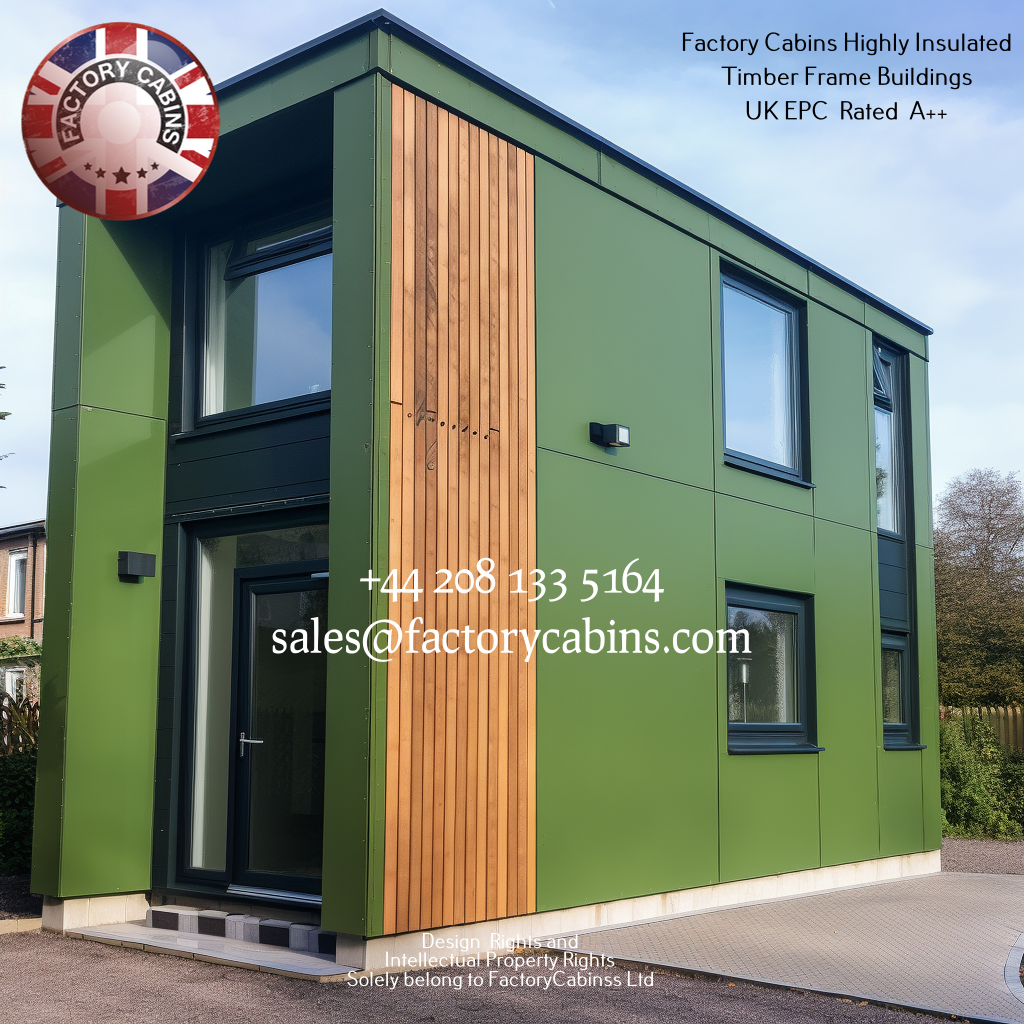
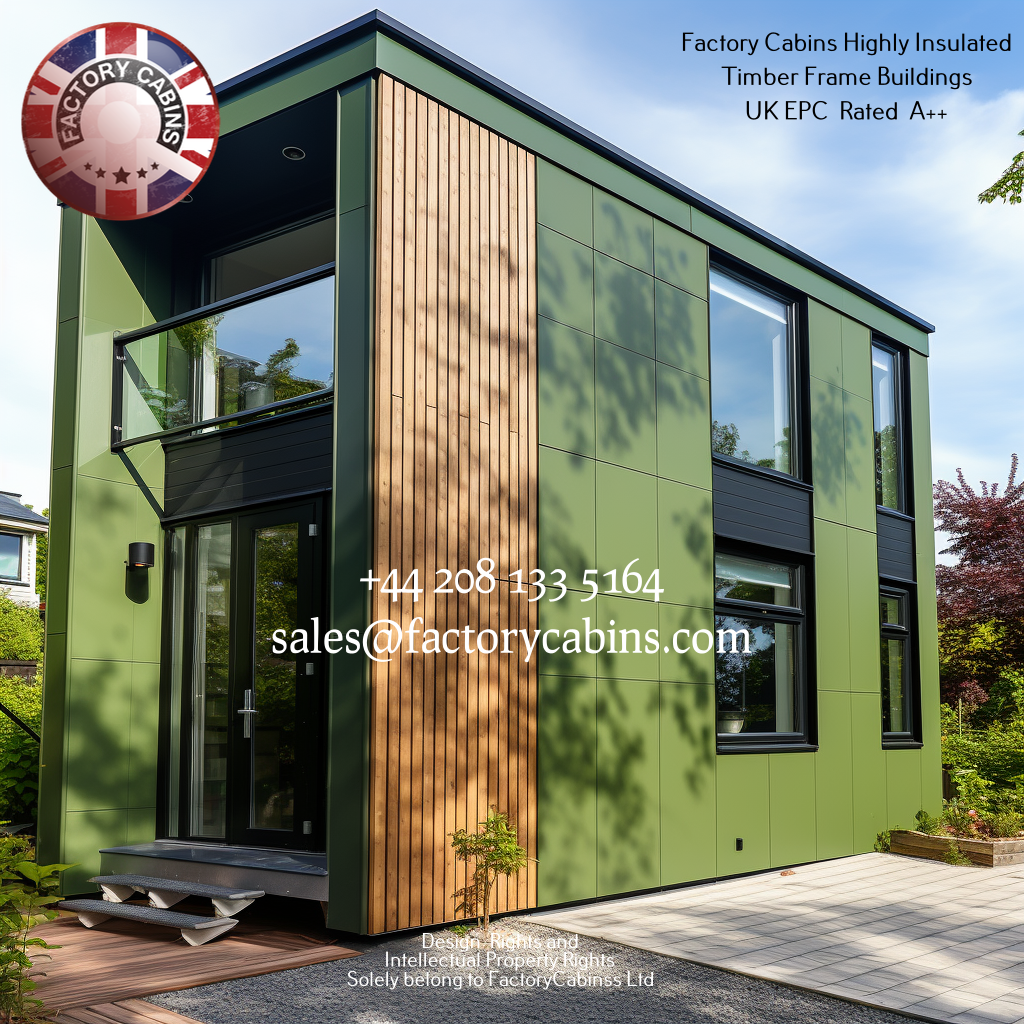
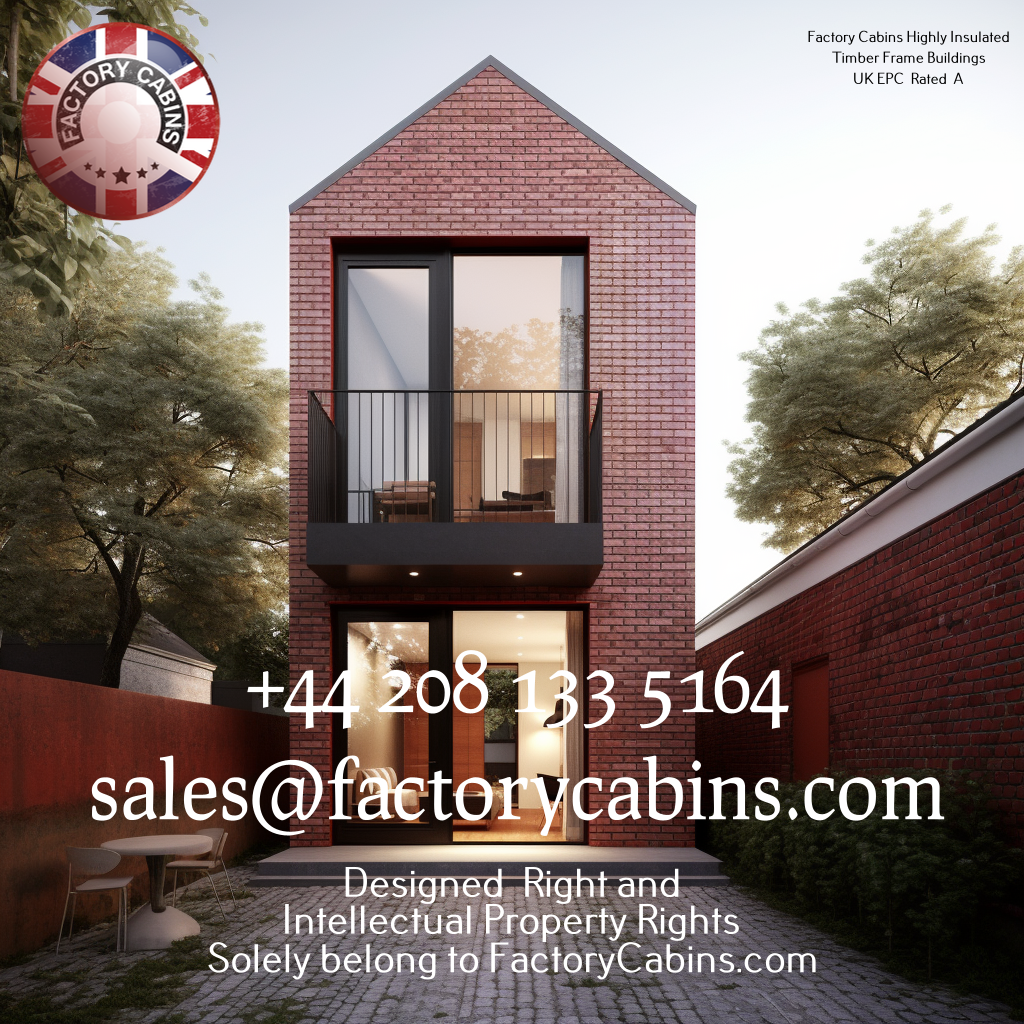
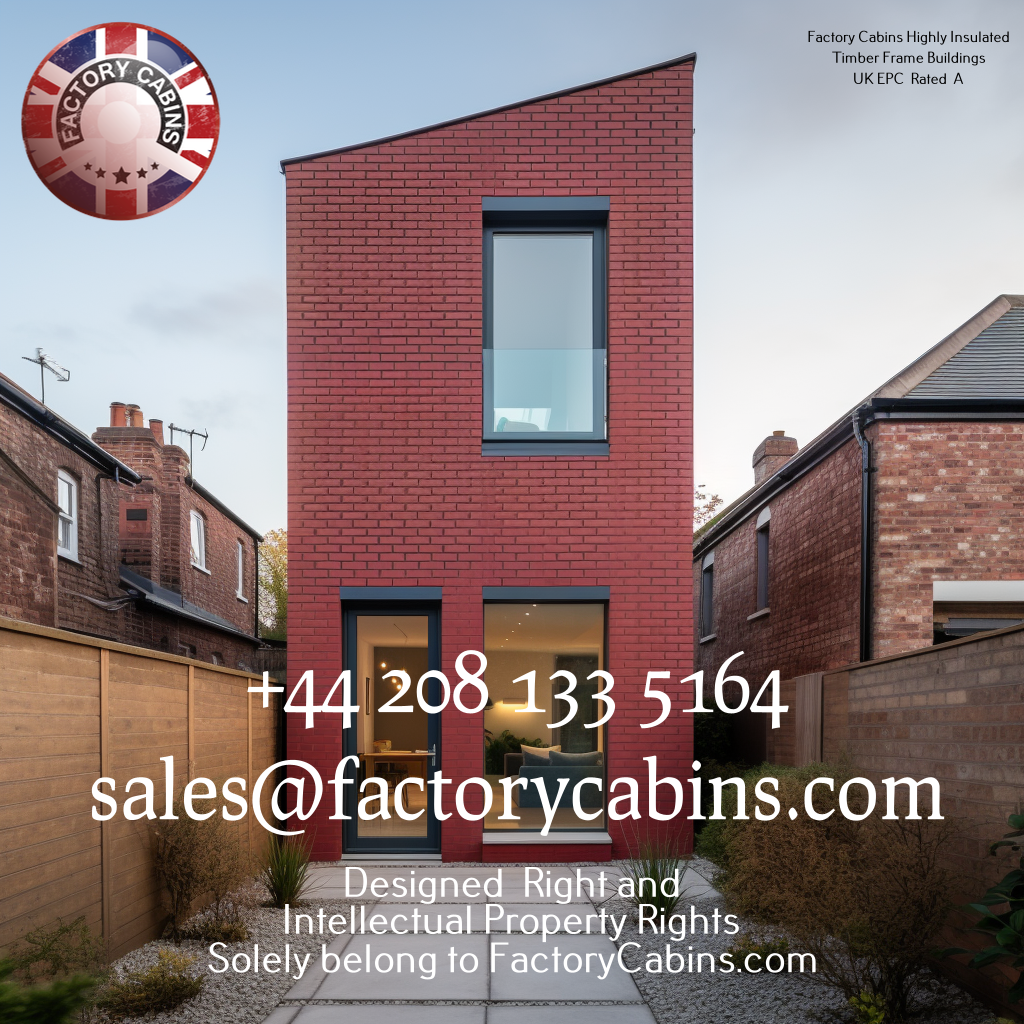
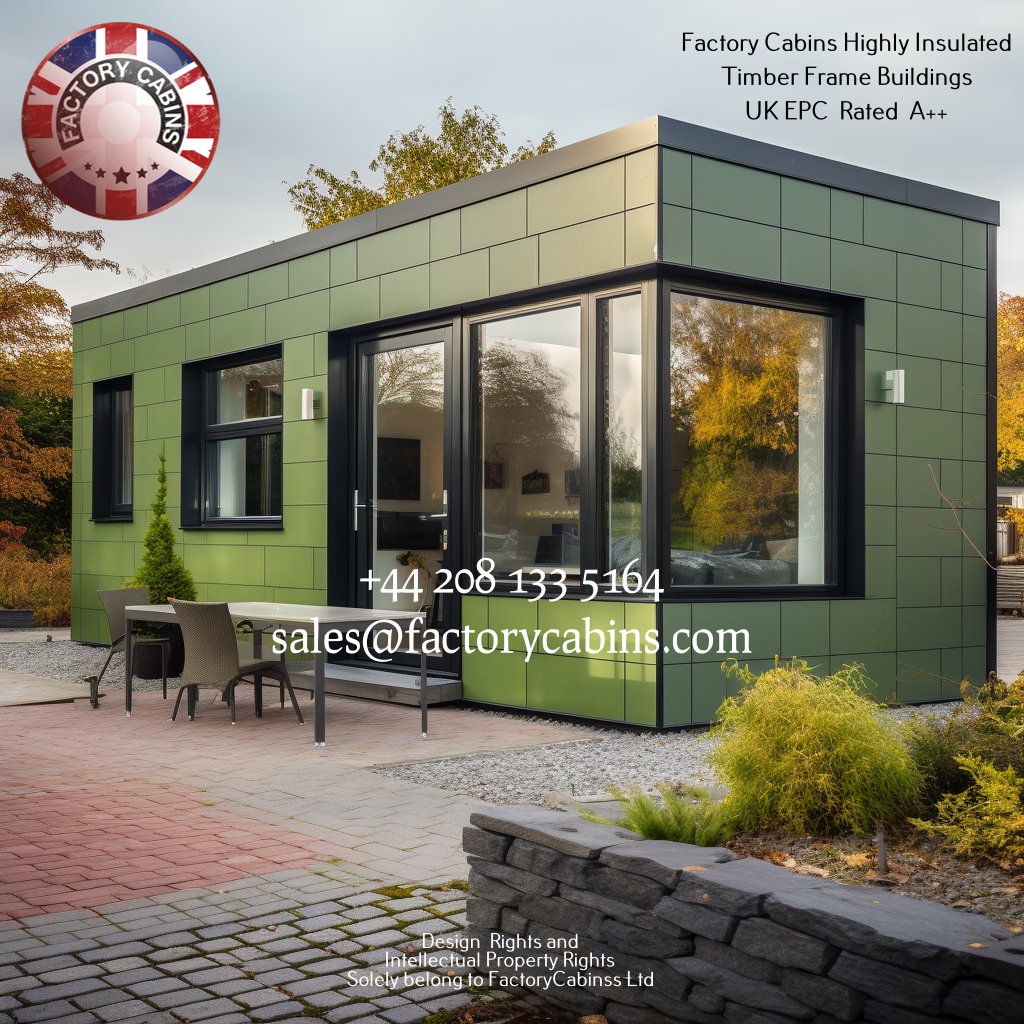
Most of our structures are clad with brick slips or some type of artificial external facia board, which lasts much longer than painted or treated natural timber, is much less expensive to maintain, and has the added benefit of being water proof, fireproofing, and insulating.
I. introductory paragraph A. Definition of Highly Insulated Tiny Homes B. Increase in Tiny Home Popularity C. Factory Cabins’ Role in Revolutionising Tiny Home Construction
II. The Advantages of Highly Insulated Tiny Homes
A. Energy Conservation 1. Use of Advanced Insulation Materials 2. Cost Savings on Heating and Cooling
B. Environmental Implications 1. Sustainable Construction Practises 2. Carbon Footprint Reduction
C. Economic Effectiveness 1. Lower Building and Maintenance Costs 2. Financial Advantages for Homeowners
III. Factory Cabins: Tiny House Construction Pioneers
A. Overview of Factory Cabins B. Benefits of Factory-Built Tiny Homes 1. Construction precision 2. Labour and Time Efficiency
IV. New Insulation Techniques
A. Intelligent Insulation Systems 1. IoT Integration for Climate Control 2. Materials for Adaptive Insulation
B. Insulation with Multiple Layers 1. The Advantages of Layered Insulation 2. Effective Implementation Examples
V. Design Factors for Highly Insulated Tiny Houses
A. Optimisation of Space 1. Intelligent Furniture and Storage Solutions 2. Making the Most of Vertical Space
Aesthetic Appeal 1. B. Trends in Exterior Design 2. Interior Design Techniques
VI. Overcoming Difficulties in Highly Insulated Tiny Houses
A. Ventilation Methods 1. The Value of Proper Ventilation 2. Ventilation System Innovations
B. Addressing Size Restrictions 1. Clever Design Tricks for Space Perception 2. Adding Outdoor Space to Your Home
Case Studies: Successful Factory Cabin Projects VII.
A. Notable Examples of Highly Insulated Tiny Homes B. User Testimonials and Experiences 1. Comfort and Liveability 2. Long-Term Contentment
Future Trends in Highly Insulated Tiny Homes VIII
A. Technological Progress 1. AI and Automation Integration 2. Eco-Friendly Building Materials
B. Customization Possibilities 1. Personalised Tiny House Plans 2. Catering to a Wide Range of Lifestyles
IX. Legal Considerations
A. Zoning and Building Regulations 1. Navigating Legal Obligations 2. Advocating for Tiny House Policies
X. Tiny Homes with High Insulation and Community Living
A. Tiny House Communities 1. Benefits of Collective Living 2. Social and environmental consequences
XI. Defending Against Common Misconceptions
A. Comfort vs. Size B. Limited Amenities C. Resale Value and Investment Potential
XII. Suggestions for Prospective Buyers
A. Investigating Factory Cabins B. Recognising Insulation Ratings C. Working with Design Professionals
Conclusion XIII.
A. Summary of Benefits B. Motivation to Investigate Tiny Home Living C. Closing Thoughts on the Future of Highly Insulated Tiny Homes
Factory Cabins’ well-insulated tiny homes
Tiny houses have grown in popularity across the world as a symbol of sustainable living and efficient use of space. The importance of insulation in small houses has become a focus point as the need for eco-friendly and cost-effective housing alternatives grows. This article delves into the intriguing world of highly insulated small houses, as well as the vital role that inventors like Factory Cabins have had in revolutionising their construction.
I. Introduction
A. Describe Highly Insulated Tiny Homes
Highly insulated tiny houses are compact structures outfitted with modern insulation materials and techniques in the field of design and housing. These houses place a premium on energy efficiency, environmental sustainability, and a low carbon footprint.
B. Tiny Houses are becoming increasingly popular.
The rise in popularity of small homes can be traced to a cultural movement towards minimalistic living, as well as a greater awareness of environmental problems. People are becoming increasingly interested in reducing and simplifying their lives, resulting in a boom in the tiny house movement.
C. The Impact of Factory Cabins on Tiny House Construction
Factory Cabins, as pioneers in the creation of tiny dwellings, have played a critical role in changing the housing scene. They have introduced accuracy, efficiency, and creativity to the production of highly insulated small homes by using factory-built processes.
II. The Advantages of Highly Insulated Tiny Homes
A. Energy Conservation
Use of Advanced Insulation Materials
Innovative insulation materials are used in highly insulated compact dwellings. These materials not only provide exceptional thermal resistance, but they also help to maintain a suitable home temperature all year.
Cost Savings on Heating and Cooling
Effective insulation in compact dwellings leads in considerable savings on heating and cooling costs. Homeowners may enjoy a comfortable living environment while reducing power expenditures to a low by minimising energy use.
B. Environmental Implications
Sustainable Construction Practises
The use of sustainable and eco-friendly building materials in well insulated small houses is in line with the global trend towards ecologically aware living. These houses are built with an emphasis on minimising environmental effect, from recycled insulation to renewable energy sources.
Carbon Footprint Reduction
Tiny dwellings, particularly those with extremely effective insulation, have a lower carbon footprint than regular residences. This reduction in environmental effect is a major element driving the appeal of tiny dwellings among environmentally aware people.
C. Cost-Effectiveness
Costs of construction and maintenance are reduced.
Factory Cabins uses efficient, simplified techniques to build tiny dwellings, resulting in lower total prices. Furthermore, because of the lower energy consumption and maintenance needs, properly insulated small houses are a cost-effective housing choice.
Financial Advantages for Homeowners
The financial benefits for homeowners go beyond the initial cost reductions. With lower utility bills and maintenance costs, living in a fully insulated tiny house becomes a more cost-effective option in the long term.
III. Factory Cabins: Tiny House Construction Pioneers
A Brief Overview of Factory Cabins
Factory cabins represent a paradigm shift in the construction business, notably in the tiny house category. Compared to typical on-site construction, these specialised facilities prioritise efficiency, quality control, and innovation.
B. The Benefits of Factory-Built Tiny Homes
Construction Precision
Precision in every stage of building benefits factory-built compact dwellings. The regulated atmosphere of a factory provides a high degree of precision in everything from framing to insulation installation, resulting in well-crafted and lasting homes.
Labour and Time Efficiency
The assembly line method of building small houses in factories greatly decreases the time and manpower necessary for each project. Skilled labour, specialised technology, and rigorous design all contribute to an efficient workflow, allowing Factory Cabins to create houses in a fraction of the time that traditional construction methods would need.
IV. Innovative Insulation Methods
A. Intelligent Insulation Systems
IoT Integration for Climate Control
With the incorporation of Internet of Things WIFI technology for climate management, well-insulated small houses are embracing the future. Smart insulation solutions enable homeowners to control temperature and energy consumption via linked devices, improving comfort and economy.
Materials for Adaptive Insulation
The use of adaptable insulating materials adds an additional level of intricacy. These materials modify their characteristics to offer appropriate insulation in response to environmental circumstances. This flexibility improves the overall effectiveness of the insulation, making it more sustainable and comfortable to live in.
B. Insulation with Multiple Layers
The Advantages of Layered Insulation
Multi-layered insulation is a feature of well-insulated compact houses. This method entails strategically placing several types of insulating materials to maximise performance. Among the advantages are improved thermal performance, acoustic insulation, and better durability.
Effective Implementation Examples
Case studies and real-world examples demonstrate the effectiveness of multi-layered insulation in a variety of tiny house designs. This strategy displays variety and adaptation in insulation measures, from avoiding heat loss in colder areas to minimising heat gain in warmer climes.
V. Design Factors for Highly Insulated Tiny Houses
A. Optimisation of Space
Intelligent Furniture and Storage Options
Maximising the usability of limited space is a key factor in the construction of a well-insulated tiny house. Multi-functional furniture and built-in storage, for example, play an important role in optimising living areas without sacrificing comfort or beauty.
Making the Most of Vertical Space
In compact dwellings, vertical space is frequently underutilised. Innovative design ideas emphasise the use of vertical space for storage, sleeping lofts, and other utilitarian spaces. This method guarantees that every square inch has a function, adding to the overall efficiency of the living area.
B. Aesthetic Value
Trends in Exterior Design
Despite their small size, properly insulated tiny houses have a variety of attractive external designs. Exterior cladding options, architectural features, and innovative material usage all contribute to these homes’ aesthetic appeal, making them visually appealing and adaptable.
Interior Design Techniques
Interior design ideas focus on producing a harmonious and visually pleasant atmosphere within the limits of a small house. Colour palettes, lighting, and layout all add to a sense of spaciousness and comfort, which improves the entire living experience.
VI. Overcoming Difficulties with Highly Insulated Tiny Houses
A. Ventilation Alternatives
The Value of Proper Ventilation
Proper ventilation is critical in highly insulated compact houses for preserving interior air quality and avoiding concerns like moisture and mould. This difficulty is effectively addressed by ventilation system innovations such as heat recovery ventilators (HRVs) and energy-efficient fans.
Ventilation System Innovations
Continuous research and development in ventilation systems for compact houses produces unique solutions. These technologies not only improve air quality but also help with energy efficiency, which aligns with the broader sustainability aims of well-insulated compact houses.
B. Addressing Size Restrictions
Clever Design Tricks for Space Perception
While compact dwellings have intrinsic physical limits, smart design tactics may give the appearance of additional room. Mirrors strategically placed, plenty of natural light, and open floor layouts are just a few of the architectural aspects that assist overcome apparent size limits.
Adding Outdoor Space to Your Home
Outdoor living areas increase the total footprint of well insulated compact houses. Decks, patios, and rooftop gardens provide extra locations for leisure and amusement, reducing the impact of restricted inside space.
VII. Successful Factory Cabins Project Case Studies
A. Examples of Notable Highly Insulated Tiny Homes
Highlighting individual Factory Cabins projects demonstrates the successful application of well-insulated compact houses. These case studies dive into the distinctive characteristics, design concerns, and technologies that distinguish these homes in the world of small home development.
B. Testimonials and User Experiences
livability and comfort
User reviews and experiences offer vital insights into the comfort and livability of well-insulated tiny houses. Homeowners tell their tales, describing the day-to-day challenges of living in a small yet well-insulated apartment.
Long-Term Contentment
Long-term contentment is an important factor in determining the success of well-insulated tiny houses. We acquire a full picture of the longevity, usefulness, and general contentment with these homes by evaluating the experiences of homeowners over long periods of time.
VIII. Trends in Highly Insulated Tiny Homes in the Future
A. Technological Progress
AI and Automation Integration
The combination of artificial intelligence (AI) and automation in highly insulated small dwellings is the future. Smart house technologies that learn and adapt to the preferences of its occupants, along with automated building processes, represent the next frontier in small home innovation.
Eco-Friendly Building Materials
Well-insulated small houses are more financially sustainable in the long run due to ongoing advancements in environmentally friendly building materials. The emphasis on ecologically aware choices remains a driving force in future trends, from biodegradable insulation to recycled construction components.
B. Options for Customization
Personalised Tiny House Plans
The desire for customised tiny house designs is increasing. Future trends will place an emphasis on the customization possibilities accessible to residents, allowing them to personalise their small houses to individual preferences, lifestyles, and practical needs.
Catering to a Wide Range of Lifestyles
Highly-insulated small houses are increasingly being constructed to accommodate a variety of lifestyles. Tiny houses may support a variety of living arrangements, whether for singles, couples, or families, thanks to customization choices and flexible floor designs.
IX. Considerations for Regulation
A. Zoning and Building Regulations
Getting Around Legal Requirements
A key component of incorporating well-insulated small houses into communities is navigating zoning regulations and building specifications. An examination of the regulatory environment reveals insights into the obstacles and potential for those looking to capitalise on this housing boom.
Advocating for Tiny House Policies
Collaboration between industry stakeholders, legislators, and communities is required for advocacy for tiny home-friendly policies. Activists who work to create regulations that support tiny home living contribute to the widespread acceptance and integration of well-insulated compact homes.
X. Tiny Homes with High Insulation and Community Living
A. Tiny House Communities
Collective Living Advantages
Tiny house villages provide a novel way to communal living. These communities’ residents benefit from shared resources, social places, and a feeling of community that extends beyond the individual house. Investigating the advantages of communal living broadens our understanding of the social elements of well insulated compact houses.
Social and environmental consequences
Tiny house villages not only build social relationships, but they also have a good influence on the environment. These communities contribute to a more eco-friendly and socially linked style of life by pooling resources and fostering sustainable practises on a communal level.
XI. Defending Against Common Misconceptions
A. Comfort vs. Size
The myth that smaller dwellings are less comfortable
is a prevalent stereotype that must be addressed. Despite their small size, well insulated tiny homes prioritise comfort via deliberate design, effective insulation, and inventive solutions. By dispelling this myth, we open the door for a more widespread acceptance of tiny houses as comfortable and liveable quarters.
B. Amenities are limited.
Another common misperception is that compact dwellings are lacking in vital amenities. Modern comforts are effectively incorporated into the small form of well insulated tiny houses. These homes provide a comprehensive living experience without compromising vital conveniences, from fully working kitchens to well-designed bathrooms.
C. Potential for resale and investment
Tiny house resale value and investment possibilities are frequently raised. Exploring real estate trends and the experiences of homeowners who have successfully sold their small houses offers insight on market dynamics while also dispelling illusions about long-term worth and potential return on investment.
XII. Prospective Buyers’ Guide
A. Investigating Factory Cabins
Track Record and Reputation
When considering the purchase of a highly insulated small house, it is critical to examine the reputation and track record of the factory cabin builder. Examining client evaluations, project portfolios, and general industry position can give vital insight about their dependability and quality of work.
Options for Customization
Investigate the modification choices provided by factory cabins. Examine whether they are compatible with your interests and lifestyle. A quality manufacturer should provide design freedom, allowing you to customise your tiny house to your exact needs and aesthetic choices.
B. Recognising Insulation Ratings
Thermal Performance and R-Values
Understanding insulation ratings, particularly R-values, is critical for appraising a small home’s thermal performance. R-values greater than one imply superior insulation. Prospective purchasers should become acquainted with these ratings in order to make educated judgements regarding the energy efficiency of their preferred property.
Considerations Regarding the Climate
Consider the climate where the small house will be built. Different insulating solutions are required for different climates. Based on the unique climate conditions of your chosen site, a qualified manufacturer should advise you on the best insulating materials and processes.
C. Working with Design Professionals
Working with design specialists like architects and interior designers may improve the overall look and functioning of your highly insulated tiny house. Their knowledge may help you maximise space, optimise layouts, and ensure that the design fits your lifestyle and interests.
XIII. Conclusion
A. Summary of the Advantages
And last, there are a number of benefits to the well-insulated tiny homes from Factory Cabins, such as cost-effectiveness, environmental sustainability, and energy efficiency. These homes debunk prevalent myths by offering pleasant living spaces with contemporary conveniences and financial opportunities.
B. Encouragement to Investigate Tiny Home Living
Prospective homeowners are urged to investigate the possibilities of tiny house living as the tiny home movement gathers popularity. The combination of novel insulation techniques and Factory Cabins’ knowledge opens the door to a more ecological, efficient, and enjoyable way of living.
C. Finally, some thoughts on the future of well-insulated tiny houses.
With continued breakthroughs in technology, design, and sustainability, the future of highly insulated tiny houses is bright. The tiny house movement is set to alter the future of housing in dramatic ways as more people embrace the concept of downsizing and living with a reduced environmental footprint.
Before we begin: Our Net Zero buildings are the pinnacle of excellence in the field of sustainable living. These buildings combine environmental consciousness with architectural ingenuity to create a masterpiece. We are reevaluating the idea of micro dwellings at the same time that we are launching a brand-new age of Net Zero New Builds. Our goal is to establish a new benchmark for ecologically responsible ways of life.
The Importance of Achieving a Net Zero Impact on the Environment
Increasing the Productivity of Solar Power
Our Net Zero buildings make strategic use of cutting-edge solar power technology to reach the highest possible levels of energy efficiency. The photovoltaic panels, which are set in such a way as to get the most possible exposure to the sun, convert the light from the sun into a source of renewable energy, which enables you to power your home in a manner that is less harmful to the environment.
Design for Efficient and Intelligent Use of Energy
Each and every one of the square feet that make up our tiny houses is a work of art. We have spared no effort in lowering energy use and creating an environmentally friendly hideaway without sacrificing comfort. This includes installing energy-efficient equipment as well as insulation that helps to adjust temperatures inside the building.
Compare and contrast the factory cabins with the tiny homes.
Improvements Made in the Field of Energy Conservation
Our Net Zero Buildings go above and beyond the significant efforts made by Factory Cabins Tiny Homes to minimise their energy usage. Modern sustainable technology is integrated into our designs, resulting in lower carbon emissions and long-term financial gains.
Architectonic Capability
The architectural design of our Net Zero New Builds is at the cutting edge of current trends. Our buildings are designed to reduce their impact on the environment, and as a result, they elegantly mix form and function, revolutionising the aesthetics of sustainable living.
The Green Revolution: Net-Zero Energy Homes as the Foundation for a Sustainable Future
Materials for Construction That Don’t Emit Any Carbon
The fundamental framework of our Net Zero Buildings is the first step in our dedication to environmental stewardship. In an effort to lessen our impact on the environment and do our part to maintain a healthy planet, we construct our buildings using carbon-neutral materials.
Techniques of Waste Management on the Cutting Edge
The reduction of waste is a critical component of our strategy. The cutting-edge waste management equipment that comes standard in each of our Net Zero Homes helps to ensure that not even the tiniest bit of a carbon footprint is left behind.
Homes with a Net Zero Energy Impact for Everyone in the Living Future
Affordability as well as continued viability over the long term
Despite popular belief, our Net Zero Homes refute the idea that leading a sustainable lifestyle is more expensive. We were the first to pioneer affordable sustainability, making it possible for anyone to live a green lifestyle without compromising on its standards.
An Infographic Offering a Visual Overview of Net Zero Homes
Our commitment to excellence comes out when seen in the context of the Net Zero Buildings initiative. Our Net Zero Homes are a step in the right direction towards a more environmentally friendly future, from the use of solar energy to the implementation of efficient waste management. Join us in the green revolution, where luxury and environmental care meet, and together we will rethink what it means to live in harmony with one another.
Before we begin, please remember that Factory Cabins is able to offer a complete bespoke Net Zero, highly insulated timber frame building, be it an office, a garage, or a family home, from say 90 m2 to 3000 m2. A net zero highly insulated house is not available for £30.000; we only manufacture quality kits that start at say 100 m2, which are around £70.000 for net zero standard materials. The insulation level in these kits is far superior to anything on the market, as are the triple-glazed windows and doors. If the company you want to compare us against is not offering KD C24 FSC everywhere, then forget about them. Its not apples against apples; it’s rubbish against quality. Any company that says they can offer a net zero house starting at £20.000 is a con, and their buildings will be absolute rubbish! If you are looking for a full turn-key option, please just ask. Net zero means something more than just at 7 letter word.
Our insulation.. 250mm in the floor cassette (standard) 300mm in the walls( standard) 350mm in the roof( standard)
Sustainable choices include timber frame kits and net zero houses. Implementing sustainable practises is more than a passing trend in today’s environmentally aware society. If you’re in the process of building your ideal house, you may make environmentally responsible decisions that are also good for your financial future. This article explores the topic of Net Zero Buildings, concentrating in particular on timber frame home kits due to their popularity in Scotland, affordability, and high popularity. So that you may make an educated choice about going green, we will guide you through the maze that is sustainable building.
Definition of Net Zero Energy Buildings Table of Contents Find out what it takes for a structure to be labelled “Net Zero.” A Green Option: Timber-Frame Buildings Investigate the eco-friendly advantages of timber-frame home kits. Profitable efficacy Find out how the energy efficiency of wood frame construction might help you save money. Budgetary Factors and Other Issues in Scotland Learn what goes into the cost of a timber frame kit for a house in Scotland. Why Customization Is So Enticing Learn how to build a one-of-a-kind house from scratch using wood frame kits. Increased Interest in Eco-Friendly Housing Investigate the buzz surrounding sustainable lifestyles and Net Zero Structures. What’s the point of having no net gain? Find out what other advantages going with a Net Zero building might provide you. Log cabins are both eco-friendly and visually appealing. Discuss the aesthetic and ecological benefits of wood frame construction. Cost Analysis for a Scottish Timber Frame Home Kit Investigate further the variables that bring the price of Scottish timber frame kits up or down. Questions That Were Asked Often Discover solutions to the most frequently asked questions regarding wood frame home kits and Net Zero Buildings. The Concept of a Net-Zero Energy Building The definition of a net-zero building
A “Net Zero Building” is one that generates as much energy as it uses annually. Innovative planning, energy-saving technology, and alternative energy sources all contribute to this extraordinary success. While still meeting the requirements of its inhabitants, Net Zero Buildings produce zero waste.
Timber-framed Houses as an Eco-Friendly Option Reasons to Build an Eco-Friendly Home Using a Timber Frame Kit.
Eco-conscious people should seriously consider purchasing a timber frame house kit. Using these kits, you may construct a house that is more eco-friendly and uses less energy. Prefabricated components allow for a more streamlined building process, cutting down on both time and materials. In addition to its eco-friendliness, timber frames are also rather lovely.
Profitable Efficiency: Timber Frame Homes’ Superior Energy Efficiency
Superior thermal efficiency is what sets timber frame home kits apart. The intrinsic thermal mass of wood, coupled with contemporary insulation techniques, makes it possible for a house to have zero annual energy use. This is good for the planet and your wallet since decreased energy use means cheaper electricity bills.
Scotch costs and factors to consider The Scotsman’s Guide to Timber Frame Home Kit Prices
It is important to understand the cost dynamics of the market while shopping for timber frame house kits in Scotland. Size, intricacy, and build quality all have a role in how much anything will set you back. Prices for even the most basic timber frame kit for a compact house may begin at roughly £60,000, with larger or more complex structures inevitably costing more.
Why Customization Is So Enticing Using Timber Frame Kits to Create Your Ideal Home
You may put your own stamp on your home with the help of a timber frame house kit. These kits provide the architectural freedom to realise your own house, be it a small, cosy cottage or a sprawling, multi-story palace.
Increased interest in eco-friendly housing Interest in Eco-Friendly Methods of Daily Life
Demand for environmentally friendly houses is on the rise as more people become aware of environmental challenges. When it comes to sustainability and energy efficiency, the world is moving in the direction of Net Zero building.
Seventh, explain your position on “Net Zero.” What Are the Benefits of a Net-Zero Structure?
There are several upsides to deciding on a Net Zero Building. In addition to the apparent gain of generating exactly as much renewable energy as is used, you’ll also be part of a more environmentally friendly, low-energy-use neighbourhood.
Environmentally friendly and aesthetically pleasing, timber frame homes are number eight on our list.
Timber-framed houses are beautiful and environmentally sustainable. Wood from responsibly managed forests is used, lowering the home’s carbon footprint, and you may design your own custom layout.
What Affects the Price of a Timber-Frame House Kit in Scotland and Why
Determine what goes into the cost of a timber frame kit for a house in Scotland. The ultimate price has a lot to do with factors like the complexity of the design and the quality of the materials utilised.
FAQs (Ten Most Frequently Asked Questions) A1: Can you please define a Net Zero Building and explain its significance? Buildings that are “net zero,” meaning they create as much energy as they need, are essential for cutting down on pollution and utility bills.
Timber frame home kits are a sustainable option, but how exactly? Timber frame home kits are eco-friendly and low-impact since they’re crafted from responsibly sourced timber.
Are timber-framed dwellings of all sizes equally functional? The structural versatility of timber frame kits allows them to be used for houses of varying sizes and designs.
When it comes to the future, what are some of the advantages of living in a Net Zero Building? Utilities are cheaper, your carbon impact is reduced, and you’re living a greener life when you’re in a Net Zero Building.
Can my wood frame house be modified to reflect my own tastes? Absolutely! A home built from a timber frame kit allows you to express your individuality in the design of your home.
Net Zero Buildings and timber frame home kits in Scotland provide a means to build a home that is both environmentally and economically friendly in a world that is more concerned with these issues. With more and more people wanting to live in environmentally responsible dwellings, Net Zero is a practical option. You may contribute to a more environmentally friendly and sustainable future while enjoying the aesthetic benefits of a really one-of-a-kind home by adopting the concepts of Net Zero and the trend towards timber frame construction. Build the green, efficient house of your dreams right now.
Net Zero Timber Frame Tiny Homes: The Future of Sustainable Living
The tiny timber frame net zero home is developing as a revolutionary and sustainable option for people wishing to invest in their dream property in the ever-changing world of real estate. These fantastic homes provide numerous advantages, making them an excellent alternative for the eco-conscious, energy-efficient enthusiast, or anyone looking for a cosy, efficient, and ecologically responsible place to live. We have designed them to be affordable; we have designed them to fit wherever they are placed with different-quality external cladding.
Redefining Sustainable Living Through Eco-Friendly Construction Tiny timber-framed net zero dwellings are the epitome of environmental friendliness. These little houses are built with sustainable materials that are extremely low in their environmental impact connected with the construction process. Timber frames are not only aesthetically beautiful but also environmentally friendly, guaranteeing that your home is in harmony with nature.
Getting to Net Zero Energy Consumption One of the most notable features of these houses is their net-zero energy use. These tiny homes are manufactured thanks to extremely efficient insulation and cutting-edge energy technology. This means lower utility bills, less reliance on fossil fuels, and a lower overall environmental effect.
Living a Quality Minimalist Lifestyle Adopting an uncluttered way of life can be freeing. Still though in style, it may be small, but its pure quality These homes inspire you to declutter and prioritise what is actually important. Less stuff, less cleaning, and more time to enjoy life Less Drama.
Economic Advantages: Low-Cost Living In the long term, investing in a compact timber frame net zero home can be an inexpensive move. Our timber frame homes make financial sense due to lower energy expenses, fewer maintenance costs, and typically lower initial purchase prices.
Investment Worth The eco-conscious movement is growing, and environmentally friendly properties are increasing in value. Owning a quality, highly insulated, net-zero-tall timber frame dwelling benefits your pocket monthly as well as your investment in the future. Tiny homes may be small, but they are a true investment.
The Pleasures of a Sustainable Lifestyle A Green Haven Imagine waking up in a house with nature all around you, clean air, and unpolluted surroundings. Tiny timber frame net zero dwellings allow you to connect with the natural environment in ways that a standard home simply cannot.
Reducing, reusing, and recycling These houses frequently use sustainable building practises, such as recycled materials and effective space utilisation. By adopting this way of life, you are actively contributing to a greener planet.
The Convenience of a Cosy Retreat Extraordinary Insulation Tiny timber-frame net-zero homes are built with high-quality insulation to keep you warm in winter and cool in summer. This exceptional insulation improves your living comfort while also lowering your heating and cooling expenditures. Plus, it benefits your health and lifestyle. No drama, no stress, no huge bills, no worries.
Finally, investing in a modest timber frame net-zero, highly insulated home is a wise investment with multiple advantages. These homes provide a unique opportunity to live in harmony with the environment while enjoying the amenities of a modern, cosy, and efficient home, from sustainability to cost-efficiency and the satisfaction of leading a greener lifestyle. A compact timber frame net zero home may be the ideal solution for you if you’re seeking a residence that resonates with your beliefs and promotes your long-term well-being.
Accepting Minimalism Minimalist living is exemplified by tiny timber-framed net-zero dwellings. When you have limited room, you will naturally restrict your possessions to merely the necessities. This not only makes your life easier, but it also promotes mindfulness and appreciation for the things that are actually important.
Maintenance Made Simple Maintenance takes less time and effort when there is less room. Whether it’s cleaning, repairs, or regular maintenance, the simplicity of a tiny home gives you more free time to enjoy life and follow your interests.
An Energy-Efficient Way of Life Sources of Renewable Energy Solar panels, wind turbines, and other renewable energy sources are common in compact timber-framed net-zero dwellings. These technologies allow you to generate your own electricity, minimising your reliance on the grid and ultimately saving you money.
Water Sustainability Solutions These homes frequently integrate water-saving technologies, such as rainwater harvesting systems and low-flow fixtures, in addition to energy efficiency. You’ll be taking proactive actions to cut water consumption and your environmental effect.
The Allure of Personalisation Customised to Your Preferences Despite their small size, these houses are highly adaptable. You can collaborate with architects and designers to build an environment that reflects your distinct personality and preferences. Your tiny home can be a true representation of your personality, from the plan to the materials utilised.
Portability Many compact timber-framed net-zero dwellings are built to be mobile. This means you can take your home with you if you decide to relocate or go on an adventure. The ability to transfer your home whenever you want is a liberating feeling.
Last Thoughts Purchasing a quality timber-framed, net-zero-insulated tiny home is more than a housing decision; it is a lifestyle option. It allows you to live more sustainably, lower your carbon footprint, and adopt a more simple, conscious way of living. The financial advantages, customisation options, and delight of living in a green paradise make it an enticing alternative for individuals seeking a harmonious balance between their living space and the environment. And no big bills.
So, if you’re looking for a living experience that not only matches your principles but also gives you with comfort, financial benefits, and the flexibility to live your life to the fullest, a compact timber frame net zero home may be the ideal decision for you. Accept the future of sustainable living and embark on a more environmentally conscious and rewarding existence.