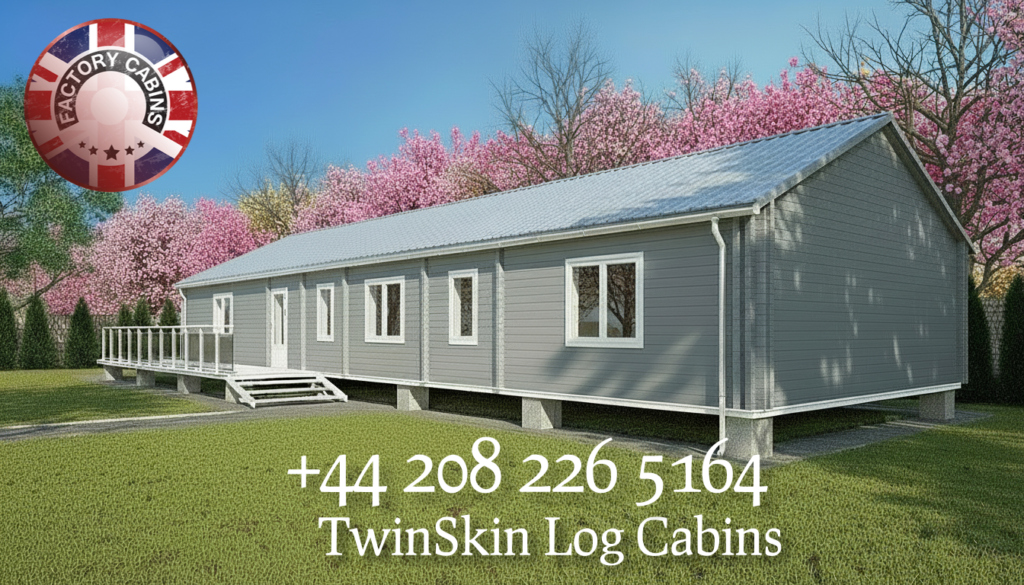
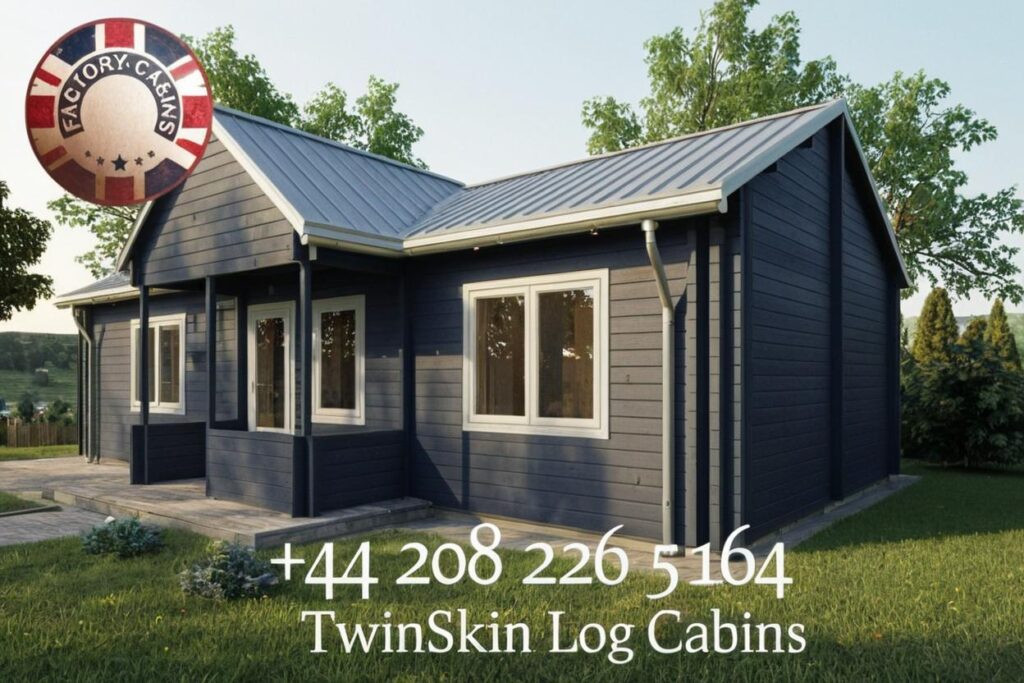
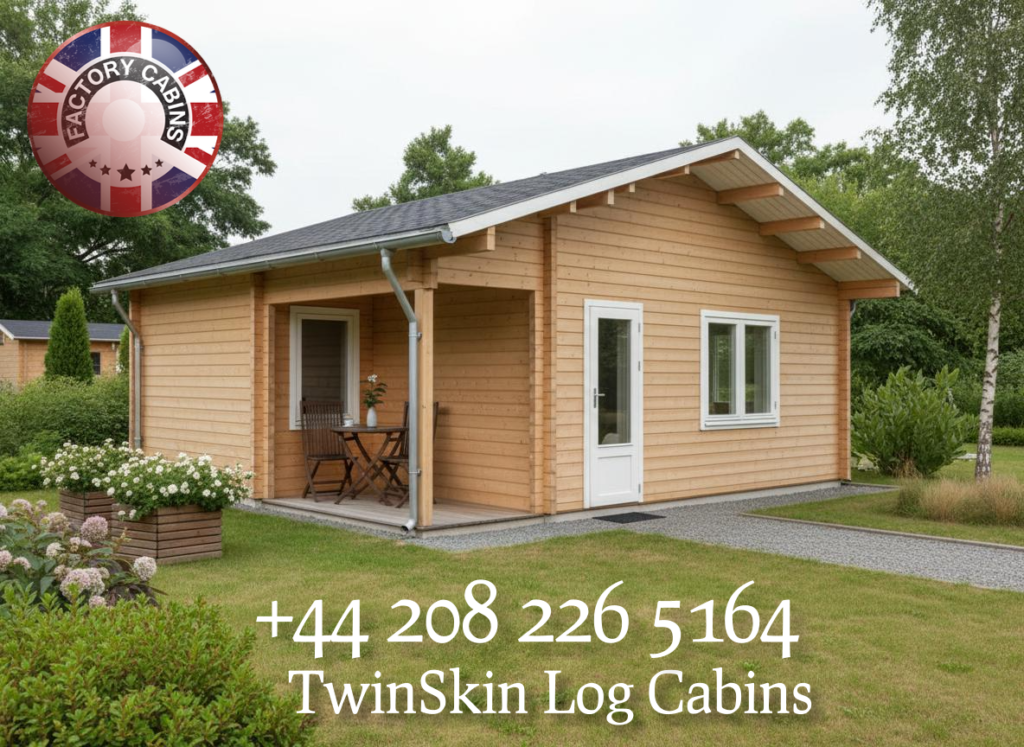
Step into your garden and picture a space that feels just as inviting as your own living room.
Maybe you want a quiet office where you can finally get some work done, a cozy summer house you’ll use all year, or just a smart way to make a little extra money. Whatever you’re after, the answer’s right outside your back door with our 44mm twin skin cabins.
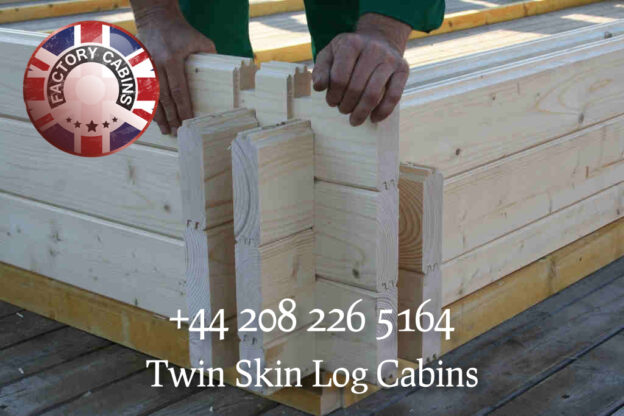
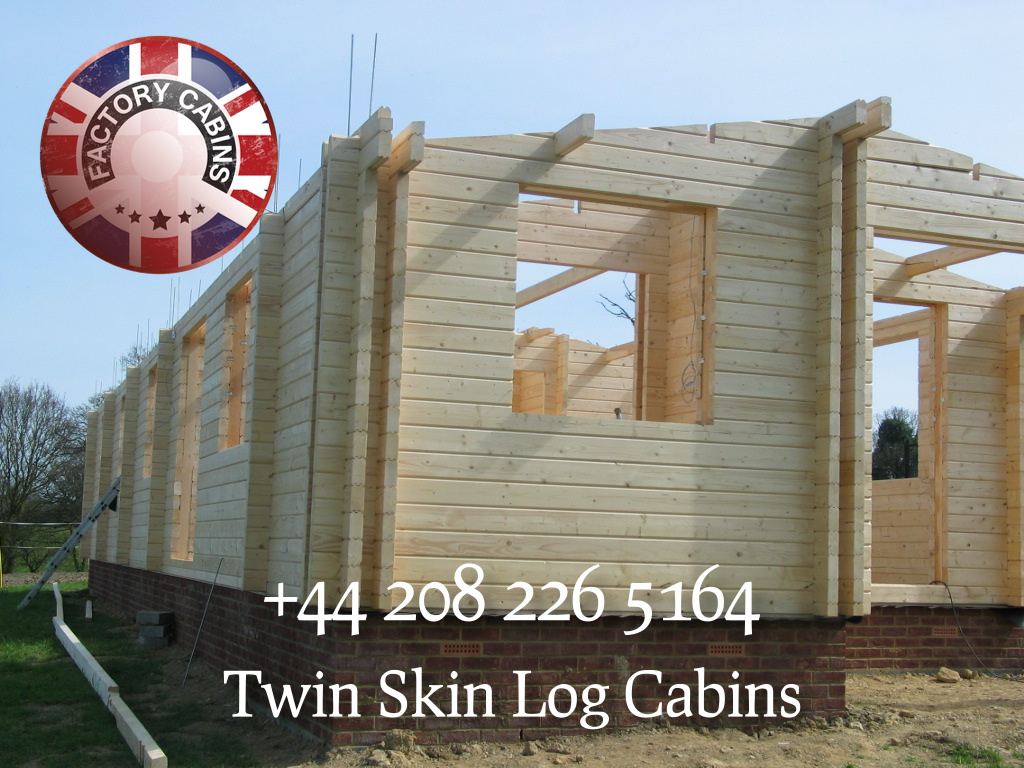
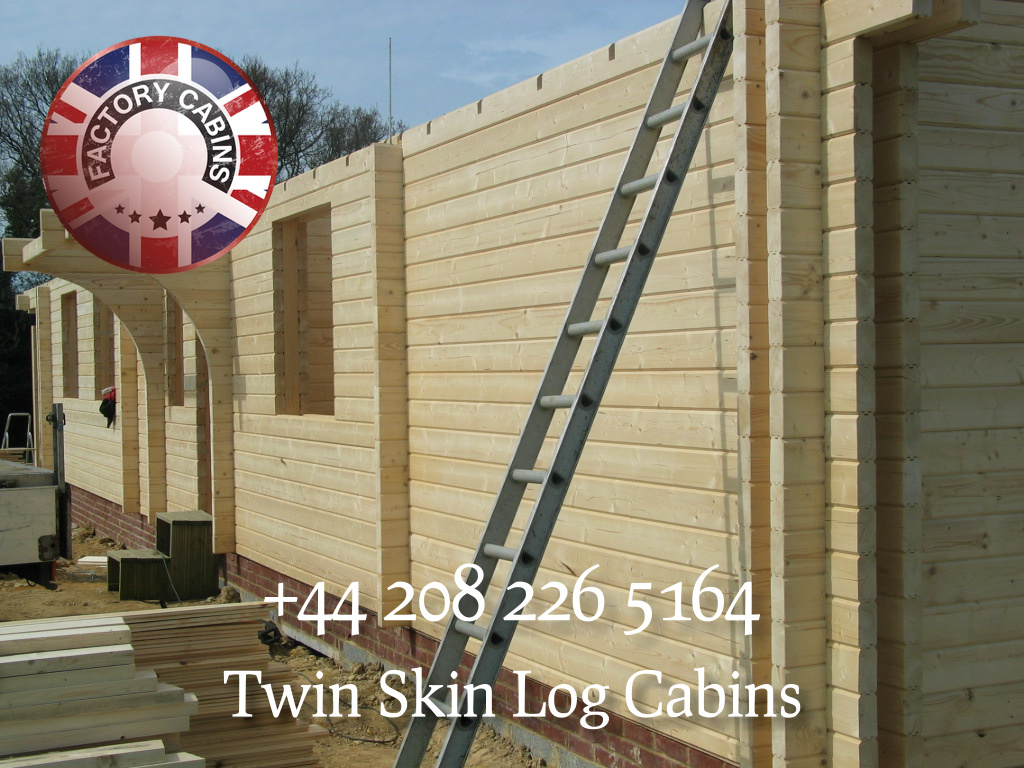
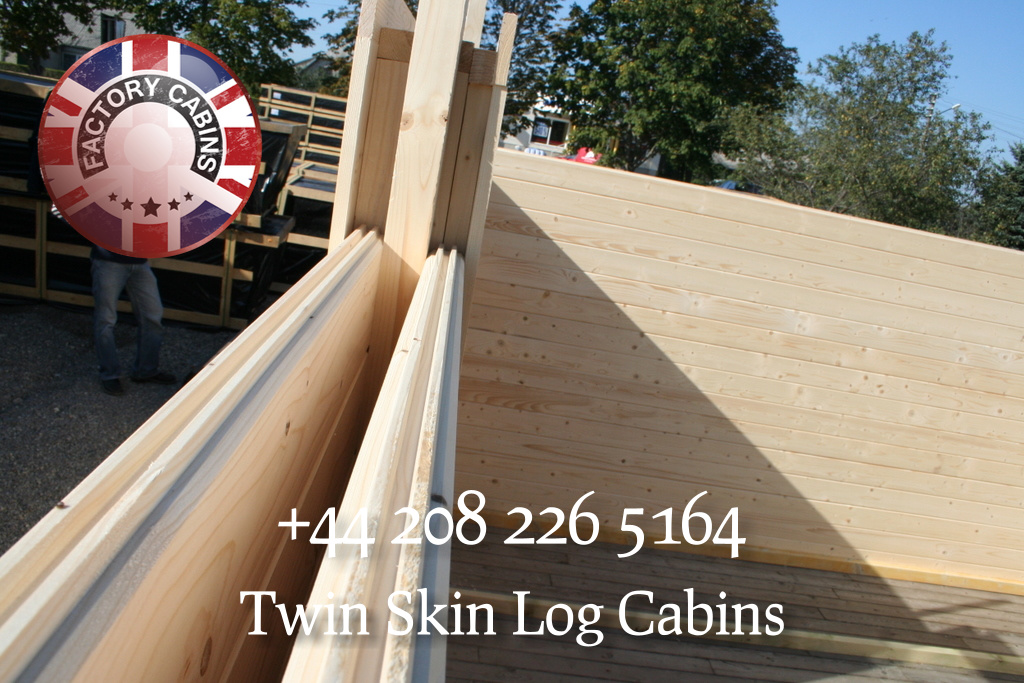
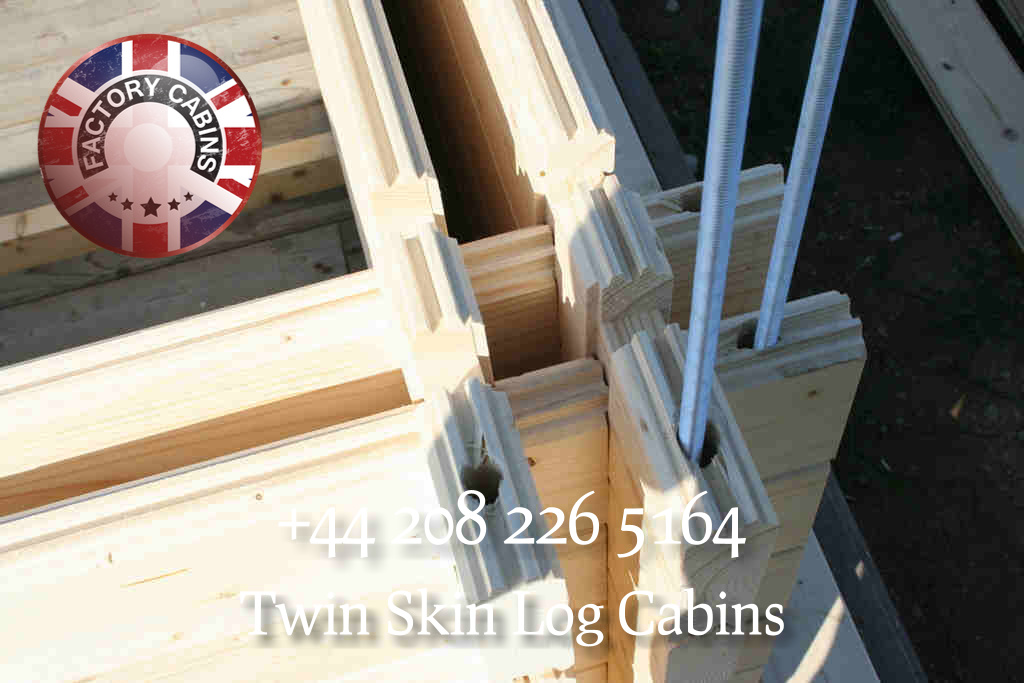
Homeowners all over the UK love these—they really do change the game for garden buildings. All those numbers—44mm x 44mm twin skin—sound a bit technical at first, but here’s what matters: you’re getting two sturdy timber walls, not just one, with an insulated gap in between.
That gap acts like a built-in thermal blanket. So, when winter’s biting cold rolls in, your cabin stays warm. And when summer brings the heat, you’re cool and comfortable inside.
There’s no bulky insulation taking up space, just clever design that keeps things cozy or breezy, no matter the season. If you’re after a proper garden office, this cabin’s a lifesaver.
We’ve all tried working from home with the TV blaring or kids running around—it’s tough. Step into a twin skin cabin, and you’ve got a peaceful, warm, proper workspace. The layout makes everything easy to reach, whether you need a desk, shelves, or just a comfy corner to think.
And it’s not just for summer—those insulated walls mean you’ll actually use it all year, not just when the sun’s out. It quickly becomes your personal retreat, whatever the weather’s doing outside.
Now, if you’re thinking about renting out your cabin for holidays or short stays, you’re onto something. People love unique getaways, and a well-built log cabin in your garden is a big draw. Sure, it’s not a luxury villa with massive walls, but it’s a fantastic, comfortable spot for guests. You get real quality and insulation without blowing your budget, and it’s tough to beat for return on investment if you’re looking at the rental market.
Let’s talk about those thicker 70mm cabins everyone mentions. They’re great—no denying it—but they cost a lot more. The 44mm twin skin cabin is the smart choice if you want durability and insulation without paying for features you don’t really need. It’s not trying to be a year-round, full-time house, but as a garden office, family hangout, or rental, it hits the sweet spot.
You get the quality and comfort, but keep your wallet happy. That’s why so many people go for this model. When we say these cabins are built to last, we’re not joking. Factory Cabins designs them to handle whatever the British weather throws at you—rain, wind, frost, you name it.
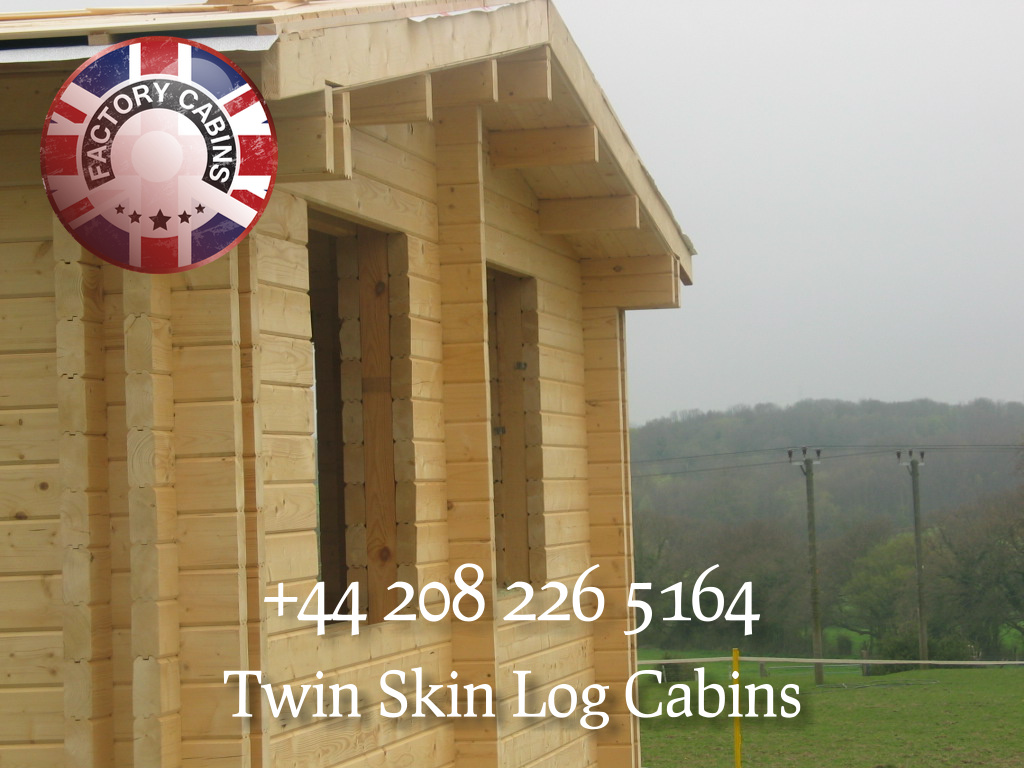
You can relax, knowing your investment stands up to the elements year after year. That kind of toughness really matters when you’re counting on your garden building to stay solid and dry. What really sets our cabins apart is the attention to detail. The walls and ceiling are made from Swedish winter-cut seasoned spruce.
That’s not just fancy talk—it means the timber is denser, more stable, and less likely to twist or crack as time goes by. It looks beautiful and stays that way with just a little care. And let’s not forget the floors. Unlike some companies that charge extra for proper flooring, our cabins come with 28mm thick spruce boards as standard. You won’t have to pay more for a floor that actually feels solid under your feet—it’s included, right from the start.
All in all, if you want a comfortable, hard-wearing, and good-looking garden retreat, this is the cabin for you.
What really sets our cabins apart is the care we put into every detail, right down to the wood itself.
We use Swedish winter-cut seasoned spruce for the walls and ceiling. That’s not just fancy talk—these trees are cut in winter when the sap is low, so the wood stays stable over the years.
No weird warping or cracking. It’s dense, strong, and honestly, it just looks great. Take care of your cabin, and it keeps looking amazing for decades. Let’s talk about the floor. A lot of other companies try to sneak in thin floorboards as standard, then ask you to pay extra for something sturdier.
We don’t play that game. Every cabin comes with 28mm thick spruce floorboards—no upcharge, no surprises. From day one, the floor feels solid and substantial under your feet. It really adds to the quality and insulation inside.
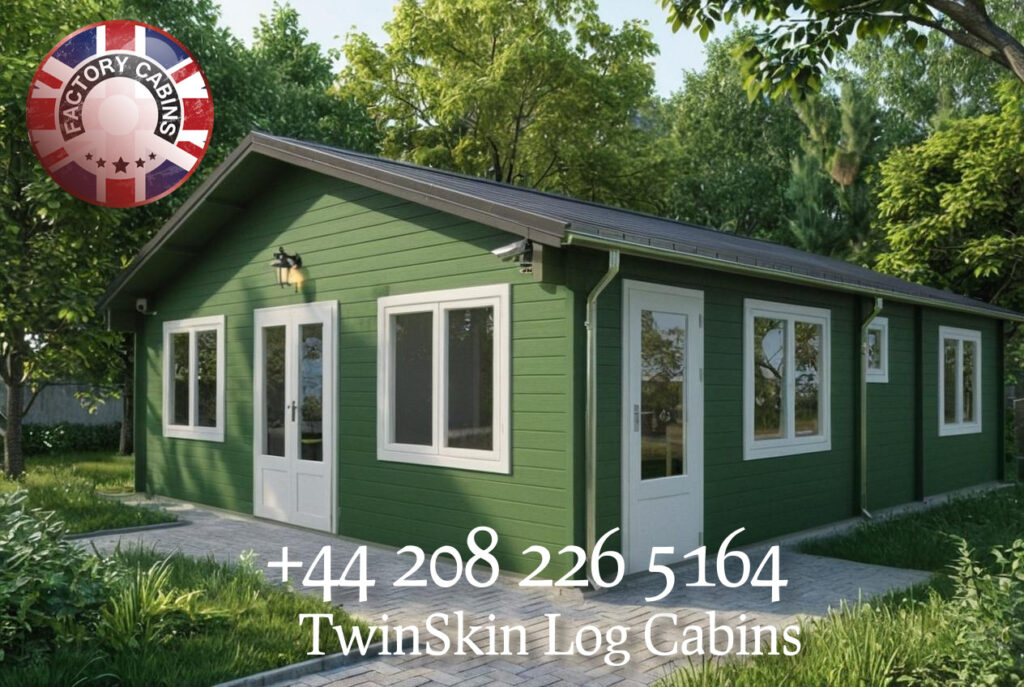
Then there are the windows and doors. We’re pretty proud of these. They come as standard, not as flimsy afterthoughts. The glass is toughened for safety and security, and everything seals up tight to keep out drafts.
You get a space that’s energy efficient—so your heating bills stay low, and you stay comfortable, no matter the season. Honestly, we believe these are the best cabins Factory Cabins has ever designed for this kind of use. We’ve nailed the balance between cost, performance, and durability.
You get that premium feel, but you don’t have to shell out for those massive 70mm walls. If you’re looking for real quality without having to compromise, this is it. Ready to give your garden a serious upgrade? Picture a space that works for you—whether that’s for business, relaxing, or something in between.
A place that stays warm in winter, cool in summer, and keeps looking beautiful year after year. The 44mm x 4mm twin skin log cabin makes all of that real. So go on—stop imagining and start building your perfect garden retreat with Factory Cabins.
Please send us an email to sales@factorycabins.com
All bespoke designs are welcome. PLEASE call 0208 226 5164
Why Our Residential Twin-Skin Log Cabins Set the Standard
These days, the way people use their homes has changed a lot. Remote work is everywhere, and more families are living together across generations. So, folks are turning to their gardens for extra space. But the old garden shed or flimsy summerhouse just doesn’t cut it anymore.
People want something real—a space that’s comfortable all year, looks great, and doesn’t cost a fortune to heat. That’s where our residential twin-skin log cabins really shine. If you’re putting money into a new building—maybe for a home office, a guest room, or even a full-time living space—quality matters.
There are plenty of timber buildings out there, but almost none match the engineering, insulation, and style you get with a high-spec twin-skin cabin. Here’s what makes ours stand out from the rest. Twin-Skin Construction:
What’s the Big Deal? First, let’s be honest about single-skin log cabins. They look nice, sure, but you’re really just getting one thick wall of wood. That’s it. And wood moves with the weather. It expands, contracts, lets in drafts, and loses heat fast. If you want to actually live in one through the winter, you’d have to spend a lot more to upgrade it. Our cabins work differently.
We use two solid layers of timber, with a special cavity in between. And that cavity isn’t just air—it’s packed with high-density insulation. Think of it like the modern cavity walls you see in new brick homes: the natural look of wood on the outside, but real warmth and energy efficiency on the inside.
With this setup, there’s no direct path for heat to escape or for the cold to creep in. You stay warm in winter and cool in summer, and the whole building just feels better to be in. Stay warm and save money. Let’s talk about energy bills.
Heating a poorly insulated space is a nightmare—and expensive. Our twin-skin log cabins are designed to lock in warmth. The insulation goes right into the walls, not just in the roof or the floor, so the whole building works together to keep you comfortable. You won’t need to blast the heater just to take the edge off in January, and you won’t sweat through the summer, either.
Picture working in your garden office in the middle of winter, no coat needed. Or having friends stay over during a snowstorm and not worrying about the heating bill. Standard garden rooms just can’t compete.
Plus, the insulated design means no condensation issues—no dampness, no mould. It’s simply a healthier place for you and your family. Built to Last When you invest in a home, you want it to stick around. Single-skin cabins tend to warp and twist over time, thanks to moisture and sunlight. Our twin-skin cabins? They’re built to handle it.
The inside layer gives you a smooth, stable surface—you can plaster, paint, or wallpaper it like any other room in your house. The outer layer shields everything from rain, wind, and sun. That means less maintenance for you and a much longer lifespan for the building.
You get that classic log cabin look on the outside, but inside, it’s all comfort and clean lines. Quiet, Private, Yours Here’s something people don’t always think about: sound. If you’re working from home, making music, or just want a quiet retreat, noise matters.
Our cabins use two layers of timber and a thick layer of insulation, which blocks out sound way better than single-skin versions. It works both ways.
Your household noise stays out, and whatever you’re doing inside doesn’t bother the neighbours. You end up with a private, peaceful spot—perfect for focusing, relaxing, or just getting away from the chaos for a while. Step into one of our cabins, and you’ll feel the difference.
There’s real comfort, real privacy, and real quality—built to last for years, not just for a single season.
Built to Residential Standards When we say “residential”, we actually mean it. This isn’t some marketing gimmick—it’s a promise to build at a higher standard. Most garden buildings out there are really just temporary structures.
They’re not meant for real, everyday living. But our residential twin-skin log cabins? We design them for frequent or even full-time use.
That means we pick better timber, we use stronger joinery, and the floors stand up to heavy furniture and all the comings and goings of daily life. The windows and doors aren’t just basic—they’re double or even triple-glazed, with thermally broken frames to keep the cabin warm and energy bills low. We plan the electrical and plumbing with proper residential safety in mind.
So when you go for a residential-grade cabin, you’re getting real peace of mind—safe, built to last, and up to the mark. Aesthetic Versatility One of the best things about our twin-skin system is how flexible it is. Some people love that classic log cabin vibe; others want something more modern and clean.
Because the interior “skin” is separate from the exterior, you’ve got real freedom to make the inside your own without messing with the outside look. Keep the natural logs on the outside so the cabin fits right in with your garden, but inside, you can go as modern as you want—bright white walls, sleek finishes, and the works.
This kind of flexibility means your cabin isn’t just a nice extra; it actually adds value and style to your home. Conclusion There are loads of timber buildings out there, but not many are built to actually work as a real home extension.
When you look at thermal performance, solid construction, quiet interiors, and energy savings, the choice pretty much speaks for itself. Our residential twin-skin log cabins set the standard for garden buildings.
They’re not just fancy sheds—they’re comfortable, high-performance spaces built for real life. Whether you need a home office, a cosy annexe for family, or just somewhere special for your hobbies, a twin-skin cabin delivers the comfort and reliability you need. Why settle for something you can only use part of the year when you could have a real, year-round sanctuary? Go for the gold standard and see how much better garden living can be.
Please send us an email to sales@factorycabins.com
All bespoke designs are welcome.PLEASE call 0208 226 516
The Twin Skin & Direct Manufacturer Advantage When people in Hastings & St Leonards start thinking about adding extra space to their homes, they usually type in something basic, like “log cabins”.
It’s a catch-all term, but once you start looking, you realise there’s a lot more to it. Honestly, just searching for “log cabins” barely scratches the surface. If you really want to know what you’re getting, you have to dig into the details — what separates a solid investment from something that won’t last. Some keywords matter more than you think.
They aren’t just there to please search engines; they tell you exactly what you can expect to see in your garden. In this guide, you’ll see why it pays to focus on things like twin skin log cabins, granny annexe specs, and—most importantly—why buying straight from the manufacturer changes everything.
We’re also going to take a real look at how the supply chain works and why going direct isn’t risky at all. In fact, it’s a smart way to save money and get more for it. Why Location Matters: Log Cabins in Hastings & St Leonards Searching for log cabins is vague.
When you look for log cabins in Hastings & St Leonards, you’re finally getting specific—and that matters. The South Coast isn’t like the rest of the UK. Hastings and St Leonards sit right on the coast, so your cabin has to handle salty air, more moisture, and winds that hit harder than what you’d get inland.
If you buy a generic cabin from a national supplier, there’s a good chance the wood hasn’t been treated for salty environments, or the roof isn’t built for those coastal gusts.
When you narrow your search to your own backyard, you’re saying, “I need something that’s built for my weather.” Local manufacturers get it. We know mornings in St Leonards can be full of sea mist, while a spot closer to the Hastings countryside often wakes up with a heavy frost. And don’t forget—Hastings has loads of conservation areas. If you buy a generic shed, you could end up breaking planning rules.
But if you go for a custom Clock House log cabin, designed with local style in mind, it can blend right in with the Victorian and Edwardian homes around here. When you stick to Hastings & St Leonards, you make sure your new cabin fits the look, follows the rules, and stands up to the weather. It just makes sense.
The Technical Divide: Why Twin Skin Log Cabins Matter Once you’ve picked your spot, the next thing you really want to focus on is twin-skin log cabins. Seriously, don’t just settle for a standard log cabin—there’s a big difference. Here’s the thing: single-skin cabins are just one layer of timber, maybe 28 mm to 44 mm thick.
They look solid, sure, but wood alone isn’t great at keeping heat in. If you’ve ever tried to use one of these in a UK winter, you know the drill—cold air seeps in, heat slips right out, and suddenly your energy bills spike. Plus, you get condensation, and that’s just asking for damp and mold. Twin-skin cabins solve all that.
You’ve got two layers of timber with insulation sandwiched in between. That extra layer makes a world of difference. It traps heat, so you’re not constantly cranking up the heater just to stay comfortable in January.
And because the inside wall stays warm, condensation doesn’t stand a chance—no more damp patches or mold creeping in. So when you search for twin-skin log cabins, you’re really weeding out all those flimsy, short-term options. You’re after something that works as a real room, not just a summer hideaway or a glorified shed. Especially if you live somewhere like Hastings, where the air is always a bit damp, twin skin isn’t a fancy upgrade—it’s the smart move if you want your cabin to last and stay healthy.
Let’s talk about the term “granny annexe”. It’s more than just a fancy way to say “garden room”. When you use this phrase, you shift the conversation from a simple outbuilding to a genuine living space. That difference matters, especially around the Southeast.
The housing market’s tough. In places like Hastings and St Leonards, lots of families want to keep their older relatives close but still give them their own space.
A granny annexe makes that possible — it’s a safe, accessible home right in the garden. But here’s the thing: calling it a granny annexe sets the bar higher. Now you’re talking about real building standards, like BS3632 compliance.
That means solid insulation, proper ventilation, fire safety, and decent windows and doors. If you just search for a “garden shed”, you’ll probably get something you can’t legally sleep in.
But when you ask for a granny annexe, you’re telling builders you need a proper place to live — plumbing, electrical safety, and energy efficiency all included. Suddenly, this isn’t just a weekend DIY project. It’s a real housing solution, and it adds serious value to your property.
Now, here’s an insider tip: always buy directly from the manufacturer. Forget the middlemen, the glossy showrooms, and the national brokers. People get nervous about going straight to the source—they worry about service or warranties, or maybe they think it’s complicated. But honestly, buying direct isn’t risky. It’s how you get the real price for a top-quality cabin. That’s the secret the industry doesn’t want you to know.
The Hidden Supply Chain Let’s be honest about the log cabin industry: not many companies actually make these buildings in the UK and Europe. What you mostly see are thousands of brokers, resellers, and showroom brands.
Scroll through ads online, and you’ll find plenty of companies shouting about their cabins—but most of them don’t build a thing. They’re just marketing agencies selling cabins made by someone else. And here’s the kicker: they guard the identity of the real manufacturer like it’s a state secret. Why? Simple. They don’t want you to find us. If you knew who actually built your cabin, you’d probably get in touch directly. You’d see that the price you’re being charged is way above what comes out of the factory. Sometimes, it’s double. That’s how the middlemen make their money—they count on you not knowing how the supply chain works.
The Direct Advantage Buy straight from the manufacturer, and you cut out the middleman entirely. You pay for the building and the work, not for flashy showrooms, national ad campaigns, or broker commissions.
If you’ve got a question about the timber, the insulation, or the roof, you talk to the actual people who work with the wood. No endless back-and-forth between a salesperson and the factory floor. Need something custom? Brokers will hand you a catalogue and stick to the script. Manufacturers, on the other hand, can actually solve problems.
Maybe you need a twin-skin log cabin squeezed onto a tricky site in Hastings. A broker might just say, “It’s not in our package.” We can make it happen—because we run the production line. Debunking the Risk People worry that buying direct means less protection. In reality, it’s the opposite. If a broker shuts down, your warranty disappears. When you buy from a proper manufacturer, your guarantee comes straight from the source—the same factory that cut the timber and built your cabin. We back our work, our timber, and our installation.
In Hastings & St Leonards, we’ve installed loads of buildings directly for people who were stunned to discover they could have saved 30% by skipping the re-seller. That extra money? It just paid for the reseller secret. When you buy direct, you break that cycle.
You still get Swedish spruce, German hardware, and a proper twin skin build—just at a price that reflects what it actually cost to make. Making an Informed Choice So, what’s the point of all these keywords? They’re not just buzzwords—they’re the real decision-makers in your buying journey.
Pick “log cabins in Hastings & St Leonards”, and you get a building that can handle coastal weather and fits in with the local style. Choose “twin skin log cabins” and you get a cabin that’s warm, dry, and cheap to run year-round.
Go for “granny annexe”, and you’ll know your building meets all the legal and safety standards for family living. And if you “buy from the manufacturer”, you’re getting a fair price—no hidden markups, no secret middlemen. Don’t let vague search terms land you with a vague product.
Be clear about what you want. Be bold about who you buy from. The difference between a costly mistake and a solid investment often comes down to understanding what’s really behind the words you type into that search bar. Ready to skip the re-seller and talk straight to the factorycabins.com Get in touch. We’re proud to bring Hastings & St Leonards top-quality, twin-skin log cabins at honest, direct prices.
Let’s build something real together.
Please send us an email to sales@factorycabins.com
All bespoke designs are welcome.PLEASE call 0208 226 516
Beyond the Roadblock: How Twin-Skin Log Cabins Revolutionize Construction in Inaccessible Locations
When Traditional Building Methods Hit a Dead End
Imagine standing on the edge of your dream property—a secluded lakeside plot, a forested hilltop, or a narrow coastal strip—and realizing that your vision for a quality insulated building is impossible. Not because of planning restrictions or budget constraints, but because there’s simply no way to get construction materials to the site.
No road access. No vehicle pathway. No conventional building method can reach your location. For decades, this scenario has left homeowners with two unpalatable choices: abandon their vision or settle for inferior, temporary structures that fail to deliver genuine year-round usability.
This is where the limitations of traditional construction methods become painfully apparent. Conventional brick-and-mortar construction requires extensive site preparation, heavy machinery, and multiple delivery trips with materials that simply cannot be transported to challenging locations.
Even standard timber frame construction—often marketed as “flexible”—requires multiple visits from skilled laborers and specialized equipment that cannot navigate tight spaces or water barriers. When accessibility becomes the primary constraint, most building solutions fail before they even begin.
But what if there was a way to bypass these limitations entirely? What if you could deliver a fully insulated, high-performance building to virtually any location—regardless of terrain or access constraints? This is the revolutionary promise of twin-skin log cabin technology, a solution that transforms previously impossible building sites into reality while delivering superior thermal performance at a fraction of the conventional construction cost.
The Accessibility Advantage: Reaching the Unreachable
The most transformative aspect of twin-skin log cabin construction isn’t merely its thermal performance—it’s the ability to access locations that conventional building methods simply cannot reach. This capability stems from the fundamental design of the twin-skin system, which allows for modular delivery and assembly in even the most challenging environments.
Consider the case of the Harrison family in the Lake District, who dreamed of creating a lakeside entertainment space on their 2.5-acre property overlooking Windermere. Their idyllic location presented significant obstacles:
No vehicular access: The only route to the desired building site was across a narrow strip of water
Environmental restrictions: The property sits within an Area of Outstanding Natural Beauty with strict building regulations
Year-round usability requirement: They wanted a space that could be enjoyed in all seasons, not just summer
Structural challenges: The lakeside terrain featured unstable soil that would have required expensive foundation work for conventional construction
Traditional building methods were immediately ruled out. Brick-and-mortar construction would have required extensive site preparation, temporary road construction across sensitive terrain, and months of disruptive work. Portable buildings lacked the insulation and quality they desired for year-round use. Even standard single-skin log cabins would have struggled with the damp lakeside environment and failed to deliver the thermal performance needed for winter gaming sessions.
What they needed was a solution that combined structural integrity with genuine insulation performance, delivered in a way that respected both the environment and their challenging site access. The answer was clear: a fully insulated twin-skin log cabin, engineered for British weather and designed specifically for their unique requirements.
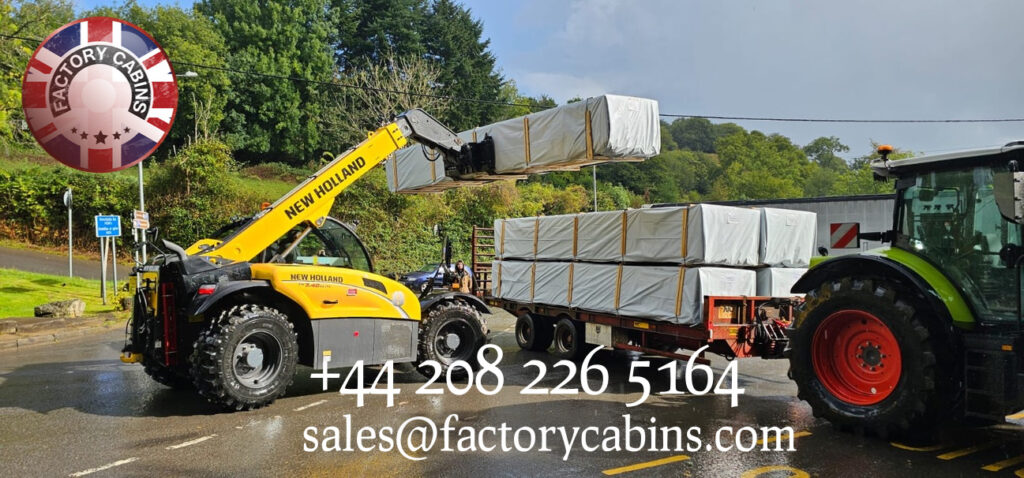
Unlike conventional construction that requires multiple material deliveries and heavy machinery, our twin-skin log cabins arrive as a single, coordinated shipment. Every component is pre-cut and pre-engineered at our Lithuanian manufacturing facility, then packaged for efficient transport. For the Harrison family’s lakeside location, we designed the cabin in modular sections that could be safely transported by boat:
Pre-assembled wall sections: Two-person manageable sizes that maintained structural integrity
Waterproof packaging: Each component sealed against lake moisture during transit
Sequential delivery plan: Components organized in precise assembly order to minimize on-site handling
This modular approach—only possible because of our direct manufacturing control—turned what could have been a logistical nightmare into a smooth operation. The entire cabin was delivered in three boat trips, with assembly beginning immediately upon arrival of the first components.
The Real Cost of Inaccessibility: When Conventional Construction Fails
The inability to access challenging building sites isn’t just a logistical inconvenience—it’s a significant economic barrier that prevents homeowners from realizing the full potential of their properties. When traditional construction methods hit accessibility limitations, homeowners face several costly consequences:
Compromised Design and Functionality
Without the ability to deliver conventional building materials to challenging locations, homeowners often settle for inferior structures that fail to meet their actual needs. Instead of a properly insulated, year-round usable space, they’re forced to accept seasonal sheds or poorly constructed temporary structures that require constant maintenance and cannot be used during winter months.
Extended Project Timelines
Conventional construction in difficult locations often requires extensive site preparation before any building can begin. This preparation phase—clearing paths, creating temporary access routes, or installing specialized equipment—can add weeks or even months to project timelines, significantly delaying the realization of the homeowner’s vision.
Environmental Impact
The extensive site preparation required for conventional construction often causes significant environmental disruption. Creating temporary roads through sensitive ecosystems, disturbing soil stability, or altering natural drainage patterns can have lasting impacts on the environment—impacts that many homeowners seeking natural retreats specifically want to avoid.
Cost Overruns
The hidden costs of conventional construction in challenging locations are substantial. Specialized equipment rentals, additional labour for site preparation, extended project timelines, and potential environmental mitigation measures can easily double or triple the initial project estimate.
Compromised Quality
Perhaps most damaging is the inevitable compromise on quality when conventional construction methods are adapted to challenging sites. Builders often cut corners on materials, insulation, or structural elements to accommodate accessibility constraints, resulting in buildings that fail to deliver the promised performance or longevity.
For homeowners seeking a quality insulated building, these consequences are particularly devastating. They’ve invested significant resources in finding the perfect location only to discover that the very features that make the property special—its seclusion, natural beauty, or unique terrain—become barriers to construction. The result is a cycle of disappointment where dreams are deferred or compromised, and the full potential of the property remains unrealized.
Twin-Skin vs. Conventional Construction: The Structural Difference That Matters
To understand why twin-skin log cabins succeed where conventional construction fails, we must examine the fundamental structural differences between these approaches. The key distinction lies not just in the materials used, but in the engineering philosophy that drives the design.
Conventional Timber Frame Construction: The Layered Approach
Traditional timber frame construction follows a sequential, on-site assembly process that requires multiple visits from skilled laborers and specialized equipment:
Foundation work: Often requiring heavy machinery and extensive site preparation
Frame construction: Multiple trips to deliver and assemble structural components
Insulation installation: Additional visits to add insulation materials
Exterior cladding: Further deliveries and labour for weatherproofing
Interior finishing: Final trips for internal walls, flooring, and services
This layering approach creates multiple points of vulnerability. Each stage depends on the previous one being completed correctly, and any delay or issue at one stage impacts the entire project. In challenging locations, this sequential process becomes particularly problematic—each delivery requires navigating the same access constraints, multiplying the logistical challenges.
Most critically, the insulation in conventional timber frame construction is typically added as an afterthought—a layer sandwiched between structural elements. This approach creates thermal bridges at structural junctions, compromises the integrity of the insulation layer, and makes it difficult to achieve consistent thermal performance throughout the building.
Twin-Skin Log Cabin Construction: The Integrated Approach
In contrast, twin-skin log cabin construction follows an integrated design philosophy where all elements work together from the outset:
Single manufacturing process: All components are precision-cut and assembled at the factory
Modular delivery: Pre-engineered sections designed for efficient transport
Rapid assembly: Minimal on-site labour with standardized connections
Integrated insulation: Thermal performance built into the wall structure from the beginning
The twin-skin design features two independent skins of premium Scandinavian spruce, separated by a precisely engineered cavity filled with high-grade insulation. This cavity is not an afterthought—it’s a fundamental component of the wall structure, designed to deliver optimal thermal performance while maintaining structural integrity.
This integrated approach is particularly advantageous in challenging locations because it eliminates the need for multiple material deliveries and sequential construction stages. Every component arrives ready for immediate assembly, reducing on-site time and labour requirements to a minimum.
The Insulation Advantage: Engineering Flexibility Where It Matters Most
One of the most significant advantages of twin-skin log cabin construction is the inherent flexibility of the insulation system. Unlike conventional construction where adding more insulation requires complex modifications to the structural design, the twin-skin system allows for simple, scalable insulation adjustments that directly address the specific needs of challenging locations.
The Conventional Insulation Dilemma
In traditional timber frame construction, increasing insulation levels presents significant challenges:
Structural modifications: Additional insulation often requires thicker wall sections, which may not fit within existing structural constraints
Thermal bridging: Conventional construction methods create inevitable thermal bridges at structural junctions, reducing the effectiveness of added insulation
Moisture management: Adding insulation without proper vapor barriers can create moisture traps that lead to condensation and timber degradation
Cost inefficiency: The marginal cost of adding insulation often becomes prohibitively high as insulation levels increase
These limitations mean that conventional construction typically caps at a certain insulation level—sufficient for standard applications but inadequate for challenging locations with extreme weather conditions or specific usability requirements.
The Twin-Skin Insulation Solution
With twin-skin log cabin construction, insulation becomes a simple matter of adjusting the cavity size between the two timber skins. The system is designed from the outset to accommodate variable insulation levels without compromising structural integrity:
Scalable cavity design: The space between the two timber skins can be expanded to accommodate additional insulation
Continuous thermal barrier: The insulation cavity creates a seamless thermal break that eliminates thermal bridging
Integrated moisture management: The design incorporates vapor barriers and moisture control systems as part of the wall structure
This flexibility is particularly valuable for challenging locations where specific insulation requirements may vary significantly. For example:
Coastal properties: Require enhanced moisture management systems to combat salt air
High-altitude locations: Need increased insulation to handle extreme temperature variations
Forest settings: May require additional insulation to maintain consistent interior temperatures
Our 70mm x 70mm interlocking system demonstrates this flexibility perfectly. The standard configuration features a cavity designed for optimal insulation performance in most UK conditions.
However, for locations requiring enhanced thermal performance—such as lakeside properties in the Lake District or coastal sites in Kent—the cavity can be expanded to accommodate 100mm or even 300mm of high-performance insulation.
This scalability means that twin-skin log cabins can be precisely engineered for the specific thermal requirements of each location, delivering optimal performance without the cost inefficiencies of conventional construction methods.
The Cost Equation: Why Twin-Skin Delivers Better Value
When evaluating construction options for challenging locations, cost is often the primary consideration. However, a true cost analysis must go beyond the initial price tag to consider the total value delivered over the building’s lifetime. When viewed through this lens, the twin-skin log cabin approach consistently demonstrates superior value.
Conventional Construction Cost Structure
Conventional construction in challenging locations follows a cost structure that becomes increasingly inefficient as accessibility constraints increase:
Site preparation costs: Often exceed 20-30% of total project cost for difficult locations
Multiple delivery costs: Each material delivery incurs additional transportation costs
Extended labour costs: longer project timelines increase labour expenses
Compromise costs: Quality compromises to accommodate access constraints often lead to higher maintenance costs
The marginal cost of addressing accessibility challenges in conventional construction is high and non-linear—each additional constraint multiplies the cost rather than adding it incrementally.
Twin-Skin Cost Structure
The twin-skin log cabin approach follows a fundamentally different cost structure that remains efficient regardless of accessibility constraints:
Single delivery cost: All components arrive in one coordinated shipment
Minimal site preparation: Often requiring only a simple foundation system
Rapid assembly cost: Reduced labour time and specialized equipment needs
The marginal cost of addressing accessibility challenges in twin-skin construction is low and linear—each additional constraint adds a predictable, manageable cost rather than multiplying expenses.
This difference becomes particularly apparent when comparing insulation options. In conventional construction, increasing insulation levels often requires significant structural modifications that can double or triple costs. In twin-skin construction, increasing the cavity size between the 70mm x 70mm interlocking logs to accommodate 100mm or 300mm of insulation adds minimal cost while delivering substantial thermal performance benefits.
Real-World Applications: Twin-Skin Solutions in Challenging Locations
The accessibility advantages of twin-skin log cabin construction are not theoretical—they’re being demonstrated daily across the UK in locations where conventional construction would be impossible or prohibitively expensive.
Lakeside Retreats: Where Water Is the Only Access Route
For property owners with lakeside plots like the Harrison family, the twin-skin approach provides a solution that respects both the environment and the vision. By designing modular sections that can be transported by boat, we’ve created numerous lakeside retreats that would have been impossible with conventional construction.
These cabins feature:
Water-resistant construction: Marine-grade hardware and corrosion-resistant materials
Elevated foundation options: Minimizing environmental impact while providing stable support
Enhanced insulation: For year-round comfort despite the damp lakeside environment
Flexible layout options: Allowing for optimal use of the limited accessible space
Forest Clearings: Where Trees Block Conventional Access
In heavily wooded areas, twin-skin log cabins offer a solution that minimizes environmental disruption while delivering high-performance structures. Rather than clearing wide paths for construction equipment, we can deliver pre-engineered sections through narrow forest trails.
These forest cabins feature:
Minimal footprint design: Reducing the need for extensive site clearing
Adaptable foundation systems: Allowing for installation on uneven terrain
Natural integration: Wood finishes that blend with forest surroundings
Enhanced insulation: For consistent interior temperatures despite forest microclimates
Coastal Properties: Where Salt Air Demands Superior Protection
Coastal locations present unique challenges with salt-laden air that accelerates corrosion and requires specialized materials. Twin-skin log cabins provide a solution that combines structural integrity with environmental resilience.
These coastal cabins feature:
Marine-grade hardware: Stainless steel components resistant to salt corrosion
Enhanced moisture management: Integrated systems to prevent salt-induced damage
Specialized finishes: Protecting wood from the harsh coastal environment
Optimized insulation: For consistent comfort despite coastal temperature fluctuations
The Quality Imperative: Why Twin-Skin Delivers Genuine Performance
For homeowners seeking a quality insulated building, the difference between twin-skin and conventional construction isn’t just about accessibility—it’s about genuine performance. When you choose a twin-skin log cabin, you’re not just solving an access problem; you’re investing in a building that delivers superior thermal performance, structural integrity, and longevity.
Thermal Performance: The Defining Difference
The most immediate benefit of twin-skin construction is its superior thermal performance. While conventional construction struggles to achieve U-values below 0.30 W/m²K (the current UK building standard), our twin-skin systems deliver U-values as low as 0.18 W/m²K—significantly better than modern residential construction.
This performance difference translates directly into:
Year-round usability: Spaces that remain comfortable in winter without excessive heating
Reduced energy costs: Minimal energy requirements for maintaining comfortable temperatures
Moisture control: Elimination of condensation issues that plague conventional structures
Long-term durability: Protection of timber structure from moisture-related damage
Structural Integrity: Built to Last
The interlocking design of twin-skin log cabins provides exceptional structural integrity that conventional construction cannot match. Our precision-engineered joints create a structure that:
Resists wind loads: Critical for exposed locations like coastal properties
Minimizes settlement issues: The interlocking system maintains integrity as timber adjusts to environmental changes
Distributes stress evenly: Preventing weak points that develop in conventional construction
Maintains thermal performance: Structural integrity is essential for maintaining the insulation cavity’s integrity
Longevity: A Building That Improves with Age
Perhaps most importantly, twin-skin log cabins deliver genuine longevity that conventional construction often fails to achieve. The combination of premium materials, precision engineering, and integrated moisture management creates a structure that:
Requires minimal maintenance: Unlike conventional structures that need regular repairs
Improves with age: Properly maintained wood structures develop a beautiful patina over time
Retains value: High-quality log cabins often appreciate as they age
Sustains performance: Thermal and structural performance remains consistent for decades
The Future of Construction: Accessibility as a Design Priority
As we look to the future, the importance of accessibility in building design will only increase. With growing environmental awareness and stricter regulations on site disruption, construction methods that minimize environmental impact while delivering high-performance buildings will become increasingly valuable.
Twin-skin log cabin technology represents a significant step forward in this evolution. By designing buildings that can access challenging locations with minimal disruption, we’re not just solving today’s construction problems—we’re creating a model for sustainable building practices that will become increasingly important in the coming decades.
This approach aligns perfectly with the growing demand for:
Sustainable construction: Minimizing environmental impact while delivering high-performance buildings
Adaptive design: Creating buildings that respond to specific site conditions rather than forcing sites to conform to standard construction methods
Resilient infrastructure: Building structures that can withstand extreme weather events and environmental changes
Resource efficiency: Maximizing the value of materials through precision engineering and minimal waste
Conclusion: Beyond Access—Creating Possibility
The true power of twin-skin log cabin construction extends far beyond solving accessibility challenges. It represents a fundamental shift in how we approach building design—a shift from forcing sites to conform to construction methods to designing construction methods that conform to site requirements.
For the homeowner with a dream location that conventional construction methods cannot reach, this shift means the difference between compromise and realization. It means transforming previously impossible sites into valuable, functional spaces that enhance property value and quality of life.
When you choose a twin-skin log cabin from Factory Cabins, you’re not just buying a building—you’re investing in a solution that:
Respects your site: Minimizing environmental disruption while maximizing space utilization
Delivers genuine performance: Providing year-round usability with superior thermal performance
Offers genuine value: Delivering high-quality construction at a reasonable cost
Solves real problems: Addressing accessibility constraints that conventional methods cannot overcome
The journey from inaccessible dream to realized reality begins with understanding that sometimes, the most significant barrier isn’t the terrain—it’s the construction method. By choosing a twin-skin log cabin solution, you’re not just building a structure—you’re creating possibility where none existed before.
Ready to transform your inaccessible dream site into a reality? Contact Factory Cabins today for a consultation on how our twin-skin log cabin technology can reach locations that conventional construction cannot. From Brighton to Margate and beyond, we deliver quality, accessibility, and performance that redefine what’s possible in garden building.
Please send us an email to sales@factorycabins.com
It’s January 2026. The UK log cabin industry is worth over £350 million annually — a staggering figure that would have seemed impossible when we first opened our workshop doors in 2003. Back then, “log cabin” was a niche term whispered among garden enthusiasts and DIY hobbyists. Few understood what it meant to build a *real* log cabin — one that could withstand decades of British weather, settle naturally without warping, and remain structurally sound, thermally efficient, and aesthetically timeless.
The quiet cabin companies secrets!
We didn’t just enter the market in 2003 — **we created it**.(Log Cabins For Sale)
Not through marketing gimmicks or inflated claims, but through relentless craftsmanship, engineering rigour, and an uncompromising refusal to cut corners. Over the past 23 years, FactoryCabins.com has not only pioneered the modern UK log cabin sector — we’ve also been its conscience. We’ve trained, mentored, and launched countless competitors — only to part ways with most of them when they chose profit over principle. Yes, we’ve *sacked* dealers, distributors, and even former partners — not out of spite, but because integrity cannot be negotiated.
This blog isn’t a sales pitch. It’s a manifesto. A warning. A guide. And above all — a plea to consumers: *Do not let the noise drown out the truth.*
Because today, more than ever, the log cabin market is flooded with imitation, deception, and dangerously substandard products masquerading as “premium.” And yet — amid the chaos — there remains a handful of manufacturers who still believe that a log cabin should be built to last longer than the owner’s mortgage.
We are one of them.
Let us take you on a journey — through history, engineering, ethics, and the quiet revolution we’ve waged behind the scenes for over 2 and a bit decades.
Part I: The Birth of an Industry — How FactoryCabins.com Built the UK Log Cabin Market (2003–2026)
In 2003, the UK had no dedicated log cabin manufacturers. There were timber framers, garden shed builders, and a few Scandinavian importers — but no one designing, engineering, and manufacturing log cabins *for the British climate*, using British standards, and respecting the physics of solid timber construction. One Cabin was the Clock House, our design.
We started small: a single workshop in rural Lithuania , with two carpenters, hand engineered notching machine, and a dream. Our first cabin? A 3m x 3m garden store — tongue-and-groove spruce, 44mm logs, fairly good notches, and a roof designed to shed rain *and* snow. It wasn’t glamorous. But it stood firm through 6 winters, zero rot, zero warping.
What set us apart from day one was our obsession with *movement*. Logs move. They shrink. They twist. They settle. Any builder who ignores this is building a time bomb.
So, we developed our proprietary **Dynamic Log System** — not a marketing slogan, but a structural philosophy:
**Moisture content control**: All timber dried to 16–18% MC before assembly — never air-dried on-site.
Within two years, we had 17 dealers across England and Wales.Scotland Not franchises — true partners. We trained them. We shared our CAD designs. We gave them access to our quality control protocols. We believed in collaboration.
Then came the first betrayal.
A dealer in Essex began selling our 5m x 4m “ DF 24” cabin — identical in spec — at **140% above our factory price**, claiming it was “exclusive” and “hand-finished in the UK.” When customers complained about warped doors and UVPC windows (more on that later), he blamed *us*. We investigated. Found his warehouse full of rebranded stock from a bulk supplier in Europe — same dimensions, same drawings, but with inferior timber, no kiln drying, and plastic windows bolted in with screws instead of proper joinery.
We terminated the relationship. Publicly. With evidence.
That was the first of many.
By 2011, we had directly trained or supplied over 40 companies now operating in the UK log cabin space. Many went on to become household names. Some still exist — though few retain the original ethos. Most? They pivoted to volume. To speed. To margin. And in doing so, they sacrificed the very thing that made log cabins viable in the first place: *quality*.We wanted to at the very beginning, manufacture a building that was better than a box standard shed, these companies have done the opposite, they have reduced the cabin to below a shed, and charge 3x its value.
We didn’t stop innovating. In 2013, we introduced the UK’s first **twin-skin log cabin** — 70mm outer log + 70mm inner log, with insulated cavity. It was ridiculed as “over-engineered.” Today, it’s the gold standard — and copied relentlessly.
But here’s the uncomfortable truth no one wants to admit:
**The UK log cabin industry grew not because of better products — but because of better marketing.**
And that’s where the rot began.
Part II: The Great Dilution — How “Premium” Became a Lie (2015–2026)
Between 2015 and 2026, the UK log cabin market exploded. Online retail boomed. Amazon entered. eBay sellers appeared overnight. Suddenly, anyone with a forklift and a website could call themselves a “log cabin manufacturer.”
We watched — horrified — as standards collapsed.
The UVPC Scandal: Why Plastic Windows Have No Place on Log Cabins
Let me be unequivocal:
**UVPC (uPVC) windows and doors do NOT belong on log cabins.**
Here’s why — and this is physics, not opinion:
Log cabins settle vertically by 3–8% over the first 12–18 months (depending on log thickness and moisture content).
uPVC frames are rigid. They do not flex. They do not accommodate movement.
When the log wall shrinks *around* a rigid uPVC frame, stress concentrates at the corners → cracks form → seals fail → water ingress → rot begins.
Within 2–3 years, 70% of uPVC-fitted cabins show visible gaps, fogged double glazing, or jammed sashes.
We tested this ourselves — in our own lab, with accelerated settling rigs. We fitted identical cabins with:
Option A: High-quality joinery-glulam timber windows (our standard)
Option B: uPVC windows (industry “budget” spec)
After 18 months of simulated settlement:
Option A: Minor adjustment needed. Seals intact. Operation smooth.
Option B: 3 out of 4 windows cracked at the top corner. One door refused to close. Condensation inside glazing units.
Yet today — walk into any major retailer’s showroom, or scroll through their website — and you’ll see “Premium Log Cabin” advertised with *uPVC windows*, *uPVC doors*, *uPVC cladding*. They call it “low maintenance.” It’s not low maintenance — it’s *low integrity*.
We use only **joinery-grade glulam timber** for our window and door frames. Why?
– Glulam (glued laminated timber) is engineered to resist twisting and warping — critical when logs move.
– It expands and contracts *with* the cabin structure.
– It accepts traditional mortise-and-tenon joinery — far stronger than screw-fixed uPVC.
– It can be repaired, refinished, and lasts decades — unlike uPVC, which becomes brittle and yellowed in UV exposure.
The 200% Mark-Up Mirage
Let’s talk money — because this is where the deception becomes criminal.
In 2014, we audited 12 leading UK log cabin retailers. We purchased identical 5m x 4m cabins (same log thickness, same floor specs, same roof pitch) from each — using fake buyer profiles to avoid special pricing.
Yes — nearly **200% markup** on *identical product*.
And what did those customers receive?
– Same 44mm spruce logs (not upgraded to 68mm or 70mm)
– Same 18mm OSB flooring (not 28mm T&G pine)
– Same 16mm roof boards (not 19mm)
– Same basic hardware (not German-made)
No innovation. No improvement. Just higher prices — justified by slogans like “Luxury Edition,” “Designer Range,” or “Handcrafted Excellence.”
Meanwhile, our warranty? **20 years** — conditional on basic maintenance (clean gutters, keep foundation dry, re-treat external timber every 3 years). Not 10 years. *20.* Because if you treat a log cabin like a house — it will last like one.
Most others offer 10-year warranties — knowing full well that by year 11, the cabin will likely be leaking, warping, or suffering condensation damage due to poor design. Windows and Doors falling apart, It’s not a warranty — it’s a *time-limited liability cap*.
We’ve seen it too many times: A customer calls us in Year 8, frustrated because their “premium” cabin is rotting at the base. We help as much as we can, its normally windows and doors, or the bottom logs have rotted away. Windows and doors we can help with, but rotten logs , impossible, sadly.
That’s not business. That’s ethics.
Part III: The Anatomy of a Real Log Cabin — What You’re *Not* Being Told
When you browse log cabin websites, you’re drowning in glossy images, 3D renders, and five-star reviews (many of which are incentivised or fake). But the real story lies in the details — the ones hidden in tiny footnotes or omitted entirely.
**Moisture Content**: Must be 16–18% *at time of assembly*. Air-dried timber (20–25% MC) will shrink excessively post-installation — causing gaps, leaks, and joint failure.
**Kiln Drying**: Non-negotiable. Air-dried logs retain sapwood — prime breeding ground for fungus and beetle larvae.
We test every batch. We reject 12% of incoming timber — even if it means delaying orders.
2. Log Profiling & Joinery
Our CNC machinery notches with absolute precision time and time again first of all the cabin is made using cad, then those plans are entered into the CNC machines, however before we start cutting the cabin we send you the plans it is that this stage that you can change or alter something, once you are satisfied you sign off the plans and we begin the process of manufacturing the cabin, quick and easy, no mistakes.
3. Flooring — Where Most Fail
Windows & Doors — Our Crown Jewel (and Why 99.9% Fail to Copy It)
This is where we draw the line — and where imitators consistently fail.
Tempered double-glazed units** (4-16-4), argon-filled, low-E coated, and toughened as standard.
Stainless steel hinges** (not zinc-plated iron — which rusts in 18 months)
Why do 99.9% of copycats fail?
A solid timber frame *will* twist as the cabin settles. Ours doesn’t — because the layers counterbalance each other.
Try finding a competitor who publishes their window spec sheet. Most won’t — because they can’t.
We challenge anyone: Send us your cabin’s window frame. We’ll tell you within 30 seconds whether it’s glulam or solid timber — and whether it will last 5 years or 20.
5. Insulation & Thermal Performance — The Net Zero Frontier
Not “eco-friendly” — *net zero*. Meaning: annual energy consumption ≤ renewable generation on-site.
How?
– Twin-skin construction (70mm + 70mm logs) with mineral wool cavity insulation (U-value ~0.28 W/m²K)
– Triple-glazed windows (U-value 0.7)
– Air-source heat pump (3–4 kW)
– Solar PV array (4–6 kW)
– Mechanical Ventilation with Heat Recovery (MVHR)
We built our first net-zero cabin in 2023 — a 10.2 x 9.2 m x 6m holiday home with:
Two en-suite bedrooms
-Kitchen
– Living/dining area
– Utility room
– Roof-mounted ground solar array
– ASHP + underfloor heating
Annual energy use: **2,100 kWh**
Solar generation: **2,450 kWh**
Net export: **+350 kWh/year**
It’s in stock — ready for delivery. Not a prototype. Not a demo. A *real* physical Twin Skin cabin.
Yet most companies still sell 44mm single-skin cabins with no insulation, calling them “energy efficient.” They’re not. They’re thermal sieves.
Part IV: The Dealer Crisis — Why We Terminated 97% of Our Partners
Let’s address the elephant in the room: **Dealerships**.
In our early years, we relied on dealers — local businesses who knew their communities, could provide installation support, and offered after-sales service.
By 2019 , we had 50/60 active dealers across the UK-Wales-Scotland-Holland-Europe
By 2020, we had **2**.
Why?
Reason #1: Systematic Overcharging and stealing !
We discovered dealers inflating prices by 50–100% — then blaming *us* for “high factory costs.” One dealer in Manchester charged £22,500 for a cabin we sold him for £9,200. When confronted, he said: *“Customers expect to pay that — they think it’s premium.”*
We terminated him.
We decided to sell direct. No more killing our brand and hard work with sadly thieves.
Reason 2: Theft & Fraud
Yes — theft. From *customers*.
Case study: A dealer in Yorkshire took deposits from 14 customers (£68.000 total) for cabins “in production.” The cabins never existed. He used the money to pay personal debts. When customers called us, we reported him to the police — he was later sentenced.
We also reported him to Trading Standards.
Another case: A dealer in Scotland substituted our 70mm twin-skin cabins with 44mm single-skin knockoffs — same packaging, same branding. Customers received cabins that leaked in rain and froze in winter. We sent engineers. Found the fraud. Terminated. Prosecuted.
These aren’t outliers. They’re symptoms of a broken system.
Which leads us to our core belief:
**If you want quality — buy direct from the factory.**
Why?
– No middleman markup
– Direct access to engineers and designers
– Full transparency on materials and processes
– Ability to customise *anything* — from roof pitch to amount of doors and windows,
– No risk of misrepresentation
And let’s be clear: **There are no significant log cabin factories in England.** None. Zero.
Why? Because England has no commercial forests suitable for structural timber. The UK imports 85% of its softwood — mostly from Scandinavia and the Baltics and sadly the Baltics is mainly Pine, too many knots, young trees, and small in diameter,. So when a company claims “Made in England,” they mean: *Assembled in England from imported parts.* Often with Chinese-made hardware and cheap timber.
We manufacture in Lithuania — But we manufacture only with Swedish Spruce.
Buying from a “UK factory” dealer? You’re paying for logistics, not quality.
Part V: The Consumer’s Survival Guide — How to Spot a Real Cabin
You’re overwhelmed. You’ve read 10 websites. Seen 50 videos. Still don’t know who to trust.
Here’s your actionable checklist — proven over 23 years:
Insist on Window/Door Specifications
Ask: *“Are windows joinery glulam or solid timber? Who manufactures the hardware? Please send photos of exactly what I am buying.
If they say “uPVC” or “premium composite” — run.
Request 4 Independent Customer References
Not testimonials on their site. *Real people.* Ask:
When did you receive your cabin?”
What issues have you had?”
Have you needed repairs? Who did them?”
Would you buy from them again?”
We give customers our direct line — no gatekeeping. If a company refuses, they have something to hide.
Check the Warranty Terms
A 20-year warranty that requires *only* basic maintenance (gutter cleaning, no standing water, re-treatment) is credible.
A 10-year warranty that excludes “natural settlement,” “weather damage,” or “improper installation” is worthless.
Visit the Factory (If Possible)
We welcome visitors — by appointment. See the timber stacks. Watch the CNC machines. Meet the joiners. Compare the finish on a freshly assembled cabin vs. one stored for 6 months.
If they won’t let you visit — why not?
Our Promise — And Why We’re Still Here After 24 Years
We could have taken the easy path. We could have switched to uPVC. We could have outsourced to the lowest bidder. We could have offered 10-year warranties and called it a day.
But we didn’t.
Because we believe:
– A log cabin is not a garden ornament. It’s a *building*.
– It deserves the same respect as a house — structurally, thermally, and aesthetically.
– The customer shouldn’t need a degree in timber engineering to avoid being ripped off.
Today, we manufacture over 7,000 unique cabin designs — from a 2m x 1.5m lawn mower cabin (yes, we make those — with lockable doors and ventilation) to a 20m x 18m luxury lodge with underfloor heating, smart lighting, and a rooftop terrace.
We’ve shipped to every county in the UK. To remote Scottish islands. To Welsh valleys. To urban London gardens (yes — even on 10m x 8m plots, with planning permission).
And we still do what we did in 2003:
– Hand-inspect every log
– Test every window under simulated settlement
– Refuse to compromise on hardware
– Fire dealers who betray trust
We’re not the biggest. We’re not the cheapest. But we are — and always have been — the most honest.
## Final Thoughts: The Future of Log Cabins — And Your Role in It
The UK log cabin industry stands at a crossroads.
On one side: Mass-produced, disposable structures — sold with flashy ads, fake reviews, and promises that crumble with the first frost.
On the other: A quiet movement of makers who believe that wood, when respected, can create beauty that endures.
We choose the latter.
But we cannot do it alone.
Every time you choose quality over hype — when you ask the hard questions, demand proof, and refuse to accept “good enough” — you strengthen the entire industry.
You protect future generations from inheriting cabins that rot, leak, and disappoint.
You honour the craft.
So, thank you — for reading this far. For caring enough to seek the truth.
If you have questions — about timber, insulation, net zero, or why your neighbour’s “premium” cabin is already peeling — email us. Call us. Visit us.
We’re here. As we’ve been since 2003.
Not to sell you a cabin.
But to help you build a legacy.**FactoryCabins.com**
Building Log Cabins That Last Longer Than Promises*
Please send us an email to sales@factorycabins.com
Efficient. Built to Last: Why Factory Cabins Redefines the Modern Log Cabin Experience
In a market crowded with shortcuts, compromises, and misleading claims, choosing the right log cabin provider isn’t just about aesthetics—it’s about trust, longevity, and performance. At Factory Cabins, we don’t just sell buildings; we deliver peace of mind through decades of hands-on expertise, uncompromising material standards, and a proprietary building system that has stood the test of time—literally. Our cabins are not seasonal novelties or temporary garden sheds. They are engineered, insulated, and crafted to be genuine living spaces: warm in winter, cool in summer, and resilient against the harshest British and Irish weather.
When you invest in a structure from factorycabins.com, you’re not just purchasing timber and glass—you’re securing a legacy of quality that begins with the sourcing of raw materials and ends only when your cabin has served its purpose for generations. Let us walk you through what truly sets us apart—and why “cosy” and “economical to run” aren’t just marketing slogans, but measurable outcomes of our design philosophy.
The Heart of Comfort: Precision Engineering Meets Natural Materials
Every element of a Factory Cabin is designed with one goal in mind: thermal efficiency without sacrificing authenticity. Unlike mass-produced alternatives that rely on synthetic cladding, plastic trims, or single-layer logs prone to warping and air leakage, our cabins are built using time-honoured woodworking principles enhanced by modern technology.
Our windows and doors are a perfect example. Crafted from premium joinery-grade timber—sourced from sustainably managed forests and selected for straight grain, low knot content, and dimensional stability—they are machined using state-of-the-art CNC (Computer Numerical Control) equipment. This ensures millimetre-perfect tolerances, seamless fitting, and long-term durability. But precision alone isn’t enough. That’s why every glazed unit is fitted with toughened safety glass, which not only meets UK building regulations but also provides superior impact resistance, noise reduction, and thermal retention compared to standard float glass.
More importantly, we refuse to use aluminium or uPVC frames in our wooden structures. While these materials may be cheaper and easier to install, they are fundamentally incompatible with timber construction. Metal and plastic expand and contract at different rates than wood, leading to stress points, seal failure, and moisture ingress over time. Worse, they disrupt the natural breathability of a log cabin—a critical factor in preventing internal condensation and mould. At Factory Cabins, we believe in timber-on-timber integrity: windows and doors that move with the logs, not against them.
The Twinskin™ Difference: A Proprietary System Proven Over Two Decades
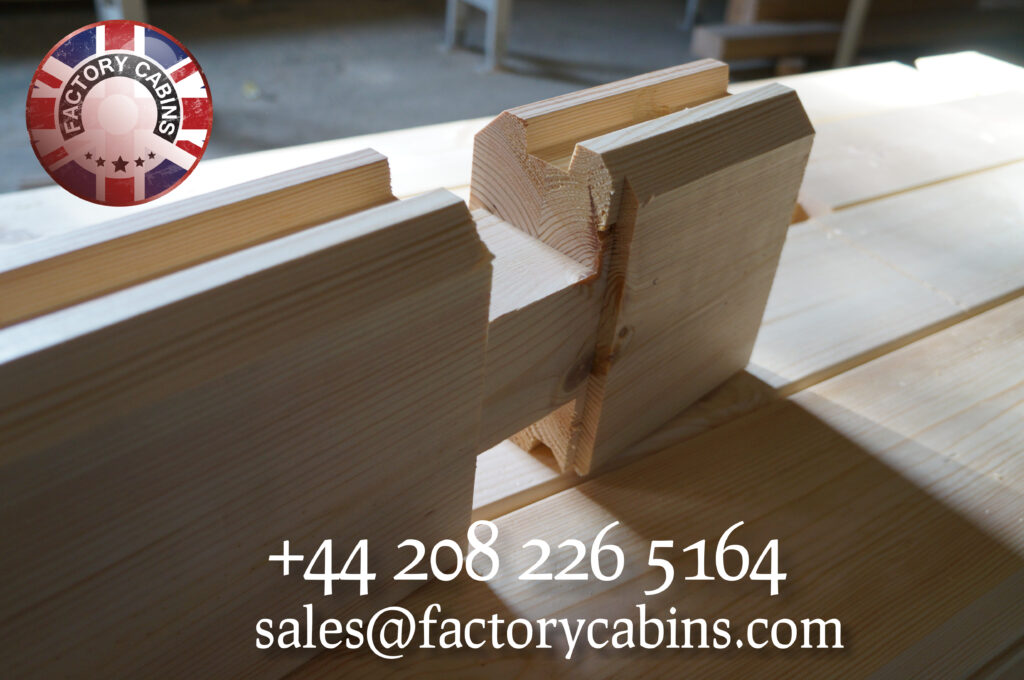
What truly distinguishes our cabins is the Twin Skin Log Cabin insulation system—a double-log wall construction developed in-house and refined over more than 23 years. While many competitors claim to offer “twin-skin” cabins, few understand the engineering required to make it work effectively. True Twinskin log cabins isn’t just two layers of logs nailed together; it’s a carefully calibrated system where:
An inner log wall provides structural stability and interior finish.
A continuous insulation layer (typically high-performance PIR or natural wool-based board) is sandwiched between the walls.
An outer log wall shields the insulation from rain, UV degradation, and wind-driven moisture.
This multi-layered approach delivers exceptional U-values—often surpassing those of conventional brick-and-block extensions—while maintaining the visual warmth and character of a traditional log cabin. The result? A space that stays warm in winter without excessive heating costs and remains cool and airy in summer thanks to the thermal mass of the timber and intelligent airflow design.
And this isn’t theory. Our very first Twin Skin cabin, installed in the Scottish Highlands in 2005, continues to serve as a family guest house today—with no signs of cracking, rot, or structural fatigue. The logs have naturally silvered with age, but the joints remain tight, the windows operate smoothly, and the interior remains dry and comfortable year-round. That’s the power of proper design executed with quality materials.
Tailored Solutions for Every Need and Budget
We understand that not every customer requires a full-time residential cabin. Some seek a garden office, a weekend retreat, or a hobby studio. Others want a permanent eco-home or rental property. That’s why we offer two primary log profiles, each engineered for specific use cases:
44mm × 44mm Twinskin Log Cabins. Ideal for seasonal use, summerhouses, or well-insulated garden rooms in milder climates. When combined with our insulation system and proper foundation, this profile provides excellent comfort from spring through autumn and can be used year-round with modest supplementary heating.
70mm × 70mm Twin Skin Log Cabins. Designed for full-time occupancy, colder regions, or customers prioritising maximum energy efficiency. The thicker logs provide greater thermal mass, reduce heat loss, and enhance acoustic privacy—making this the preferred choice for home offices, granny annexes, or off-grid dwellings.
Both options are fully customisable in size, layout, roof pitch, and interior finish. And because we manufacture directly—cutting out middlemen and distributors—we pass significant savings to you without compromising on quality.
Climate-Specific Advice: Because One Size Doesn’t Fit All
Where you build matters as much as how you build. A cabin in Cornwall faces different challenges than one in the Cairngorms or County Donegal. That’s why we don’t offer a one-size-fits-all insulation package. Instead, our team provides personalised guidance based on your location, orientation, and intended use.
For example:
In exposed coastal areas, we recommend enhanced wind-tightness detailing and marine-grade timber treatments.
In high-rainfall zones, we specify extended eaves and upgraded damp-proof courses.
For year-round habitation, we integrate underfloor heating conduits, MVHR (Mechanical Ventilation with Heat Recovery) compatibility, and triple-glazed window upgrades.
This consultative approach ensures your cabin isn’t just beautiful—it’s fit for purpose in your unique environment.
The Hidden Cost of “Cheap” Cabins: Why Quality Can’t Be Faked
Let’s address a difficult truth: the UK and Irish log cabin markets are rife with misleading advertising. Many sellers—especially online—use terms like “twin wall,” “insulated,” or “premium” without any verifiable standards. Some even rebrand basic single-skin sheds with added foam board as “eco-cabins.” These products often suffer from:
Poor log grading (leading to warping, twisting, and gaps)
Inadequate sealing (causing drafts and water ingress)
Substandard hardware (hinges rust, locks fail within months)
Worse, many of these companies disappear after installation, leaving customers with no recourse when problems arise.
As we often say: “A cheap Rolex is still a fake.” You might save a few hundred pounds upfront, but you’ll pay far more in repairs, heating bills, and disappointment. At Factory Cabins, we believe your investment deserves better. We use only slow-grown Nordic spruce, kiln-dried to 16–18% moisture content—the optimal range for stability in the UK climate. Our joinery is assembled by craftsmen who understand wood movement, not factory line workers following generic templates.
Buyer Beware: Navigating the Online Marketplace with Confidence
Unfortunately, dishonesty is not uncommon in the online cabin trade. Fake reviews, stock photos passed off as real installations, and bait-and-switch pricing tactics are all too prevalent. To protect yourself, we strongly advise:
At Factory Cabins, we welcome scrutiny. We’re proud of our track record, our craftsmanship, and our customers’ satisfaction. We encourage you to compare—not just prices, but long-term value, material transparency, and service integrity.
Sustainability and Responsibility: Building with the Future in Mind
Beyond performance and aesthetics, we’re committed to environmental responsibility. Timber is one of the most sustainable building materials on Earth—especially when sourced from certified forests where replanting exceeds harvesting. Our cabins store carbon for decades, unlike concrete or steel structures that emit CO₂ during production.
Moreover, our efficient designs reduce energy demand over the building’s lifetime. A well-insulated Twinskin log cabin can cut heating costs by up to 60% compared to a poorly built alternative—lowering both your bills and your carbon footprint.
We also minimise waste through precision CNC cutting, which optimises material usage and reduces offcuts. Leftover timber is repurposed for packaging or donated to local woodworking schools.
Final Thoughts: Your Cabin, Your Legacy
A log cabin is more than a structure—it’s a place for memories, creativity, rest, and connection with nature. It should feel solid underfoot, quiet during storms, and warm on frosty mornings. It should age gracefully, not deteriorate. And it should reflect your values: quality over convenience, authenticity over imitation, and long-term thinking over short-term savings.
At Factory Cabins, we’ve spent over two decades refining a system that delivers exactly that. From the first sketch to the final coat of protective oil, every step is guided by respect—for the material, the craft, and the customer.
So, whether you’re dreaming of a woodland hideaway, a productive home office, or a sustainable forever home, know this: you deserve a cabin that performs as beautifully as it looks. And with Factory Cabins, that’s not just a promise—it’s a proven reality.
Visit us at www.factorycabins.com to explore our full range, request a personalised quote, or schedule a consultation with our design team. We’re here to help you build something you’ll be proud of—for years to come.
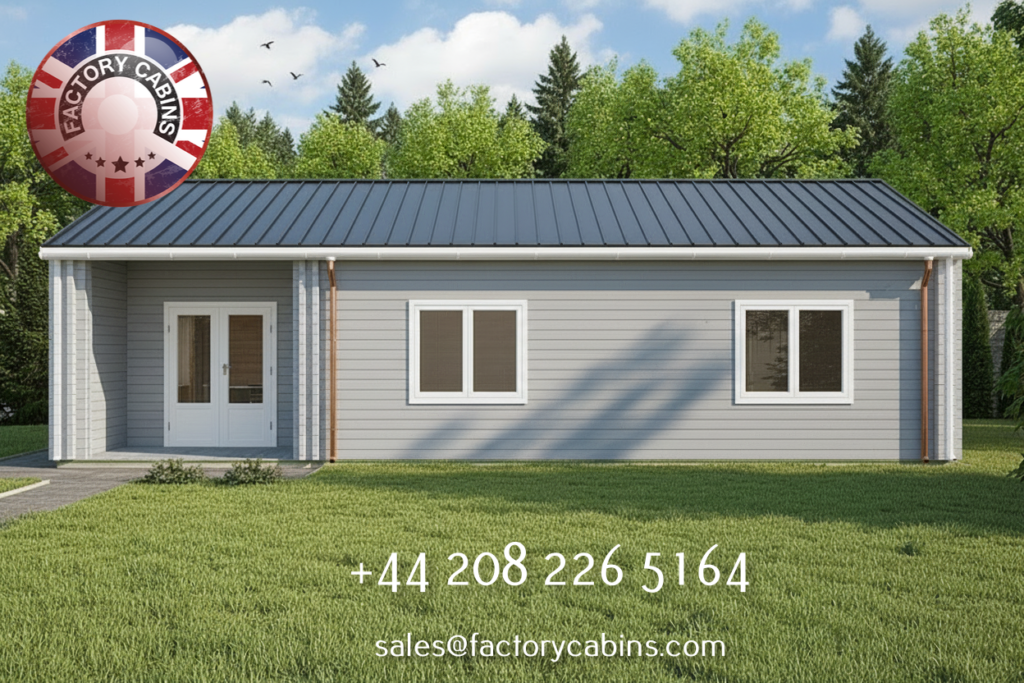
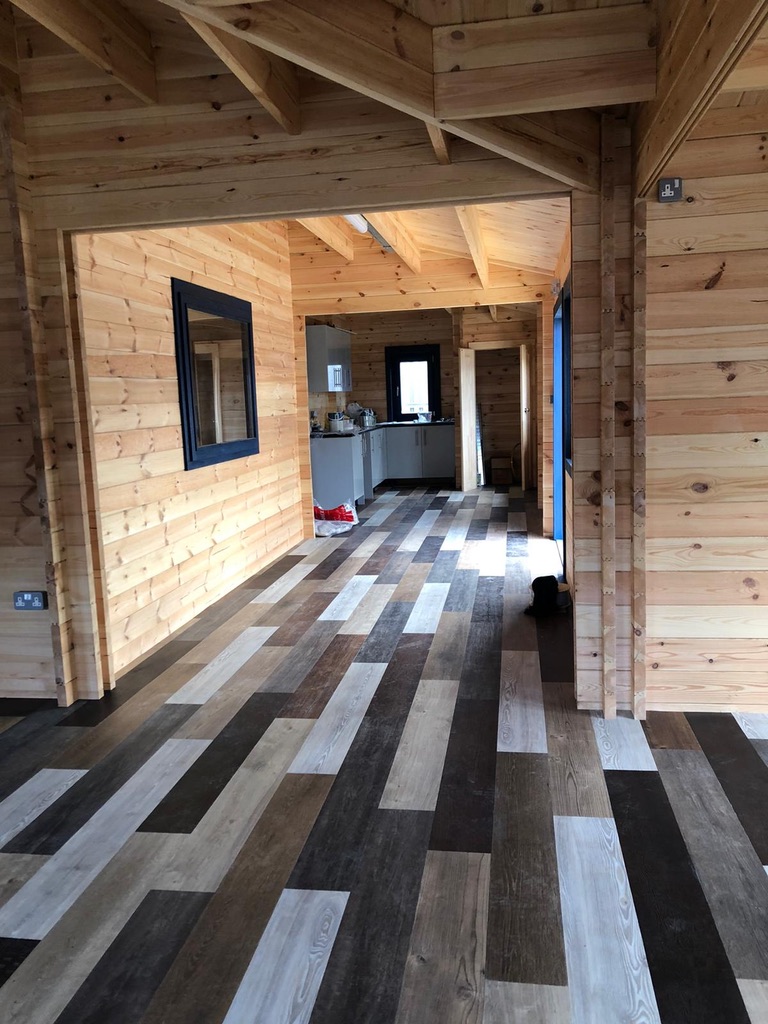
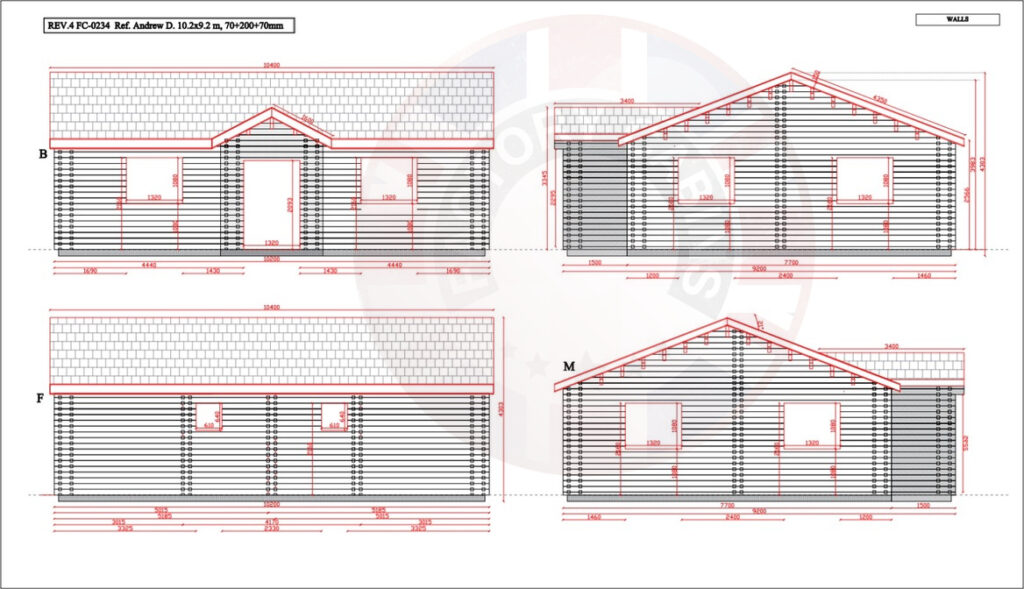
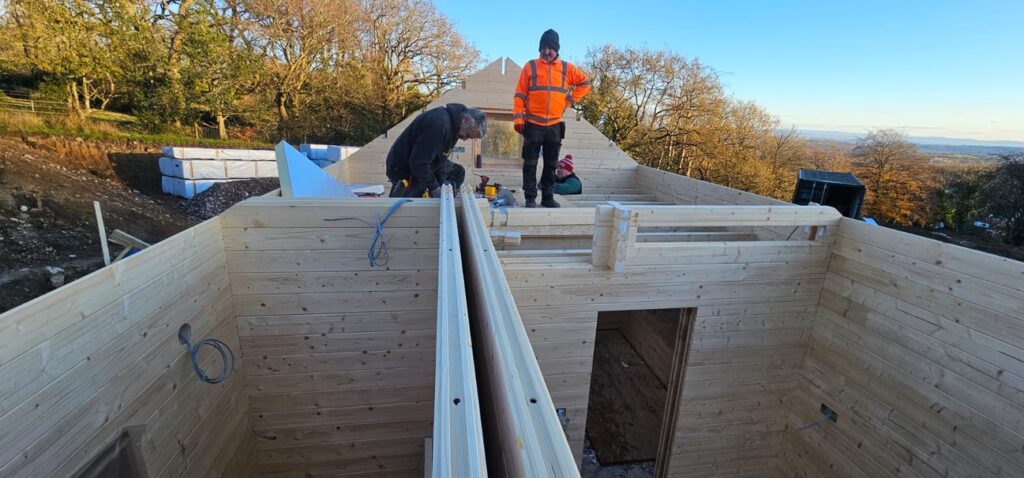
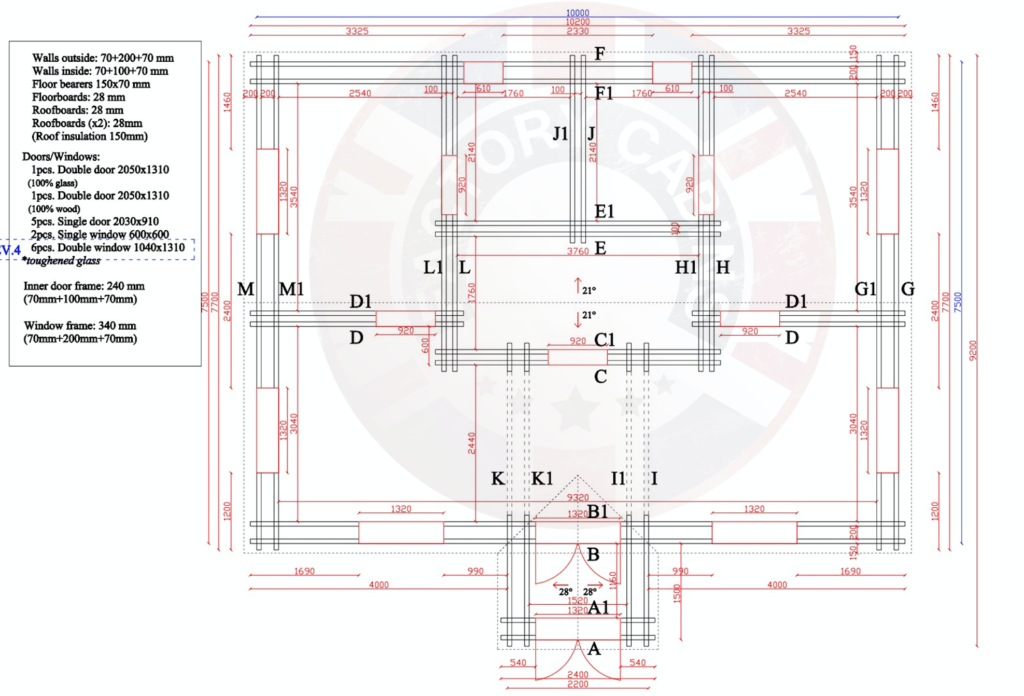
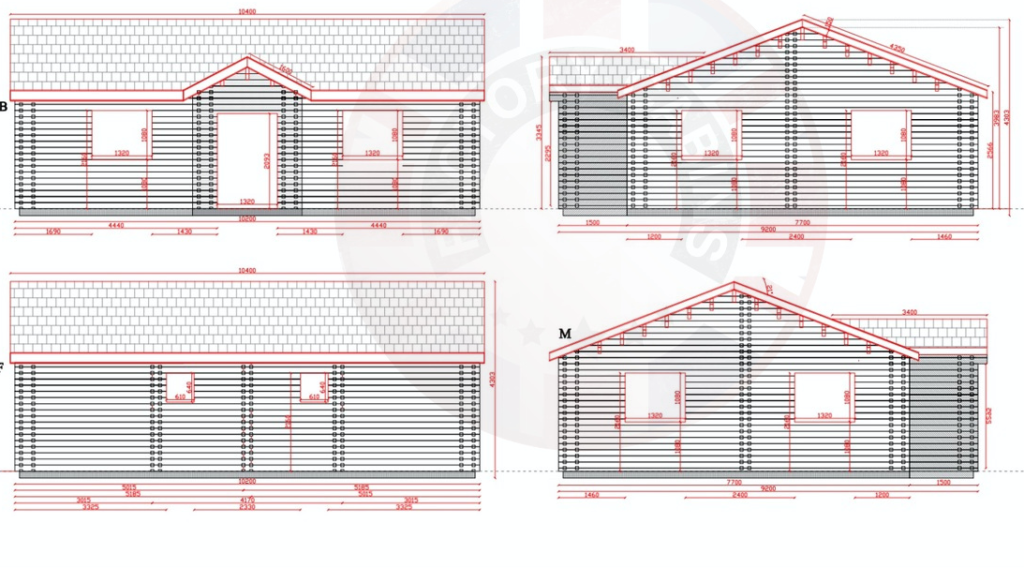
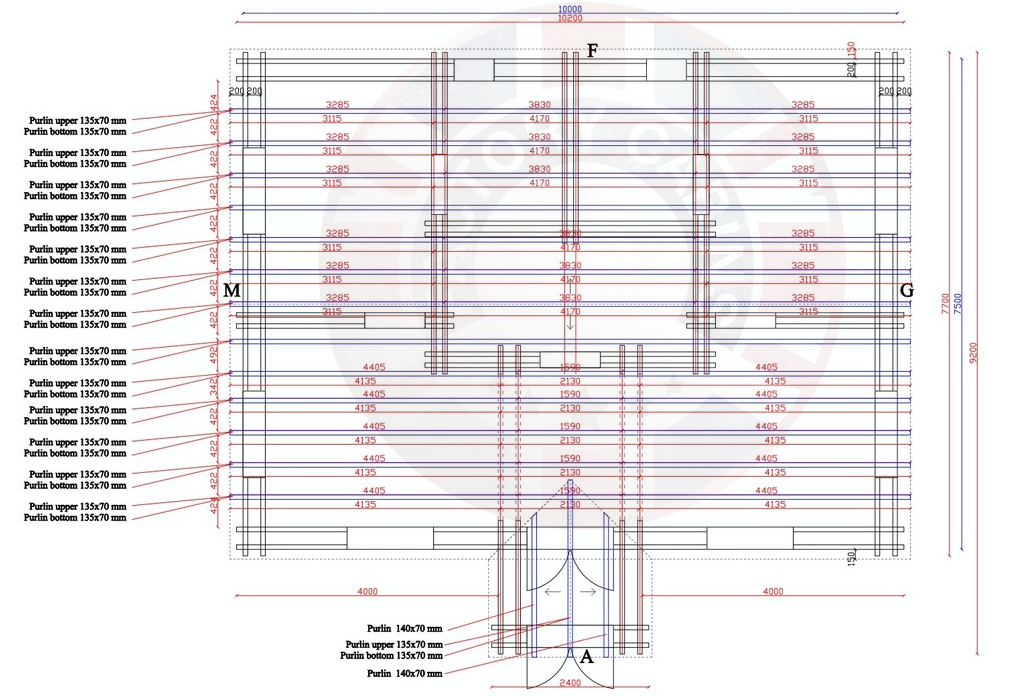
If you are looking for a Twinskin log cabin that is a 70mm x (200 void for insulation) x 70mm , 2 bed-2 ensuite, Lounge, Kitchen and Utility room which is has the external measurements of, 9.2m x 10.2m, we have one in stock that is ready to go.
Price on request.
Please send us an email to sales@factorycabins.com
What is there to say? This log cabins is a twin-skin; that means it has two walls, not one, and in the void between the walls you can add all your insulation and wires, plus optic cabins, etc.
There is not a company in England or Ireland that could possibly offer you all of this and more at this price for this size of building. Impossible.
(OUR TWINSKIN LOG CABINS ARE NOT JUST THE BEST; THEY ARE THE BEST (THAT IS A FACT; WE DESIGNED THE SYSTEM AND PROVIDE IT AT REASONABLE PRICES).)
We are also able to offer a full-turn-key solution.
We have one of the best-fitting crews in the UK
Call today and get a welcoming voice who understands everything about everything. +44 208 226 5165
Why are our twin skins the best? Possibly because we were the ones that invented this system, we have the best machines, CNC cutters, and craftsmen in the industry. We always have the desire to improve everything we put our minds to.
Sadly, the industry has now fallen on its knees, as there is a shortage of certain materials in other countries, which is why you see companies selling 60mm cabins and not 44mm.
Do not be fooled when companies say you are getting a free upgrade to 60mm, which is what you will take, as it is priced into the cabin.
44mm is a difficult size log to find in countries where they mass produce log cabins. Due to Russian sanctions, if you want a 44mm, tell them to price a 44mm. You will see them saying 60mm is better and then the truth hopefully comes out.
The difference between the two can be in the hundreds of pounds; never get caught up in the (for free) part; nothing is for free.
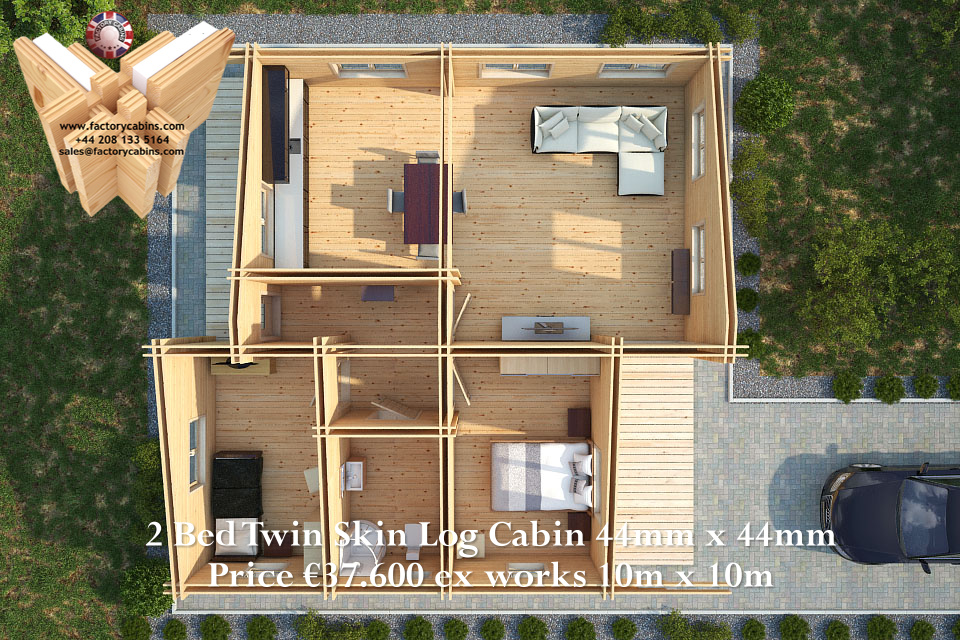
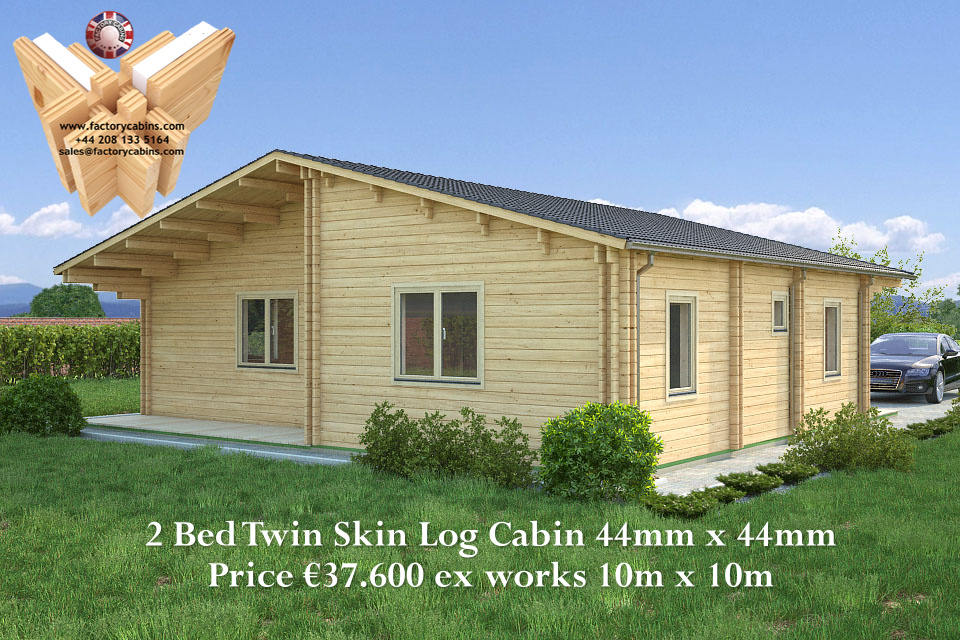
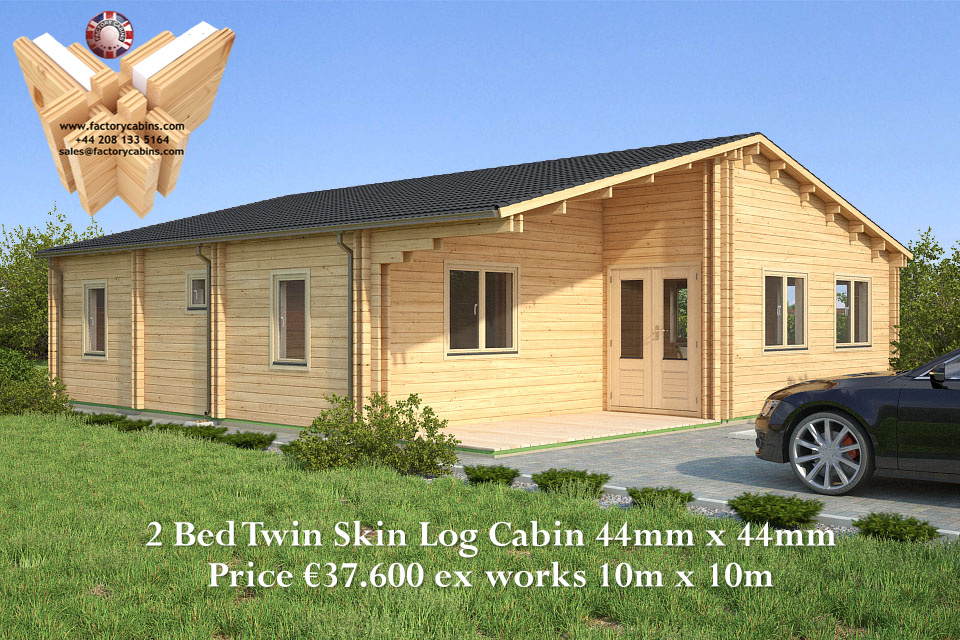
So getting back to our Twin Skin log cabin (10 m x 10 m), which has 3 bedrooms and is also priced ex works, that means here at the factory for thousands less, which for a double-walled cabin, which has amazing windows and doors, is a giveaway.
Features.
Amazing windows and doors and high-quality pine logs are the best for any building manufactured as a log cabin because they soak up the stain better than any other soft wood, making the impregnation successful. We do not cut the logs at the end to make them look like arrows. Companies that do this do it for a purpose, so when you have built your cabin and the logs start to twist, you cannot see it. Our logs do not twist, so we do not need to do this, and we keep the cabin honest-looking.
Massive savings on factory twin-skin log cabins.
Today we are offering a 2-bed twin-skin log cabin for thousands less than your local reseller.
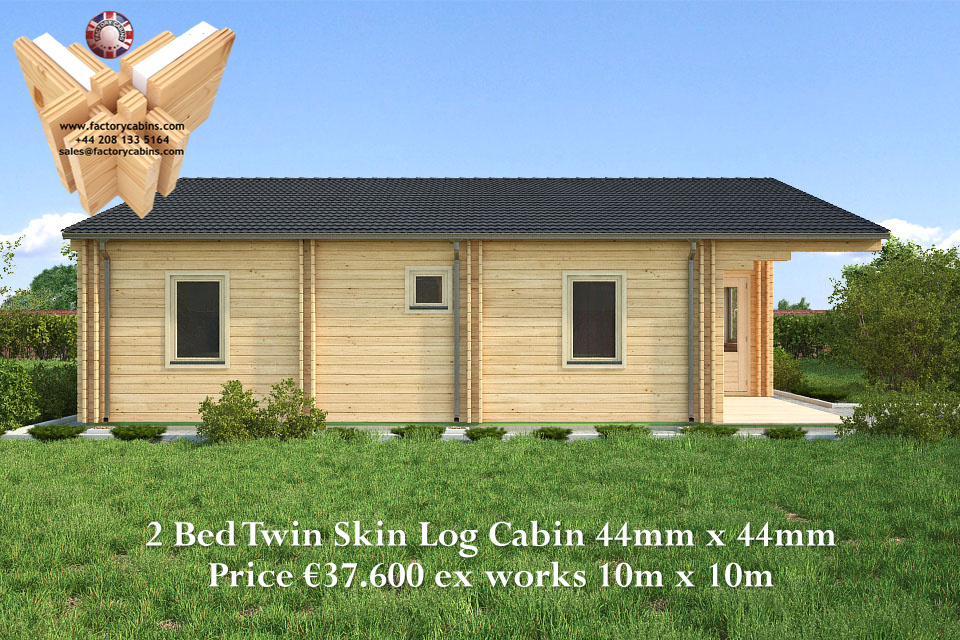
Twin Skin Log cabin 3128
Twin-skin cabin size: 10.0 m x 10.0 m Decking: 1.5 m x 5.5 m Decking: 2.0 m x 4.5 m
Window size: 88 cm x 131 cm x 113 cm Window size: 1×50 cm x 50 cm Window size: 2 2x 71 cm x 113 cm
Door size: 1 cm x 193 cm Door size: 1 1x 141 cm x 193 cm Door size: 4 4x 83 cm x 193 cm (inside)
Factory Cabins: Creating Outdoor Living Spaces of Excellence
Introduction
We take great pleasure at Factory Cabins in providing stunning garden buildings and outdoor structures that not only enhance the appearance of your outdoor space but also provide practicality and durability like no other. Our dedication to craftsmanship and quality distinguishes us in the business, making us a top choice for customers looking for luxury garden structures.
Challenge …..We would put any our log cabins up against any other manufacturer and have 5 member of the public score the cabins, and we would win, 5/5.
Exploring Our Legacy
A Family Custom
Factory Cabins was founded in 2001. Our adventure began with a simple vision: to design extraordinary garden structures that are in harmony with nature and will last a lifetime. We continue to follow this legacy with unshakable dedication, even today. We were the first to bring log cabins to the UK, and it was us that helped shape the market today, as most of the top 3 sellers in the UK came to us, cap in hand asking us to help them, and supply them, sadly since those days, they have ventured off on their own, and have brought nothing of quality to the market but mass manufactured rubbish; they have not changed the doors, windows, or range. Same old crap, year after year, the only thing thats changed is the prices.
Unrivalled Knowledge
Our staff consists of seasoned artisans and craftspeople with decades of experience. Their skill, along with our cutting-edge facilities, guarantees that each garden structure we design is a work of beauty in its own right. Our attention to detail is unrivalled, from custom design to painstaking construction. Our windows and doors, are simply the best of the best in the UK-Europe.
The Factory Cabins Distinction
Excellent Materials
We feel that the materials employed form the foundation of an extraordinary garden structure. As a result, we only use the best timber and other materials, guaranteeing that each construction is built to last. And if you follow our tearms and conditions your cabin can last many many years, not the ten years everyone always brages about, but 20-30 years easy, you just need to follow our recommendations. As part of our commitment to sustainability, we source our wood from goverment responsibly managed forests.
Custom Design
No two gardens are alike, and neither should the garden structures that adorn them be. We specialise in producing custom- bespoke designs that are suited to your individual requirements and tastes. Our design staff collaborates directly with you to realise your idea, ensuring that your garden building is a true representation of your personality.
Unrivalled Quality
For us, quality is more than a phrase; it is a way of life. At every stage of production, our buildings are subjected to stringent quality controls. We maintain the highest standards from the first design concept to the last coat of paint to develop goods that exceed your expectations.
Offices in the Garden
Creating the Ideal Garden Office: Your Complete Guide
Introduction
Working from home has been increasingly popular in recent years as people seek a more harmonious work-life balance. The concept of a garden office has grown in popularity as the demand for remote workspaces has increased. A garden office creates a peaceful and productive setting right in your own backyard, giving you the best of both worlds: work and nature. In this detailed guide, we’ll delve into the complexities of designing the ideal garden office for you.
Location Is Important
Choosing the Best Location
It is critical to choose the best site for your garden office. Make sure it’s strategically situated to maximise natural light while minimising distractions. Look for a location that matches the aesthetics of your garden and evaluate its accessibility to your home for ease.
Creating Your Garden Office
Personalization and functionality
Customization is essential when it comes to constructing your garden office. Customise the design to your specific needs and tastes. Choose a plan that encourages work, with plenty of storage space and ergonomic furnishings. A well-planned design can considerably improve your work experience.
Materials for Sustainable Construction
Using eco-friendly materials in your garden office not only decreases your environmental impact but also increases the value of your property. To build an environmentally conscious workstation, use sustainably sourced wood, energy-efficient windows, and insulation.
Technology and wiring
Hiring a skilled electrician to perform the wiring will ensure that your garden office is fully functional. For remote work, a dependable internet connection is crucial, so invest in a high-speed, outdoor-ready Wi-Fi system. Additionally, to reduce energy consumption, consider adopting eco-friendly lighting alternatives. We can help with this.
Blending Landscaping and Aesthetics with Nature
A well-designed garden office fits in with its environment. Planting native trees and plants around the office not only improves its aesthetics but also supports biodiversity. With a garden path and a little patio for breaks, you can create a relaxing ambiance.
Permits and Regulations
Considerations Legal
Before beginning your garden office project, learn about local restrictions and permit needs. Compliance with these regulatory requirements promotes a smooth construction process and peace of mind. We can help with this.
Finally, the concept of a garden office is more than a trend; it is a lifestyle option that provides an ideal work-life balance. You can construct a garden office that not only fits your work needs but also improves your overall quality of life by carefully considering elements like as location, design, sustainability, electrical setup, landscaping, and legal requirements. Enjoy the peace and quiet of your yard while remaining productive in your personalised workspace.
Customer satisfaction is our number one priority.
Our dedication to quality extends beyond the construction phase. We take pleasure in offering outstanding customer service and support. We ensure a smooth and joyful process from the minute you discuss your ideas with us to the day your garden building is completed.
Factory Cabins is more than just a garden structure manufacturer; we create outdoor fantasies. Our commitment to craftsmanship, quality, and client satisfaction has earned us a reputable reputation in the business. When you choose us, you are choosing a legacy of excellence that will enhance your outdoor living space for future generations
Please call us on +44 0208 133 5164 Or email sales@factorycabins.com
Please always read our terms and conditions.They are full of very helpful tips, things you should not do. Better to know than not!