Why Quality Beats ‘Cheap’: The truth about log cabins that are on sale now with 33% off or even 50% off, which must tell you something: it’s utter madness.
Even now at the beginning of the season, if any company is offering discounts, one, they have loads of old stock from last year, and two, you should be asking yourself why this is bad because most high-volume mills that manufacture log cabins literally stack them high, which means the pack on the bottom of that stack will have 10 to 15 tons stacked on top of it. So that’s not good. Next, it means that you could be getting a very old compressed cabin, which will not be going together very well. When you normally see ‘cheap,’ you should convert that word to ‘old.’
The Real Price of “Cheap is Cheerful”: Why a Quality Log Cabin from the Mill is Worth Every Penny
There’s something special about Kent—rolling hills, old villages, and that feeling of peace you get just by stepping outside. It’s no wonder more people want a little sanctuary in their gardens.
Maybe you want a home office, a spot for your hobbies, a guest room, or just somewhere quiet to escape. A log cabin sounds perfect, right? So you start searching for “cheap log cabins for sale in Kent,” thinking you’ll save a bundle.
But here’s the thing—what does “cheap” really cost you in the end? The old saying goes, “Buy cheap, buy twice,” and nowhere does it ring truer than with garden buildings.
Let’s look at why spending more on a high-quality log cabin—one straight from a trusted manufacturer—actually makes sense. It’s not just about getting a building that lasts. It’s about peace of mind, less hassle, and real value for your money.
The Temptation—and Trouble—of a Cheap Cabin
You’ll see loads of bargain cabins online, all promising a quick, easy fix. Most of these are mass-produced in huge factories in the Baltics, Poland, or Eastern Europe using quick-grown pine, which is sad, as the trees are normally only 30 to 40 years old, not 100+. Their stunted growth is only down to greed.
Some facts, and please remember we only use Swedish spruce.
Baltic pine” in log cabins = industrial waste timber – rejected by furniture/paper mills.
< 5% of the Baltic pine harvest goes to cabins—and it’s the worst 5%.
At first glance, they seem like a steal. But that low price? It comes from cutting corners everywhere.
1. The Foundation: Cheap Timber, Endless Problems Timber is the soul of a cabin. If you get a good one, it’s made from slow-grown, kiln-dried Nordic spruce or pine.
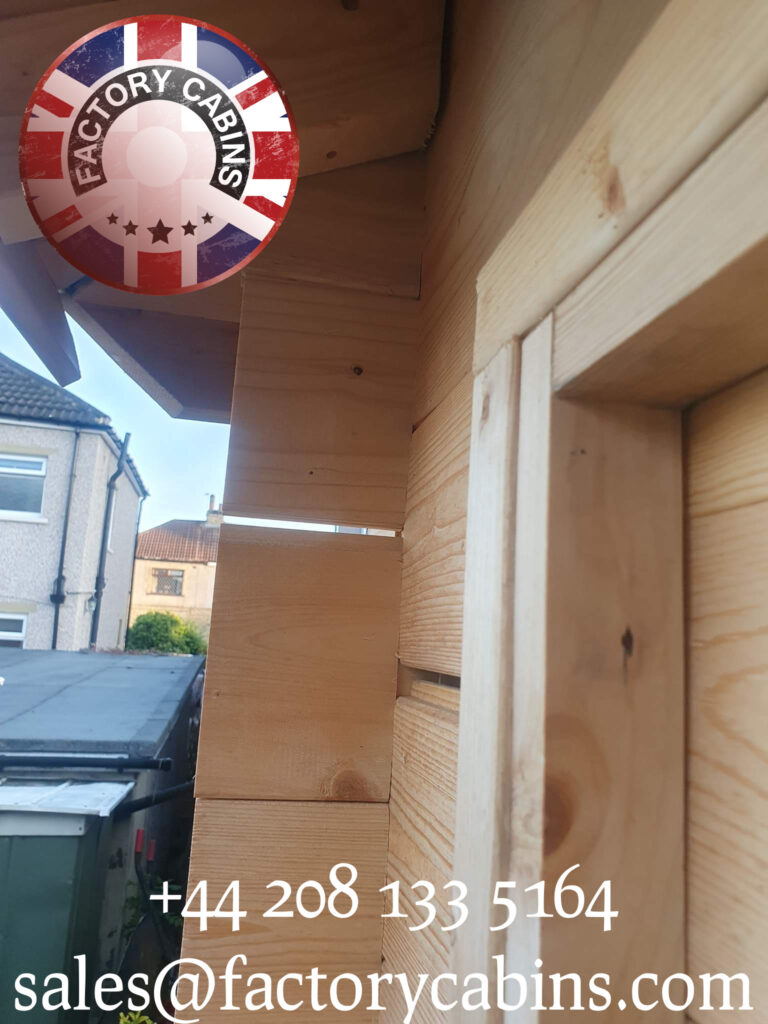
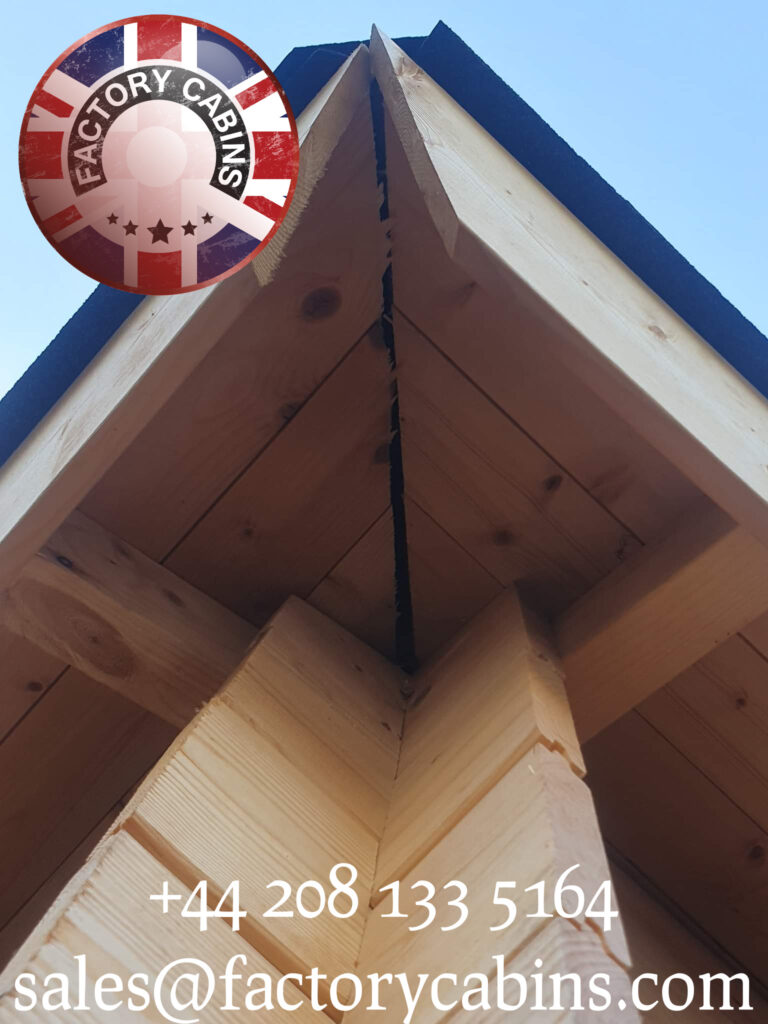
This wood, toughened by harsh winters, grows tight and dense, so it stays strong and straight and resists splitting. Cheap cabins? They use fast-grown, green, or badly seasoned softwood. The growth rings are wide, the wood is soft, and once you install it, it starts to shrink and shift. Gaps open up. Cold creeps in. Moisture finds its way through. Before long, your logs move, and the building develops draughts and leaks.
Doors and windows stop fitting right. They stick—or won’t close at all. The whole structure loses its strength from day one. Suddenly, you’re not just buying a cabin—you’re buying a never-ending project: more fixes, more repairs, more headaches.
2. Windows, Doors, and Fittings: More Cut Corners The savings don’t stop at the timber.
Manufacturers eager to keep prices rock-bottom use the cheapest windows—thin, single-glazed panes in wobbly, poorly sealed frames. You get little insulation. In winter, the cabin’s freezing and damp. In summer, it turns into an oven. The glass fogs up, cracks, and maybe even leaks. The doors are just as bad—hollow, flimsy, and easy to warp. Don’t expect much security. Hinges and locks are basic, barely keeping the weather or intruders out. Even the screws and brackets are usually bargain-bin quality. They rust, snap, or just give up. When you go cheap, you’re really just buying a shell. Right away, you’ll need to upgrade Windows, swap out doors, and replace failing hardware. Whatever you saved up front disappears fast.
3. The Hidden Costs: Stress, Wasted Time, and More It doesn’t end with shoddy materials. Mass-produced cabins are pumped out so fast, quality control becomes an afterthought. People get deliveries with missing or broken logs—or the wrong parts entirely. Try sorting that out with a distant supplier who barely answers emails. It’s a headache, and it eats up your time. Assembly is another story. Instructions are often vague or badly translated. What was supposed to be a “fun DIY weekend” turns into days of confusion and frustration. You waste time, energy, and probably your patience. In the worst cases, you end up replacing the cabin much sooner than you expected. This is the real meaning of “buy cheap, buy twice.” You pay less up front, but you pay again—sometimes with your wallet, always with your time and sanity.
The Factory Cabins Difference: Real Craftsmanship, Real Value.
Let’s take a closer look at what you really get when you choose a log cabin from a company that puts quality, longevity, and your satisfaction first. At Factory Cabins, we get it—a garden building isn’t just a shed or a box out back. It’s a big investment in your home and your day-to-day life. That’s why we don’t cut corners.
Our approach is straightforward: build it right, build it to last.
1. Premium Materials, Top to Bottom We start with the good stuff—slow-grown timber, carefully kiln-dried until it hits just the right moisture level. That means our logs are solid, stable, and ready to handle years of unpredictable British weather. We don’t stop at the logs, either. Every part matters. Our cabins come with sturdy double-glazed windows, secure doors, and high-quality fixtures and fittings. We pick these not because they’re cheap, but because they work, and they last.
2. The Game-Changer: Twin-Skin Construction Here’s where Factory Cabins really pulls ahead: We’re experts in twin-skin log cabins. Picture this—two layers of interlocking logs, with a big cavity in between, packed with proper insulation.
This isn’t just a gimmick; it transforms the whole building. You get serious benefits: – Superior Insulation: A twin-skin cabin keeps you warm in winter and cool in summer. You’ll notice the difference on your heating bills, and you’ll actually want to spend time in there all year round. – Built to Last: That extra layer of logs adds major strength.
Throw in the insulation barrier, and you’re protecting your timber from damp and extending your cabin’s life by years. – Peace and Quiet: The insulated gap also blocks out noise, so your cabin becomes a true escape from the outside world. Really, a twin-skin cabin is nothing like a flimsy garden shed—it’s a proper extension of your home, comfortable and built to stay that way.
3. Beyond Cabins: A Full Range of Timber Buildings Our love for timber construction doesn’t stop at log cabins.
We build a whole range of timber structures—modern garden offices, backyard gyms, cosy camping pods for glamping, and you name it. All of them stick to the same principles: quality materials, smart design, and solid value. Got an idea that’s a little out there? We’ll work with you to make it real. Why Buy Direct? Here’s the Big Difference One of the best things about factory cabins is you buy straight from us. No middlemen, no extra markups, just a direct line from our workshop to your garden.
That alone saves you about 30% compared to the usual supply chain. But the real advantage is personal service. You get to talk to the people who actually build your cabin. Got questions? We answer them. Need advice? You get the honest, technical details—no scripts, no pressure. And if you need something after your cabin’s up, we’re still here. Fast support, real accountability. That’s something you just won’t find with a faceless reseller.
Please send us an email to sales@factorycabins.com
or call 0208 226 5164