Category Archives: https://factorycabins.com/

The New 45 SQM Garden Homes, Southern Ireland

The 45 sqm “Exemption” Trap: Why the New Planning Rules Actually Demand a Higher Standard of Build

PUBLIC NOTICE: Before proceeding, we urge all readers to review the following information carefully. The market is currently being saturated with misleading claims and deceptive marketing. Our objective is to ensure complete transparency and protect the public from these misrepresentations. Upon reviewing the factual evidence provided below, the deceptive nature of these claims becomes immediately undeniable.
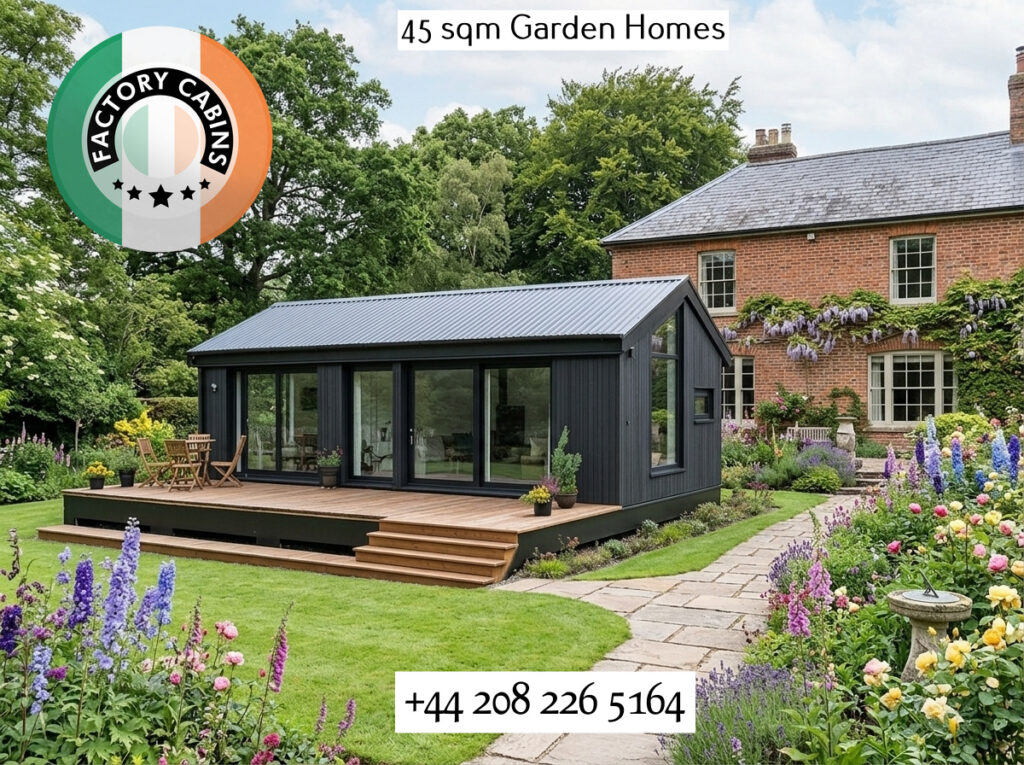
The Window Question: Why Material Choice Matters

While a triple-glazed uPVC window might look acceptable on a spreadsheet for a budget build, comparing it to factory-manufactured timber glulam triple-glazed windows and doors is like comparing a plastic toy to a precision-engineered machine.

If you put uPVC windows into a premium, net-zero-ready building, you are completely undermining the quality of the build. Here is exactly why timber glulam specification outperforms uPVC, especially for high-end projects in the UK and Ireland:

1. Structural Integrity & The “Steel Core” Problem

Triple-glazed glass units are incredibly heavy.

  • uPVC: Plastic is not strong enough to hold heavy triple-glazing on its own. To stop the windows from sagging or warping, uPVC manufacturers have to insert galvanised steel or aluminium reinforcements inside the plastic chambers. This creates a massive thermal bridge right in the middle of your window frame, letting heat escape and ruining the U-value.
  • Timber Glulam: Glued Laminated Timber (glulam) has immense structural strength. Timber frames can support massive, heavy triple-glazed units naturally, without any metal reinforcements. This means the frame remains 100% thermally broken, maintaining premium U-values without cold spots.

2. The “German Hardware” Reality (Tilt & Turn)

High-end German hardware is essential for full tilt-and-turn functionality.

  • uPVC: Over time, the repeated heavy operation of tilt-and-turn mechanisms strips the screws out of plastic profiles. uPVC simply cannot grip heavy-duty metal hinges as tightly as solid wood over 20 years of daily use.
  • Timber Glulam: Solid timber and glulam bite into the screws and hinges permanently. German hardware will operate smoothly for decades because it is anchored into a structurally superior, dense material.

3. Longevity and the “Buy Cheap Twice” Rule

  • uPVC: uPVC is essentially plastic. Under the UV rays of the sun and the harsh weather of the UK/Ireland, it becomes brittle, discolours (turns yellow or chalky), and the rubber seals perish. After 15–20 years, a uPVC window cannot be repaired; it has to be ripped out and sent to a landfill. It is the definition of “buy cheap twice”.
  • Timber Glulam: High-quality timber (especially thermally modified timber for external exposure) lasts 60+ years. If a timber window gets scratched or weathered after 30 years, you don’t throw it away—you simply sand it down and refinish it. It is a permanent, lifetime investment.

4. Fire Safety and Toxicity

In the event of a fire, uPVC (which is petroleum-based) releases highly toxic chlorine gas and dense black smoke. Timber, conversely, chars predictably and does not release toxic synthetic fumes, making glulam windows vastly safer for residential dwellings.
5. Aesthetics and Property Value

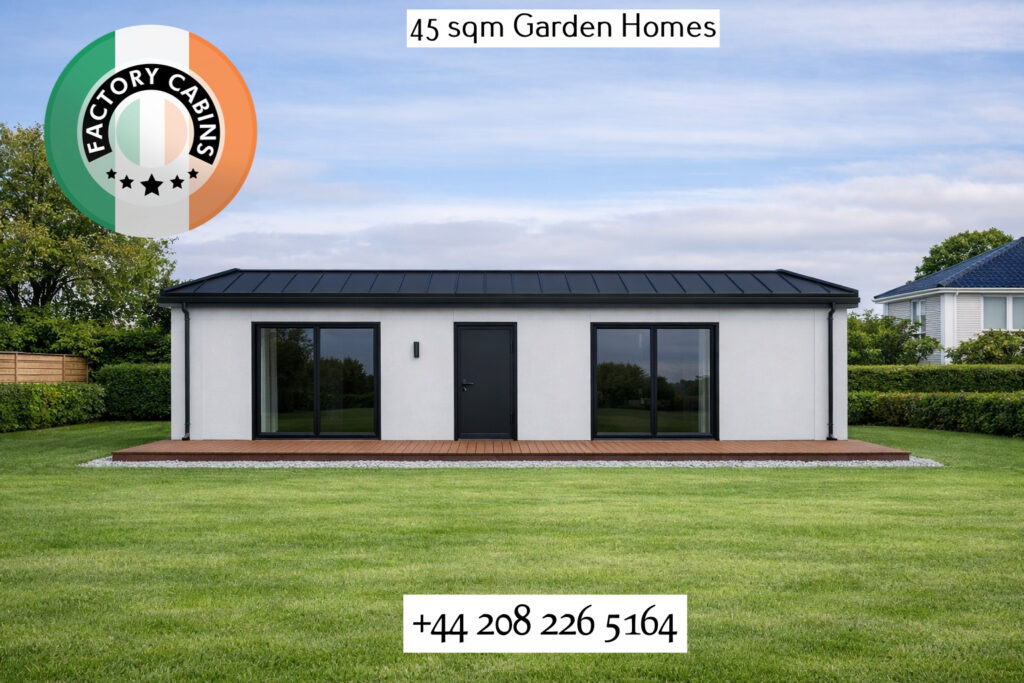
builder-grade”.A beautiful, architecturally designed 45 sqm dwelling with a dining area, living space, and master bedroom deserves components that match its quality. If a buyer walks into this stunning, highly insulated, net-zero-designed timber home and touches a plastic, hollow-sounding uPVC window, the illusion of luxury is instantly broken. Timber joinery glulam adds warmth, prestige, and tangible value to the property. uPVC screams “cheap builder-grade”.


The Verdict: Specification Matters

A truly premium specification is an absolute masterpiece of building physics. With 200mm floor insulation, 300mm wall insulation, 350mm roof insulation, and a ventilated service cavity, specifying uPVC windows and doors instead of joinery glulam triple-glazed windows is like putting cheap, budget tyres on a Porsche.


The 45 sqm Planning Exemption: What You Need to Know

The government has just announced proposed changes to the Planning and Development Act, introducing new exempted development regulations. The headline? You can now build detached auxiliary habitable dwellings of 32 to 45 square metres in back gardens without needing full planning permission.

Naturally, the market is going wild. Every shed company and quick-fix modular builder is rubbing their hands together, printing flyers that scream, “No planning permission needed! Buy now!”

But here is the twist that the cheap competitors won’t tell you: Being exempt from planning permission does NOT mean being exempt from the building regulations.

The legislation specifically uses the word “habitable.” The moment you intend to sleep, work, or live in this 45 sqm structure, it must legally comply with strict building regulations regarding energy performance (NZEB standards), fire safety, and moisture protection.

The government didn’t lower the standards for a habitable home; they just removed the bureaucratic red tape to get it built faster. If you buy a cheap, single-skin, poorly insulated box from a company exploiting this “loophole”, it will fail building control, it will be freezing in winter, and it will rot from the inside out.
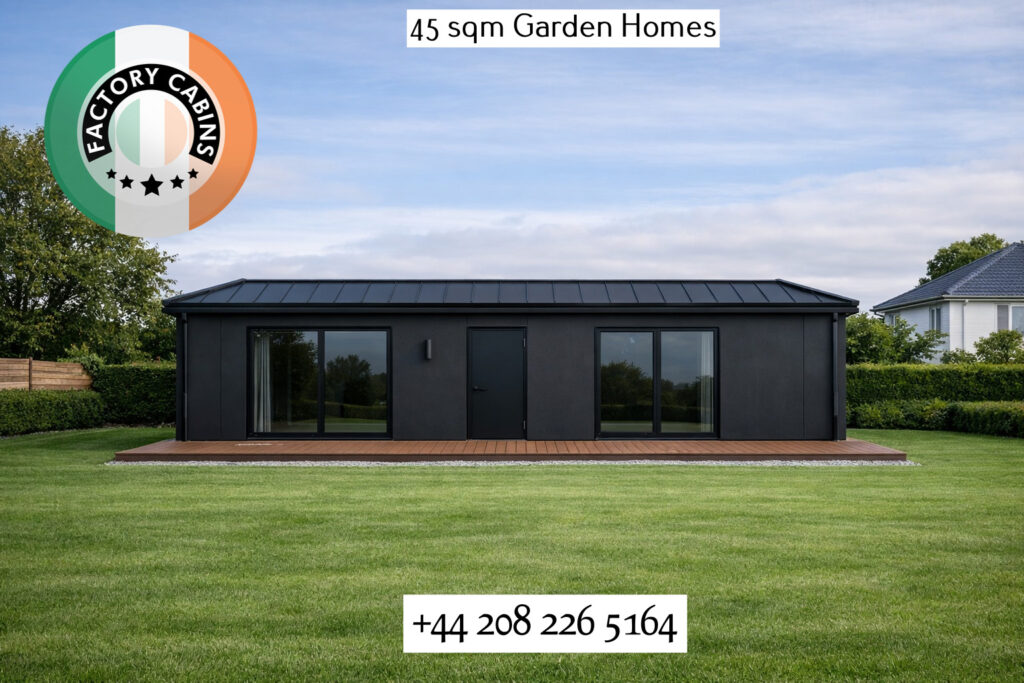
Why Factory Cabins Is the Excellent Choice for Navigating This New 45 sqm Landscape

1. We Build “Habitable” Homes, Not “Exempt” Sheds

While others are throwing up lightweight, uninsulated structures that legally cannot be used as dwellings, our buildings are engineered from the ground up to be permanent, year-round homes. We don’t just meet the baseline requirements for a 45 sqm auxiliary dwelling; we over-engineer the thermal envelope. We utilise massive, multi-layered high-performance insulation in our walls, floors, and roofs, ensuring your new garden dwelling costs almost nothing to heat and stays perfectly comfortable in the dead of winter.

2. True Factory Precision (The “PF” Advantage)

When competitors build a 45 sqm “exempt” dwelling, they are often assembling it on-site in the rain, leading to warped timber, compromised seals, and failed airtightness tests. And the airtightness test is not a joke; it should be taken extremely seriously. Why? It’s the make-or-break of whether your new 45 sqm house is allowed to take its place in your garden, or your building fails and the price just goes through the roof to fix it—even if it can be fixed. You cannot use a steel core if you are looking to pass the cold bridging test.

Our approach is entirely different. The core structural elements of our buildings are prefabricated (PF) in our highly controlled factory environment. Your approved construction drawings are fed directly into our CNC machinery. Every calibrated timber stud is cut to millimetre-perfect tolerances, and windows and doors are installed and sealed in the factory. When it arrives on your site, it is a precision-engineered machine, not a site-built experiment.

3. Engineered “Breathing” Walls for the Irish Climate

Ireland is wet. If you build a highly insulated, airtight 45 sqm dwelling without proper moisture management, you will create a mould factory. We don’t just stuff insulation into a wall and seal it up. Our unique wall build-up includes specialised windproof membranes, windproof plasterboard, and crucially, planed timber battens that create a dedicated ventilated air gap. This allows the structure to breathe and naturally expel moisture, protecting your investment and guaranteeing the structural timber lasts for generations.
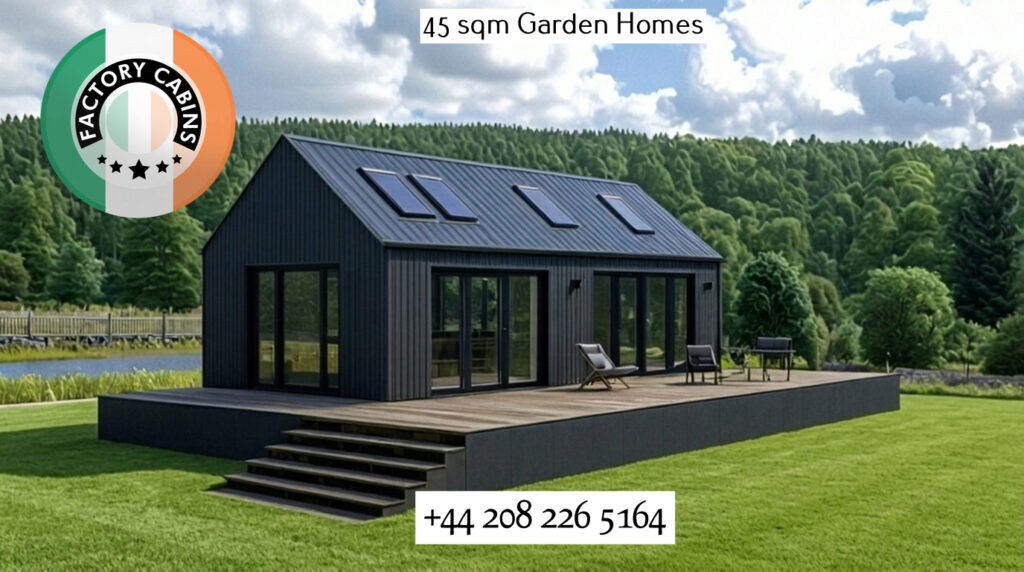
4. Heavy-Duty, Calibrated Structural Integrity

Many of the new “exempt” garden dwellings on the market are built with cheap, uncalibrated timber that warps and twists, resulting in bouncy floors and cracking plaster. We use strictly calibrated timber for our wall frames and heavy-duty calibrated beams for our floors, topped with premium, thick structural floorboards. When you walk through one of our 45 sqm dwellings, it doesn’t feel like a temporary garden room. It feels like a solid, permanent, luxury home.

5. Complete, Code-Compliant Interior Finishes

To legally be classed as a “habitable dwelling” under the new Act, the interior must meet fire and safety regulations. You cannot just line the walls with cheap plywood. Our specification includes proper, fire-rated gypsum board throughout the interior. Furthermore, for any wet areas like en-suites or kitchenettes, we specify waterproof, fire-rated green gypsum board, ensuring the building is fully compliant, safe, and ready for immediate use.

The Bottom Line: Don’t “Buy Cheap Twice”

The new Planning and Development Act regulations are a fantastic way to add valuable living space to your property without the planning headache. But it is exactly that—valuable living space.

If you treat a 45 sqm habitable dwelling like a garden shed, you will end up with a cold, damp, non-compliant eyesore that you’ll have to tear down in ten years. That is the definition of “buy cheap twice.”

At Factory Cabins, we are offering you a turnkey, net-zero-ready, precision-engineered home. We are taking the “exemption” and using it to deliver a building that actually respects the laws of physics, the strictness of the Building Regulations, and your financial investment.
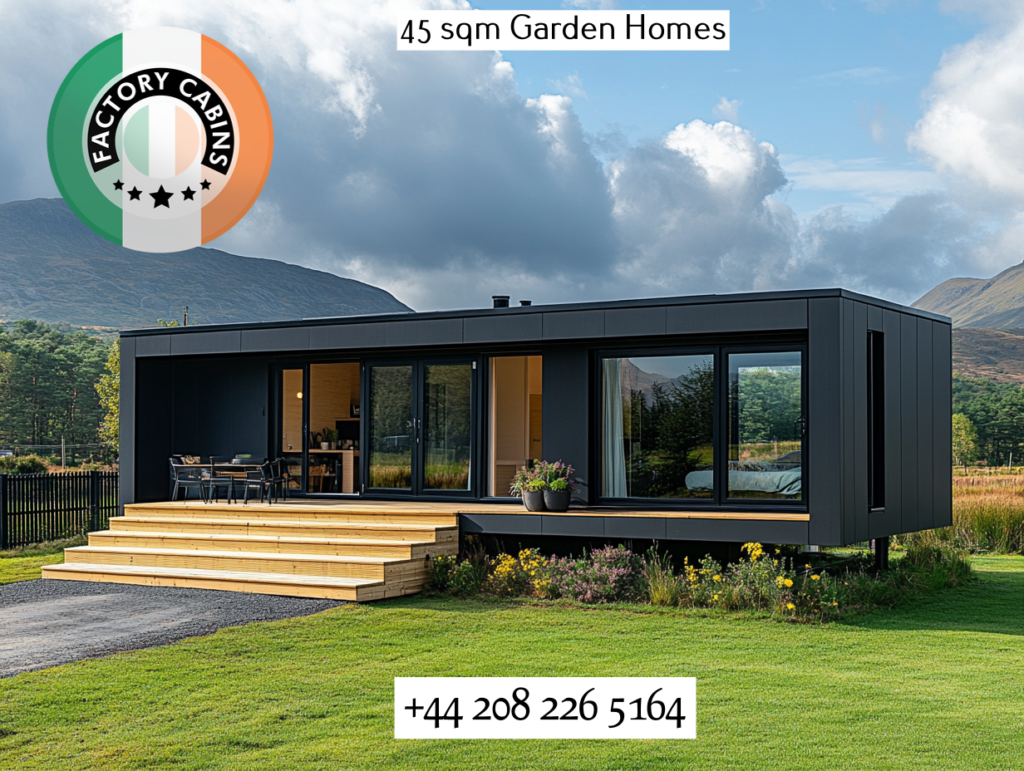
Why Our Buildings Are the Undisputed Choice for Quality and Compliance

When evaluating a garden building or modular home, the devil is in the details. While others cut corners to hit a low price point, our manufacturing process is engineered for longevity, comfort, and strict regulatory compliance. Here is exactly what sets our build quality apart:

1. True Factory Precision, Not On-Site Guesswork

We don’t build your home in the unpredictable Irish weather. The core structural elements of our buildings—including walls, floors, and even the installation of windows and doors—are prefabricated (PF) in a controlled factory environment. Our construction drawings are uploaded directly to CNC machinery, ensuring every calibrated timber stud and joint is cut to exact, millimetre-perfect tolerances. This guarantees superior airtightness and structural integrity that site-built competitors simply cannot match.

2. A Thermal Envelope That Redefines Efficiency

Standard garden buildings rely on token amounts of insulation. Our specification features a massive, multi-layered thermal envelope. We utilise high-performance ISOVER insulation at exceptional depths across the entire building: deep within the wall cavities, a dedicated internal service cavity, thick layers beneath the floor, and a dual-layer system in the roof. This ensures the building retains heat effortlessly in winter and stays cool in summer, drastically reducing running costs and far exceeding standard energy regulations.
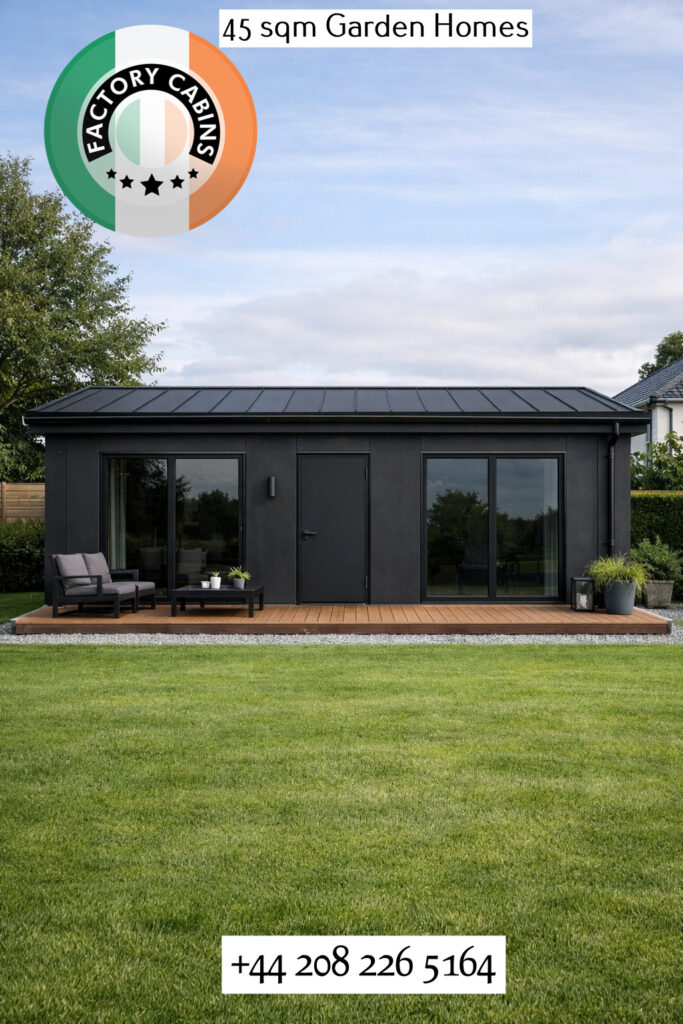
3. Engineered “Breathing” Walls for Ultimate Moisture Protection

Ireland’s climate is unforgiving, and trapping moisture inside a wall is a recipe for black mould and structural rot. Our wall system is meticulously layered to manage moisture perfectly. It features a windproof membrane and windproof plasterboard on the exterior, a robust waterproof membrane on the interior, and crucially, planed timber battens that create a dedicated ventilated air gap. This allows the structure to breathe and dry out naturally, protecting the timber frame for generations.

4. Heavy-Duty, Calibrated Structural Timber

You won’t find warped, lightweight, or uneven studs in our buildings. We use strictly calibrated timber for our wall frames and heavy-duty calibrated beams for our floors. This is topped with premium 22mm Forestia Extra floorboards. The result? A solid, permanent feel underfoot with no bounce, no creaking, and no flex—just the sturdy, reassuring feel of a true home.

5. Complete, Code-Compliant Interior Finishes

Many suppliers deliver a shell and expect you to figure out the rest, or they line the walls with basic OSB that fails fire and moisture regulations. Our specification includes proper, fire-rated 12.5mm gypsum board (GKB) throughout the interior. Furthermore, for any wet areas like bathrooms or kitchens, we specify waterproof green gypsum board (GKBI), ensuring the building is fully compliant, safe, and ready for immediate, long-term use.

6. Thoughtful, Long-Lasting Protective Details

A premium building is defined by the details others ignore. Our specification includes:

  • Impregnated timber battens on the foundation to prevent ground moisture from wicking up into the structure.
  • Integrated rodent protection built directly into the build-up.
  • A complete, heavy-duty gutter system with drop outlets and metal tin parts, properly integrated to protect the building’s perimeter from water damage.
  • Exterior cladding that is delivered primed and pre-painted, giving you immediate weather protection and a flawless finish from day one.

Contact Factory Cabins today to learn how we can help you navigate the new 45 sqm regulations with a building that is truly compliant, efficient, and built to last a lifetime.

Beyond the 45 sqm Rule: Why Twin-Skin Cabins Are the Best Compliant Choice for Irish Gardens

BUY DIRECTLY FROM SOURCE.

Hi, my introduction to you all is this: you will hunt around the internet, and you will find many companies big and small that know very little about very little. They will say that their buildings are perfect, best price, best ratings, and you can’t find cheaper, and that maybe is the case, but with over 150 building companies in just Southern Ireland going under just last week and more coming, it’s time to think. Understand this new rule of a 45 sq. metre building in your garden is not so simple, but also the prices will rise as building companies will see a massive gap in the market, and now you will get overpricing and lies. If you are looking for a company that really understands you. +44 208 226 5164, so here goes a lot of information, not giving away too much, as I know from over 25 years of experience most dealers won’t know where to begin, and what they build won’t pass the new regulations, especially when it comes to pricing.

So, what’s really going on with the new 45 square metre rule for garden buildings in Ireland? Lately, this announcement has stirred up lively debate all over the country—people everywhere are dreaming about home offices, granny flats, or wellness spaces tucked away in their backyard. The appeal is obvious: more room to breathe, more flexibility, and a step towards greener living.

But hold on—before you run out with a tape measure or start picking from glossy cabin catalogues, it’s worth digging into what this change actually brings. The headline sounds like a free pass to build whatever you want. In reality, it’s not that simple, and there’s a lot more to it than meets the eye. If you ignore the details, you’re not just risking a slap on the wrist; you could end up with a costly headache.

One big misunderstanding right now is the idea that “exempt from planning” somehow means building standards don’t apply. That idea is completely off-base. In Ireland, planning laws and building regulations are two separate things; skipping planning permission doesn’t mean you’re dodging the rules that make a structure safe and sound. Every garden build—even the ones under 45 sqm—has to meet the Building Regulations 1997–2024, covering everything from insulation and ventilation to fire safety and energy use.

Why? Because Ireland’s weather isn’t gentle. It rains; it’s damp; winds batter exposed areas, and winter chills seep into anything not built right. If your new garden room ignores these realities, you won’t just feel a cold draught—you’ll be dealing with condensation, bad air, high heating bills, maybe even a knock from a regulator. The 45 sqm allowance isn’t a loophole for cutting corners; it’s recognition that properly designed garden builds deserve a spot in Irish life.

Now, you’ve probably seen ads for timber kits and prefab cabins promising easy installs and bargain prices. They look lovely—at least, until you realise most weren’t built for Irish standards. A basic log cabin, cute as it is, uses only timber as insulation. That’s fine if it’s just a summer shed, but nowhere near enough for a year-round living space. Without the right insulation, airtightness, proper ventilation, and moisture control, these builds don’t hold up. They’re hot in summer, cold in winter, and prone to condensation. Even worse, many aren’t structurally sound enough for compliance. Plenty of people only find out after pouring foundations and fitting out interiors that their cabin isn’t up to code. Retrofitting is expensive, frustrating, and usually doesn’t solve the problems fully.

That’s where experience matters. At Factory Cabins, we’ve spent years figuring out how timber buildings behave in Ireland. We’ve tested everything—thermal performance, moisture, joints, and compliance checks—to develop a twin-skin system made for Irish regulations from the ground up. ‘Twin-skin’ isn’t a buzzword: it’s a real design choice. We separate the inside and outside timber with a cavity that lets the building breathe, keeps moisture in check, and maintains warmth. The outer layer fends off the elements; the inner layer gives you comfortable interiors. In between, insulation and vapour management do their job. We don’t do flat-pack builds and hope for the best. Every piece is made for compliance, assembled with care, and delivered as a pre-engineered system.

Building for compliance is about focusing on it from the very start—not trying to fix mistakes later. We’ve poured time into matching our cabins with technical requirements: airtightness, insulation, ventilation, fire safety, you name it. We work closely with specialists to make sure our buildings actually meet the Irish standards—not just look good in the garden. That means you get thermal envelopes that keep you warm, ventilation strategies that keep the air fresh, moisture barriers, and systems that work together, not against each other. And we document everything, so you have proof when you need it.

If you choose our cabins, you’re not just buying four walls and a roof—you’re getting a complete system that’s engineered, tested, and ready for scrutiny. All the tricky bits? We handle them, so you get a garden room that’s comfortable, up to spec, and stress-free.

Ireland isn’t all the same, either. Building for sheltered Tipperary or windy Galway are two different beasts. That’s why our cabins aren’t generic. We tune them to suit all sorts of Irish climates, especially in the south, paying attention to local weather, soils, and exposure. We’ve talked with homeowners across Cork, Kerry, Limerick, Clare, Tipperary, and Waterford. Everyone just wants a reliable, good-looking garden room with no sneaky compliance or maintenance worries. They’re tired of risking it on quick-build kits that might crumble under Irish weather.

The 45 sqm rule is just a start. Building standards will only get tighter, and energy demands are rising. If you invest in a garden room that’s already up to code, you’re protecting your future. You won’t have to shell out for costly fixes years down the line. You’ll enjoy clean air, stable temperatures, and peace of mind that your investment will last.

Here’s what you need to know:

  • Just because you don’t need planning permission doesn’t mean building standards vanish. They still apply.
  • Standard log cabins look inviting, but they rarely pass muster for year-round living.
  • Twin-skin construction isn’t just thicker walls. It’s a real system built for Irish requirements.
  • You need paperwork: certified U-values, ventilation strategies, condensation risks, and commissioning certificates. We sort all of this out for you.
  • Experience counts. We’ve already navigated the messy parts, so you don’t have to.

You don’t need to become an expert in insulation or ventilation jargon. Just choose a cabin that’s already designed and documented for compliance. That’s exactly what we offer, and it’s what homeowners in southern Ireland are starting to demand.

In the end, garden buildings aren’t about speed or cheapness anymore—they’re about getting it right. People want homes that last, that perform, that they can trust. They want systems built by people who know their stuff, not just quick fixes. That’s what we’ve spent years preparing for. We’ve refined our designs, improved manufacturing, and created a twin-skin solution that fits Ireland’s building standards and weather challenges.

So, if you’re thinking of a 45 sqm garden room, don’t gamble. Go for a system built for compliance, made for the Irish climate, and crafted for decades of reliability. Your home and garden deserve that level of confidence.

Because honestly, building right the first time is the best investment you’ll ever make.

Please send us an email to sales@factorycabins.com

All bespoke designs are welcome. PLEASE call 020 8226 5164

Are Twin Skin Log Cabins Worth the Extra Cost?

A Guide to Log Cabin Energy Bills

Is Twin Skin Worth the Extra Cost? (Energy Bills)

In the current economic climate, every homeowner in the UK is watching their energy bills closely. When investing in a garden building—whether it’s a clockhouse log cabin, a garden office, or a granny annexe—the initial price tag is often the first thing people look at. Naturally, single-skin log cabins appear cheaper upfront. But for anyone planning to use their garden building beyond the sunny months of July and August, the question arises: Is twin skin worth the extra cost?

The short answer is yes. But the long answer involves understanding thermal efficiency, long-term durability, and the hidden costs of trying to heat a poorly insulated structure. As a direct manufacturer serving Kent and Sussex, we’ve seen firsthand how the choice between single and twin skin impacts our customers’ wallets and comfort levels year after year.

Here is a comprehensive breakdown of why twin-skin construction is not just an upgrade but a necessity for serious garden living.

What Exactly Is Twin Skin Construction?

To understand the value, you first need to understand the build. A single-skin log cabin consists of one layer of timber, typically between 28 mm and 44 mm thick. While this looks sturdy, timber alone is not a highly efficient insulator. Heat escapes through the wood relatively quickly, and cold penetrates just as fast.

Twin-skin log cabins, however, are built like a thermos flask. They feature:

  1. An Outer Wall: Usually made from premium Swedish spruce, providing structural strength and weather resistance.
  2. An Inner Wall: A second layer of timber or cladding inside the cabin.
  3. The Insulation Gap: Between these two walls lies a cavity filled with high-grade insulation material (often rock wool or rigid foam boards).

This creates a thermal break. The heat generated inside your cabin stays inside, and the cold British weather stays outside. This construction method is standard in residential homes for a reason—it works.

The Energy Bill Breakdown: Heating Costs Compared

Let’s talk numbers. While every building is unique, the difference in thermal efficiency between single and twin skin is drastic. A single-skin cabin has a high U-value (a measure of heat loss), meaning it loses heat rapidly. To keep a single-skin garden office warm in January, your heater must work constantly, cycling on and off every few minutes to combat the cold timber walls.

In contrast, a twin skin insulated cabin retains heat for hours. Once warmed up, the insulation prevents that heat from escaping.

  • Single Skin: You might run a heater for 8 hours to feel comfortable for 2 hours.
  • Twin Skin: You might run a heater for 2 hours to feel comfortable for 8 hours.

Over a year, especially if you use the building as a year-round garden room or home office, this adds up. With energy prices in the UK remaining volatile, the extra upfront cost of twin skin construction can often be recouped within 3 to 5 years purely through energy savings. After that point, every pound saved on heating is pure profit in your pocket.

Twin skin log cabins where standard building access is impractical !

Beyond Energy: The Hidden Costs of Single Skin

Energy bills are only part of the equation. Single-skin cabins come with hidden maintenance costs that twin skin avoids.

1. Condensation and Mold

When warm, moist air (from breathing, coffee machines, or computers) hits cold, single-skin timber, it condenses into water. This leads to damp patches, mould growth, and eventually timber rot. Treating mould and replacing rotted wood costs money and ruins the aesthetic of your clock house log cabin. Twin-skin construction keeps the internal wall warm, preventing condensation from forming in the first place.

2. Usability Limits

A single-skin cabin is essentially a summer house. In Kent and Sussex, where winters can be damp and windy, a single-skin building is often unusable from November to March. If you paid £10,000 for a building but can only use it 6 months of the year, your cost per use is high. A twin skin cabin is usable 365 days a year. Halving the cost per use instantly makes it the better value option.

3. Soundproofing

If you’re using the space as a home studio, music room, or office, sound matters. Single-skin timber transmits noise easily. Twin skin cabins, with their insulation layer, offer significant soundproofing benefits. This keeps your music practice from disturbing the household and keeps traffic noise out of your workspace.

The Kent & Sussex Weather Factor

Location matters. Here in the Southeast, we experience a specific type of weather pattern. Coastal areas in Sussex deal with salty air and strong winds, while inland Kent can suffer from heavy frost and damp winters. Twin-skin log cabin interior are warm and very energy efficient

Standard sheds or single-skin cabins struggle in this environment. The wind chill factor can make a single-skin cabin feel freezing even if the air temperature is above zero. Our twin skin log cabins are designed to withstand these local conditions. The dense Swedish spruce outer layer resists the wind, while the insulation layer ensures that the damp cold doesn’t seep into your workspace.

We’ve installed cabins in exposed locations in Hastings and Canterbury where customers reported staying warm and comfortable even during the coldest snaps, simply because the building envelope was secure.

Long-Term Value and Property ROI

Investing in a bespoke log cabin is an investment in your property. A well-insulated, twin-skin garden building adds more value to your home than a basic shed. Potential buyers look for “extra living space”, not “extra storage”.

A twin-skin cabin that is BS3632 compliant (residential standard) can function as a granny annexe or a rental unit. This opens income-generating possibilities. A single-skin cabin cannot legally or practically be used for residential accommodation due to insulation standards. Therefore, the twin-skin option offers a higher Return on Investment (ROI) should you decide to sell your home or rent out the space.

Twin skin log cabins navigating what conventional builders avoid !

Getting Twin Skin at Direct Manufacturer Prices

One misconception is that twin skin is prohibitively expensive. This is often true when buying through brokers or national retailers who add significant markups. However, as a direct manufacturer, we cut out the middleman.

We supply Clockhouse log cabins for sale directly from our factory to your garden in Kent and Sussex. This means you get premium twin skin construction with German hardware and double glazing at a price point that competes with single-skin offerings from larger national brands. You don’t have to sacrifice quality for affordability when you buy direct.

Conclusion: Is It Worth It?

If you only plan to store lawnmowers and sit in the sun once a week in July, a single skin cheap log cabin might suffice. But if you want a luxury garden room, a productive home office, or a comfortable guest cabin, twin skin is not just worth it—it is essential.

The combination of lower energy bills, zero condensation issues, year-round usability, and increased property value makes twin skin the smarter financial choice in the long run. Don’t let the initial price tag fool you; the true cost of a garden building is measured over decades, not days.

Ready to upgrade your garden living? Contact us today for a free quote on our twin skin clock house log cabins. We serve all of Kent and Sussex, offering site surveys to assess your space and access needs. Let’s build you a space that stays warm, stays dry, and stays valuable.

Please send us an email to sales@factorycabins.com

All bespoke designs are welcome. PLEASE call 0208 226 516

Buy once: buy quality log cabins for sale in Kent

Why Quality Beats ‘Cheap’: The truth about log cabins that are on sale now with 33% off or even 50% off, which must tell you something: it’s utter madness.

Even now at the beginning of the season, if any company is offering discounts, one, they have loads of old stock from last year, and two, you should be asking yourself why this is bad because most high-volume mills that manufacture log cabins literally stack them high, which means the pack on the bottom of that stack will have 10 to 15 tons stacked on top of it. So that’s not good. Next, it means that you could be getting a very old compressed cabin, which will not be going together very well. When you normally see ‘cheap,’ you should convert that word to ‘old.’

The Real Price of “Cheap is Cheerful”: Why a Quality Log Cabin from the Mill is Worth Every Penny

There’s something special about Kent—rolling hills, old villages, and that feeling of peace you get just by stepping outside. It’s no wonder more people want a little sanctuary in their gardens.

Maybe you want a home office, a spot for your hobbies, a guest room, or just somewhere quiet to escape. A log cabin sounds perfect, right? So you start searching for “cheap log cabins for sale in Kent,” thinking you’ll save a bundle.

But here’s the thing—what does “cheap” really cost you in the end? The old saying goes, “Buy cheap, buy twice,” and nowhere does it ring truer than with garden buildings.

Let’s look at why spending more on a high-quality log cabin—one straight from a trusted manufacturer—actually makes sense. It’s not just about getting a building that lasts. It’s about peace of mind, less hassle, and real value for your money.

The Temptation—and Trouble—of a Cheap Cabin

You’ll see loads of bargain cabins online, all promising a quick, easy fix. Most of these are mass-produced in huge factories in the Baltics, Poland, or Eastern Europe using quick-grown pine, which is sad, as the trees are normally only 30 to 40 years old, not 100+. Their stunted growth is only down to greed.

Some facts, and please remember we only use Swedish spruce.

Baltic pine” in log cabins = industrial waste timber – rejected by furniture/paper mills.

< 5% of the Baltic pine harvest goes to cabins—and it’s the worst 5%.

At first glance, they seem like a steal. But that low price? It comes from cutting corners everywhere.

1. The Foundation: Cheap Timber, Endless Problems Timber is the soul of a cabin. If you get a good one, it’s made from slow-grown, kiln-dried Nordic spruce or pine.

This wood, toughened by harsh winters, grows tight and dense, so it stays strong and straight and resists splitting. Cheap cabins? They use fast-grown, green, or badly seasoned softwood. The growth rings are wide, the wood is soft, and once you install it, it starts to shrink and shift. Gaps open up. Cold creeps in. Moisture finds its way through. Before long, your logs move, and the building develops draughts and leaks.

Doors and windows stop fitting right. They stick—or won’t close at all. The whole structure loses its strength from day one. Suddenly, you’re not just buying a cabin—you’re buying a never-ending project: more fixes, more repairs, more headaches.

2. Windows, Doors, and Fittings: More Cut Corners The savings don’t stop at the timber.

Manufacturers eager to keep prices rock-bottom use the cheapest windows—thin, single-glazed panes in wobbly, poorly sealed frames. You get little insulation. In winter, the cabin’s freezing and damp. In summer, it turns into an oven. The glass fogs up, cracks, and maybe even leaks. The doors are just as bad—hollow, flimsy, and easy to warp. Don’t expect much security. Hinges and locks are basic, barely keeping the weather or intruders out. Even the screws and brackets are usually bargain-bin quality. They rust, snap, or just give up. When you go cheap, you’re really just buying a shell. Right away, you’ll need to upgrade Windows, swap out doors, and replace failing hardware. Whatever you saved up front disappears fast.

3. The Hidden Costs: Stress, Wasted Time, and More It doesn’t end with shoddy materials. Mass-produced cabins are pumped out so fast, quality control becomes an afterthought. People get deliveries with missing or broken logs—or the wrong parts entirely. Try sorting that out with a distant supplier who barely answers emails. It’s a headache, and it eats up your time. Assembly is another story. Instructions are often vague or badly translated. What was supposed to be a “fun DIY weekend” turns into days of confusion and frustration. You waste time, energy, and probably your patience. In the worst cases, you end up replacing the cabin much sooner than you expected. This is the real meaning of “buy cheap, buy twice.” You pay less up front, but you pay again—sometimes with your wallet, always with your time and sanity.

The Factory Cabins Difference: Real Craftsmanship, Real Value.

Let’s take a closer look at what you really get when you choose a log cabin from a company that puts quality, longevity, and your satisfaction first. At Factory Cabins, we get it—a garden building isn’t just a shed or a box out back. It’s a big investment in your home and your day-to-day life. That’s why we don’t cut corners.

Our approach is straightforward: build it right, build it to last.

1. Premium Materials, Top to Bottom We start with the good stuff—slow-grown timber, carefully kiln-dried until it hits just the right moisture level. That means our logs are solid, stable, and ready to handle years of unpredictable British weather. We don’t stop at the logs, either. Every part matters. Our cabins come with sturdy double-glazed windows, secure doors, and high-quality fixtures and fittings. We pick these not because they’re cheap, but because they work, and they last.

2. The Game-Changer: Twin-Skin Construction Here’s where Factory Cabins really pulls ahead: We’re experts in twin-skin log cabins. Picture this—two layers of interlocking logs, with a big cavity in between, packed with proper insulation.

This isn’t just a gimmick; it transforms the whole building. You get serious benefits: – Superior Insulation: A twin-skin cabin keeps you warm in winter and cool in summer. You’ll notice the difference on your heating bills, and you’ll actually want to spend time in there all year round. – Built to Last: That extra layer of logs adds major strength.

Throw in the insulation barrier, and you’re protecting your timber from damp and extending your cabin’s life by years. – Peace and Quiet: The insulated gap also blocks out noise, so your cabin becomes a true escape from the outside world. Really, a twin-skin cabin is nothing like a flimsy garden shed—it’s a proper extension of your home, comfortable and built to stay that way.

3. Beyond Cabins: A Full Range of Timber Buildings Our love for timber construction doesn’t stop at log cabins.

We build a whole range of timber structures—modern garden offices, backyard gyms, cosy camping pods for glamping, and you name it. All of them stick to the same principles: quality materials, smart design, and solid value. Got an idea that’s a little out there? We’ll work with you to make it real. Why Buy Direct? Here’s the Big Difference One of the best things about factory cabins is you buy straight from us. No middlemen, no extra markups, just a direct line from our workshop to your garden.

That alone saves you about 30% compared to the usual supply chain. But the real advantage is personal service. You get to talk to the people who actually build your cabin. Got questions? We answer them. Need advice? You get the honest, technical details—no scripts, no pressure. And if you need something after your cabin’s up, we’re still here. Fast support, real accountability. That’s something you just won’t find with a faceless reseller.

Please send us an email to sales@factorycabins.com

or call 0208 226 5164