Twin Skin Log Cabins for Tough Access & The Roofing Face-Off: Felt Shingles or Steel Standing Seam Most people imagine their new garden building as a finished dream:
maybe a cozy Clock House log cabin tucked among the flowers, a quiet garden office, or a fancy granny annexe. What almost nobody thinks about?
Actually getting it into the garden. For so many homes in Kent and Sussex, just getting from the factory to your backyard can turn into a real headache. Old-school builds need big machines, wide paths, and often a crane.
But what do you do when your side passage is only 0.8 meters wide? Or there are power lines overhead? Or your garden’s hidden behind a row of terraced houses with no rear access at all? That’s exactly where twin skin log cabins save the day.
They don’t just keep you warm all year and look great—they’re built in a way that lets us squeeze them into places where other buildings just can’t go.
Once you’ve figured out how to get your cabin in, the next big question is the roof. We offer both classic felt shingles and sleek steel standing seam roof sheets.
Both work, but picking the right one matters for your wallet, your cabin’s style, and how long it’ll last. Let’s dig into why twin skin cabins are unbeatable for tricky access and help you decide which roof actually fits your needs.
Part 1:
The Access Headache—Why Regular Builds Don’t Work If you live in an older house in Canterbury, a terraced spot in Brighton, or a cottage with a driveway barely wider than a bike in Tunbridge Wells, you already know the pain.
You want more space, but your house seems to fight you at every turn. Why Modular and Brick Just Don’t Cut It Brick extensions need mortar, scaffolding, and huge deliveries of blocks and sand. Even “modular” garden rooms, which come in big sections, usually need a crane. And cranes?
They need space to set up, open sky above, and gates wide enough to drive a small truck through. If you’ve got: – Side passages under a meter wide – Trees, cables, or neighbors’ roofs hanging overhead – Slopes too steep for trucks – Protected land where no heavy machines are allowed …regular construction just isn’t going to happen. Most big companies will come out, take a look, and politely walk away.
They don’t have the people or the know-how for this kind of job. How Twin Skin Cabins Solve the Problem This is where we step in. Our twin skin log cabins, made from Swedish spruce, break down into smaller, easy-to-carry parts.
No crane. No concrete mixer. Just skilled hands and some muscle. We carry every piece—logs, insulation, wall panels, windows, roof tiles—through the tightest gaps. Sometimes, we’ve brought luxury cabins through front doors, down steep banks, or along alleys so narrow we had to turn sideways.
For folks in Kent and Sussex with tricky gardens, this isn’t just helpful—it’s the only real option. Part 2: Why Twin Skin Beats the Rest for Awkward Sites
You might be thinking, “With all these access issues, shouldn’t I just go for a cheap, single-skin shed?” Not a chance. Tough access actually calls for better quality, and here’s why twin skin is the top pick for cramped spaces.
1. Built to Last,
Even When Built by Hand Single-skin cabins need big, heavy logs to stay stable. Twin skin cabins use a frame-and-panel system (or a fancy interlocking one) that stays strong, even when we build it piece by piece. That way, we can put everything together in tight quarters without needing a huge open space to lay out big wall sections.
2. Year-Round Usability,
No Matter Where Your Garden Sits Let’s be honest—some gardens just aren’t easy to reach, and those spots usually get hit hardest by the weather. If your garden’s tucked away at the bottom of a steep hill, you’re probably dealing with constant damp. If you’ve got a courtyard boxed in by high walls, it’s likely cold and shady for most of the year. Now, if you put up a simple single-skin cabin in these conditions, you’ll regret it come winter.
The cold timber will quickly collect condensation and that garden room will basically be off-limits for months. But when you go for a twin-skin insulated cabin, you get a proper thermal barrier. It blocks out the damp, holds onto the heat, and suddenly you’ve got a garden room you can actually use all year—even if the microclimate in that part of your garden is less than ideal.
3. Boosting Property Value,
Even in Tight Spaces In places like South East England, where every square meter of garden is precious, you want any new building to actually add value. If your garden room is only comfortable during the summer, it won’t do much for your property price. But a BS3632-compliant twin-skin annexe? That’s a different story. You can use it as a home office or guest space, any time of year. Even if access is tricky, the end result is a high-spec space that genuinely adds equity.
4. Less Mess,
Less Disruption Old-school building methods in narrow plots are a headache—think muddy trenches and the noise from digging foundations. Log cabins are a lot easier on both you and your neighbors. They need lighter foundations—usually just screw piles or concrete pads you can carry in by hand. That means way less mud, less noise, and much less disruption, which is key if you live in a row of terraced houses in places like Hastings or Maidstone.
Part 3: The Roofing Showdown –
Felt Shingles vs. Steel Standing Seam Once you’ve put up the walls, the roof is the big deal for keeping out the weather. We offer two main options: Felt Shingles and Steel Standing Seam Roof Sheets.
Both get the job done, but they look and cost pretty differently. Here’s what you need to know.
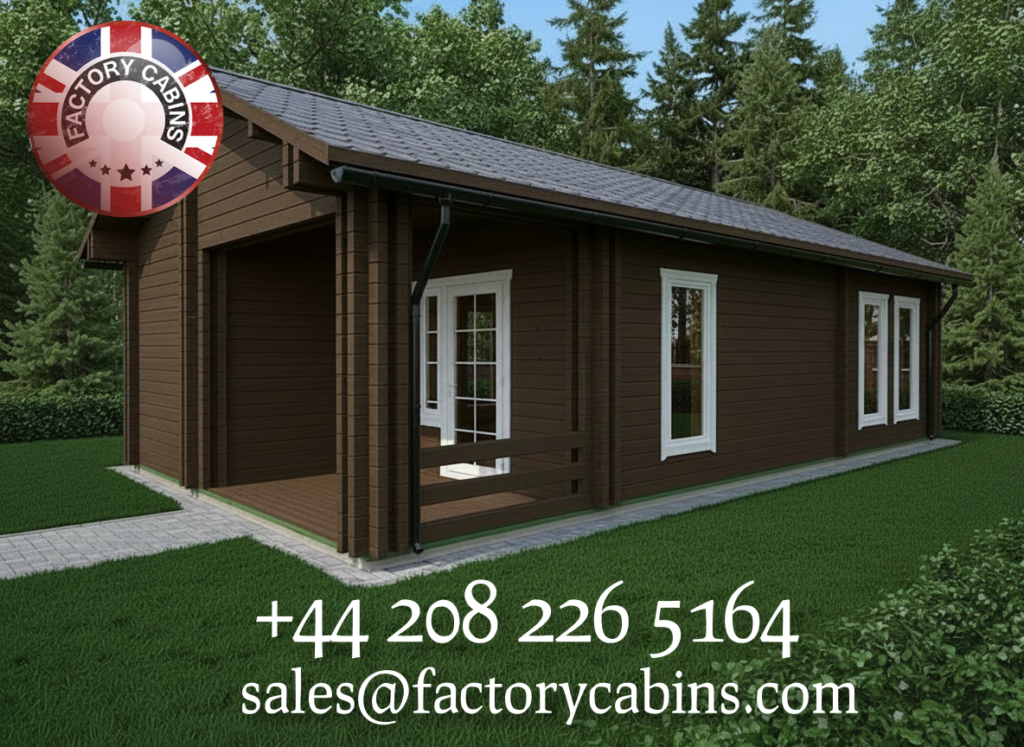
Option A: Felt Shingles (The Classic Look) Felt shingles are those small, overlapping tiles made from bitumen-soaked fiberglass or organic mat. They’re the go-to for traditional Clock House log cabins and old-school garden buildings.
The Look: Felt shingles have a rustic, textured style that fits right in with classic British gardens. You can get them in black, green, red, or brown, and they look a lot like slate or clay tiles, just much lighter. If you’re after a granny annexe or a garden office with a traditional vibe, this is usually what people pick.
The Cost: Felt shingles are easier on the wallet. Materials cost less, and they’re simple to install. If you need to keep the budget tight, this helps keep the whole project affordable.
The Lifespan & Maintenance: Here’s the catch—felt shingles last around 10 to 15 years before you’ll need to repair or replace them. They can get mossy in damp, shady gardens, and if they’re not nailed down well, strong winds can lift them right off. Best For: Traditional looks Tight budgets Places where getting onto the roof for repairs won’t be a pain
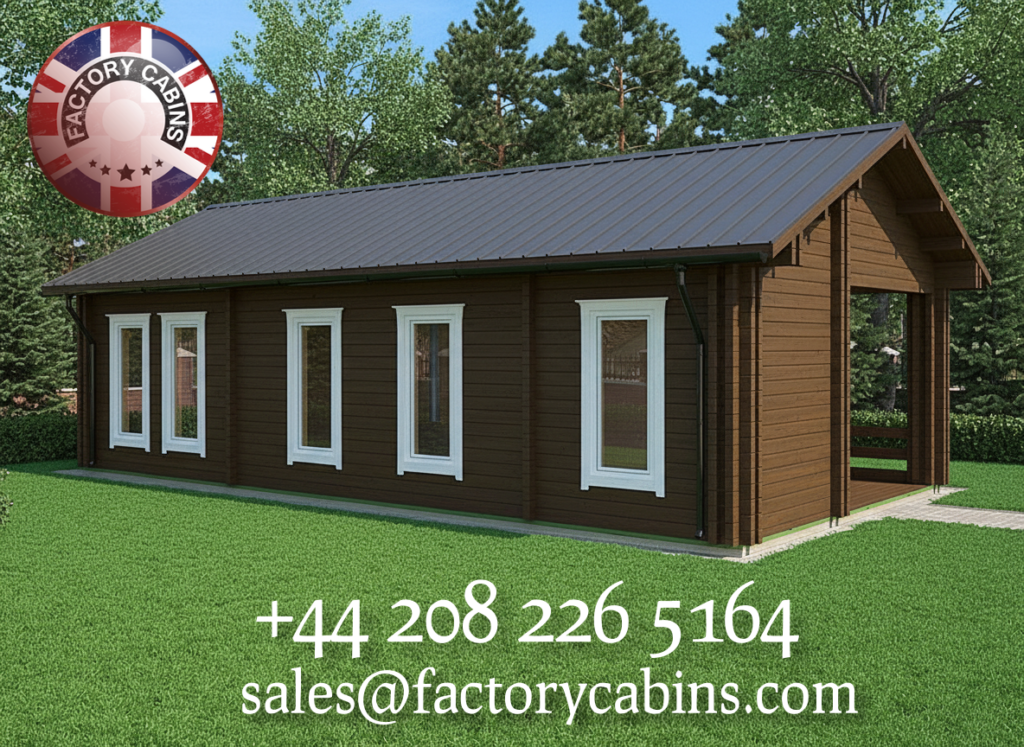
Option B: Steel Standing Seam (The Modern Choice) Steel standing seam roofs are made from long metal panels with raised seams that lock together. You’ll see them on modern buildings and high-end garden cabins. The Look: If you want sleek and contemporary, this is it.
The clean lines and smooth finish make any garden room look sharp. Plus, you can pick from loads of RAL colours, so it’s easy to match your windows or really make a statement.
The Cost: Steel standing seam costs more up front. The materials are pricier, and you need a specialist to install it so everything stays watertight. But it’s a solid investment in the long run.
The Lifespan & Maintenance: This is where steel really shines. Get it done right, and you’ll have a roof that lasts 40 to 50 years. It barely needs any upkeep—no moss, no leaks, and it shrugs off coastal winds. If your cabin is hard to get to or you never want to climb up there for repairs, this is a huge win.
Best For: Modern styles Long-term owners who want to do it once and be done Hard-to-reach roofs Windy locations (think Sussex by the sea)
| Feature | Felt Shingles | Steel Standing Seam |
|---|---|---|
| Initial Cost | ££ (Lower) | £££ (Higher) |
| Lifespan | 10–15 Years | 40–50+ Years |
| Maintenance | Moderate (Moss/Repairs | Low (Occasional Clean) |
| Aesthetic | Traditional / Rustic | Modern / Sleek |
| Wind Resistance | Good | Excellent |
| Installation | Standard | Specialist |
| Best Use | Traditional Cabins | Premium/Modern Builds |
Part 4: Making the Right Choice for Your Project So, what’s the best move for your cabin? When you’re dealing with tricky access and have to pick a roof, here’s what we recommend.
1. Think About Future Maintenance Picture this: your cabin sits tucked away, maybe down a narrow path or squeezed in a corner of the garden. Ask yourself, “Will I be able to get a ladder here in ten years if I need to fix the roof?” If the answer is no, or if getting up there sounds like a nightmare, go with Steel Standing Seam. Sure, it costs more up front, but it gives you peace of mind. The last thing you want is a leak you can’t reach. Steel lasts for decades without fuss. But if you know you’ll have access and don’t mind occasional upkeep, Felt Shingles are a great pick. They’re easy on your wallet and really suit the traditional Clock House look.
2. Match Your Home’s Style Take a good look at your main house. If you live in a Victorian home with slate tiles, felt shingles in grey or black will blend right in. But if your house is more modern, maybe with metal or zinc details, steel standing seam just looks right—it feels like it belongs.
3. Budget vs. Long-Term Value You know the saying, “buy cheap, buy twice.” Felt costs less now, but steel outlasts it by decades. If you’re planning to keep your building for 20 years or more, steel actually works out cheaper over time. But if you just need a quick solution or want to keep your initial spend low, felt gets the job done.
4. Don’t Forget the Kent & Sussex Weather Coastal spots like Folkestone or Eastbourne get hit with salty air, which eats away at cheap metals. So, if you’re near the sea, make sure your steel roof is high-grade and built for marine weather. Inland, in places like Sevenoaks, you’ll see more moss on felt roofs because of the humidity.
Steel doesn’t give moss a chance—it sheds water too fast. Conclusion: Build Smart Where Space Is Tight Going for a twin skin log cabin is already a smart way to get around access headaches.
You get a warm, high-quality living space in places most builders wouldn’t even try. Even in the trickiest corners of Kent and Sussex, you don’t have to settle for second best. But don’t stop at the walls.
The roof you pick—felt shingles or steel standing seam—really decides how long your cabin lasts and how much work it’ll need down the road. Pick felt for classic looks and a lower price tag.
Choose steel for modern style, serious durability, and barely any maintenance, especially if getting to your roof will be a challenge. At Factory Cabins, we do more than just sell buildings.
We solve problems. Whether you need a bespoke Clock House log cabin squeezed through a tight alley or a garden office with a sleek steel roof, we know how to make it happen. Ready to get started? Reach out for a free site survey.
We’ll check your site, talk through your roofing options, and give you a clear, direct quote straight from the manufacturer. Let’s build something beautiful, accessible, and made to last.
All bespoke designs are welcome. PLEASE call 0208 226 516