Let’s be honest—when it comes to garden buildings, you’ve got your flimsy, cheap sheds on one end, and then you’ve got the kind of spaces you actually want to spend time in.
At Factory Cabins, we’ve never bought into the whole “stack ’em high, sell ’em cheap” game. We care about building cabins that last, look incredible, and feel like a real upgrade to your home—no matter the season.
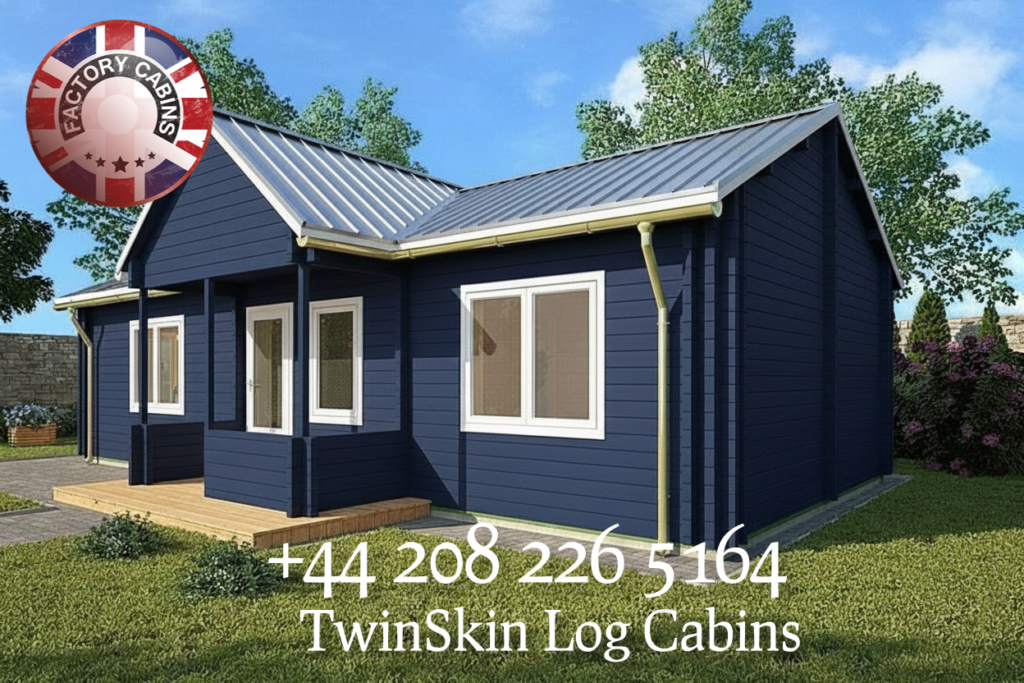
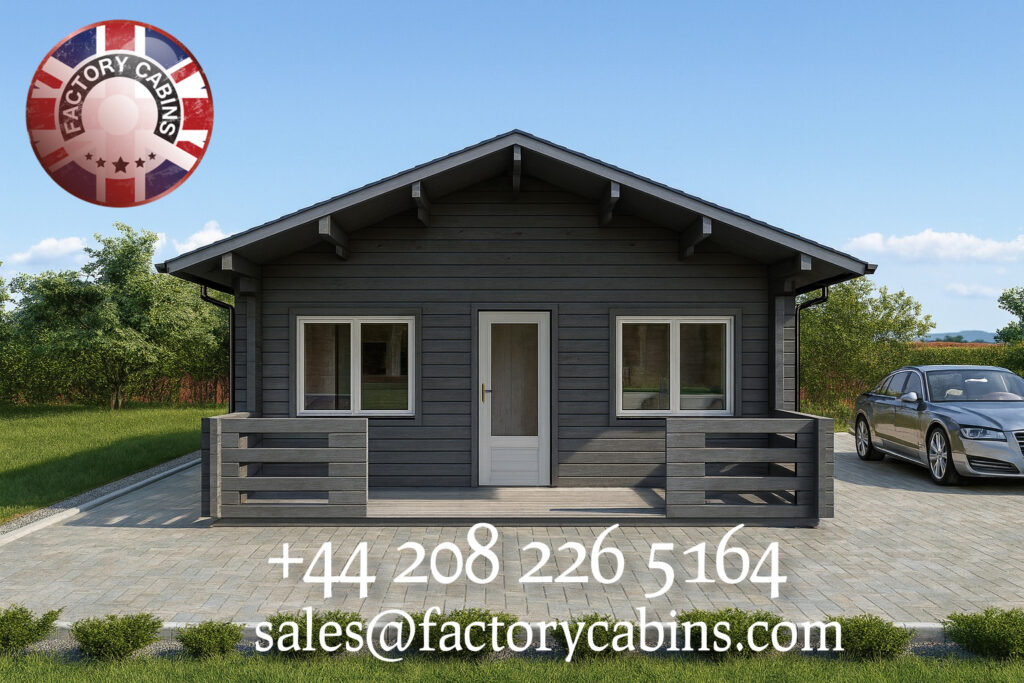
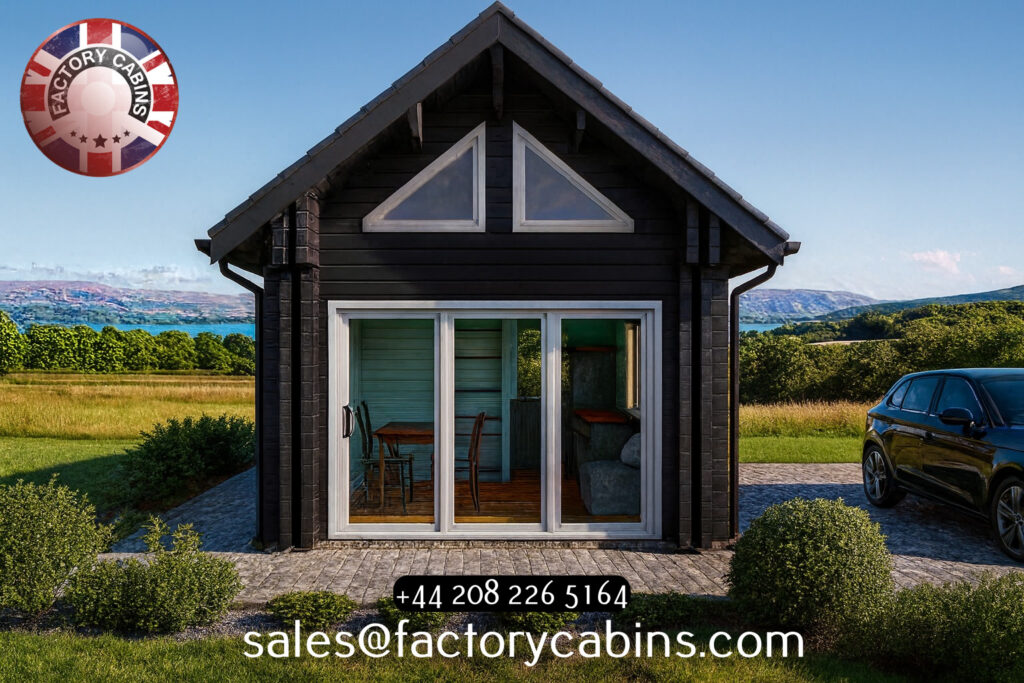
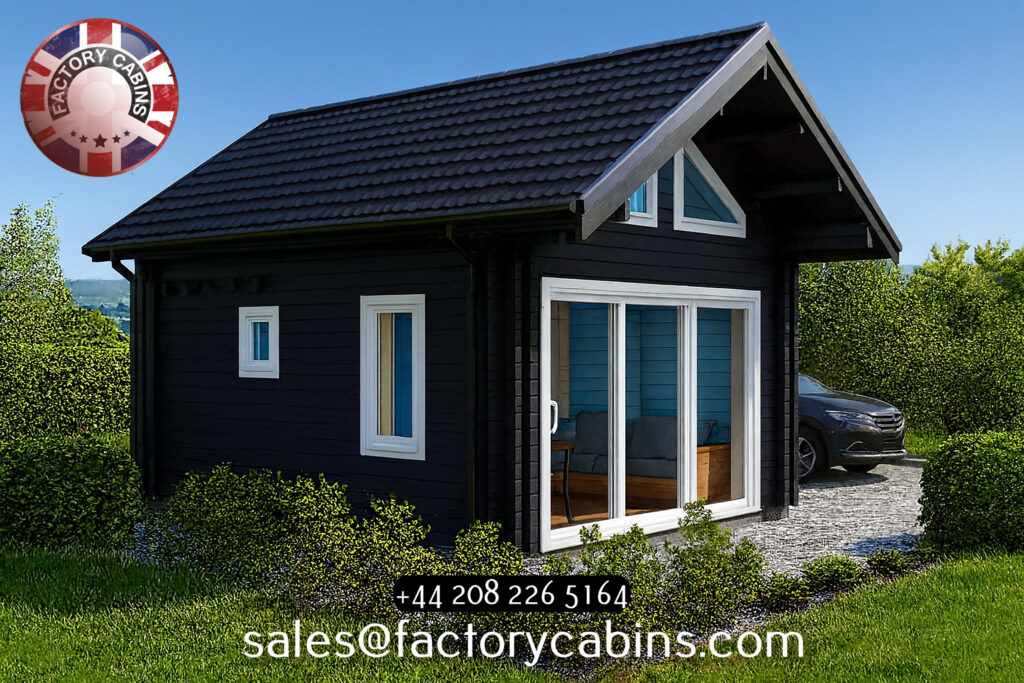
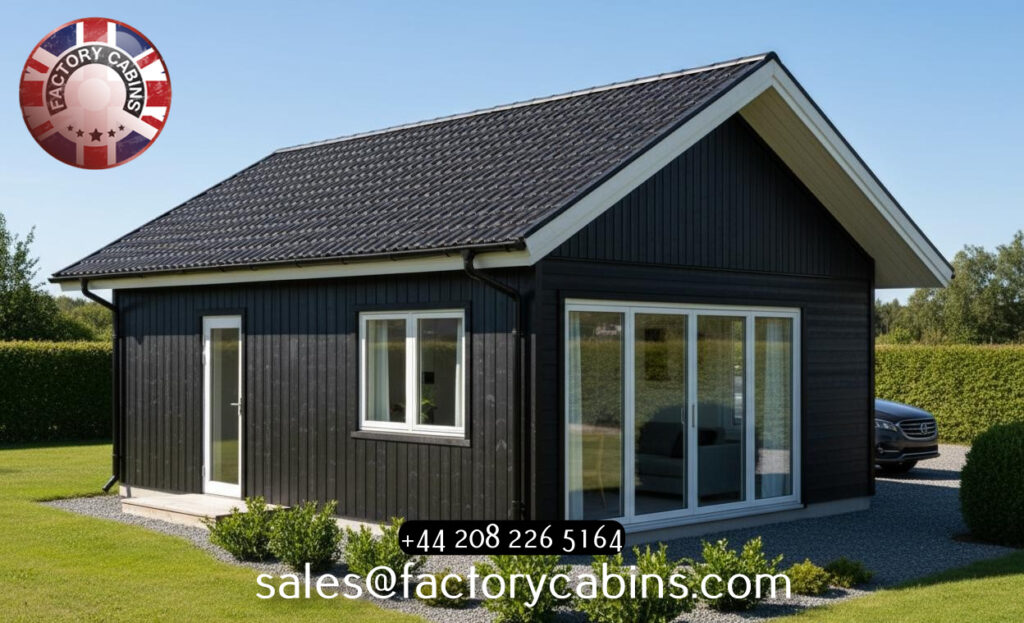
That’s exactly what you get with our KI Range of insulated log cabins. Whether you want a proper garden office, a luxury studio, or just a retreat you can use all year, the KI Range isn’t just another option—it’s the one you really want to check out. Here’s what sets it apart. Aesthetic Mastery: Curves That Make You Look Twice The first thing you’ll notice? The silhouette.
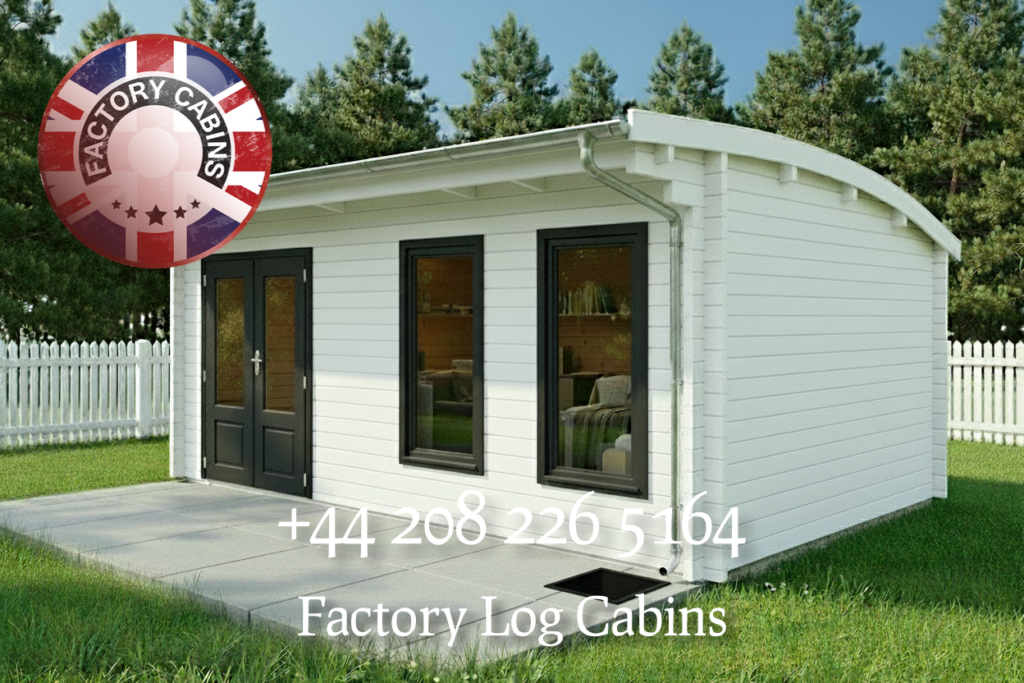
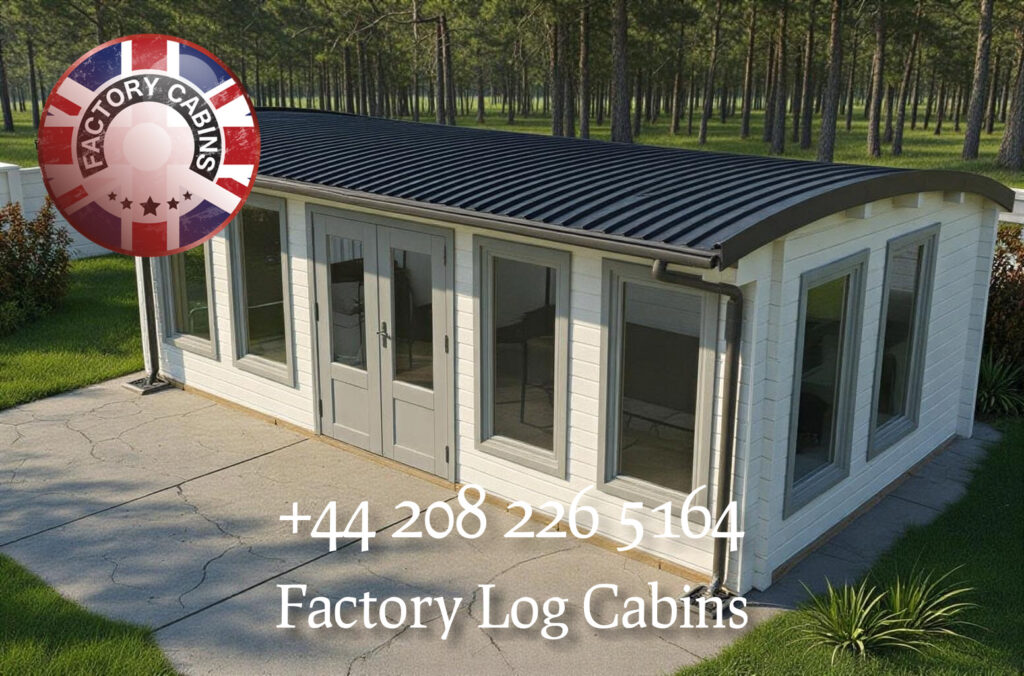
Most garden buildings out there are just boxes—practical, maybe, but not exactly inspiring. The KI Range breaks the mold with its sweeping, curved roof. It’s not just for show, either.
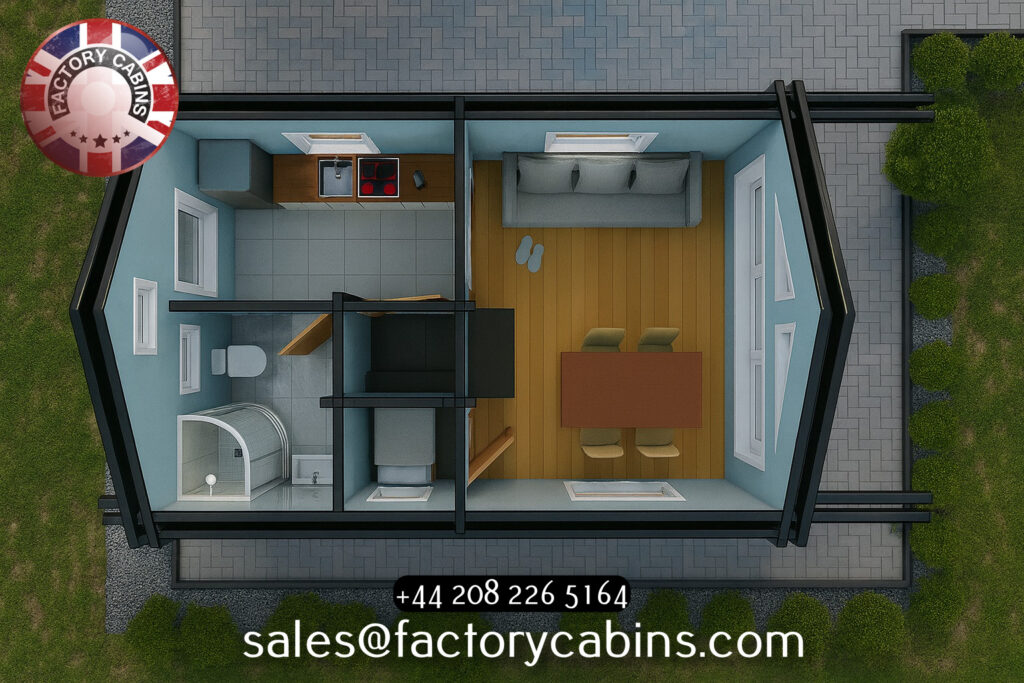
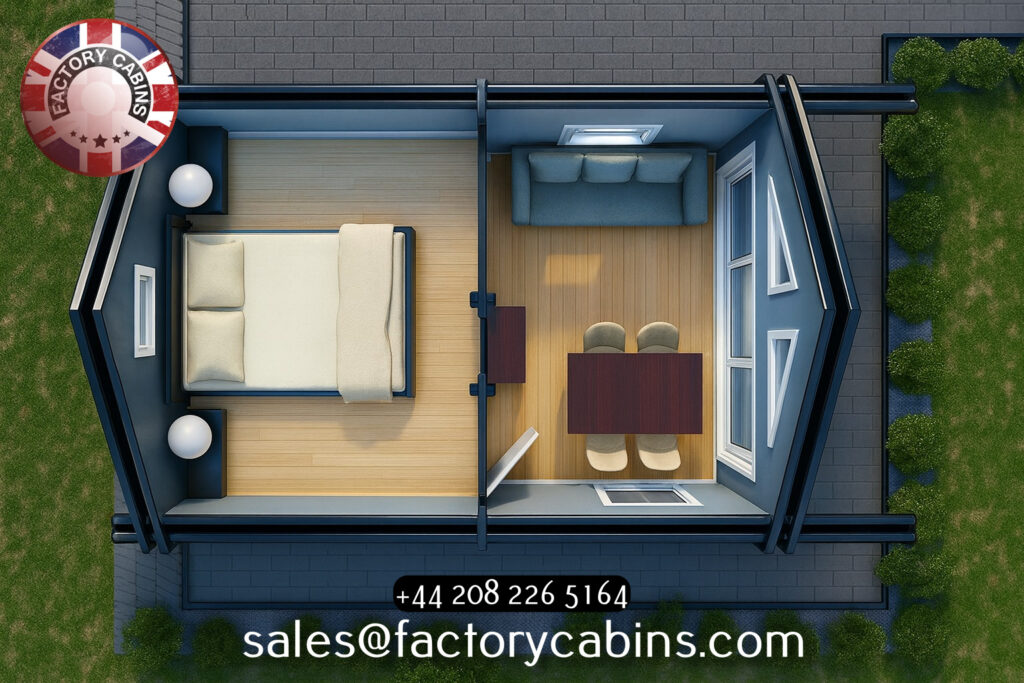
This design gives you more space inside, while still sticking to the strict height rules that apply in a lot of UK gardens. We use cutting-edge CNC machinery to get every detail just right. The front wall reaches up to 2.47m, then slopes down to 2.08m at the back, so most models fit under the key 2.5m height limit.
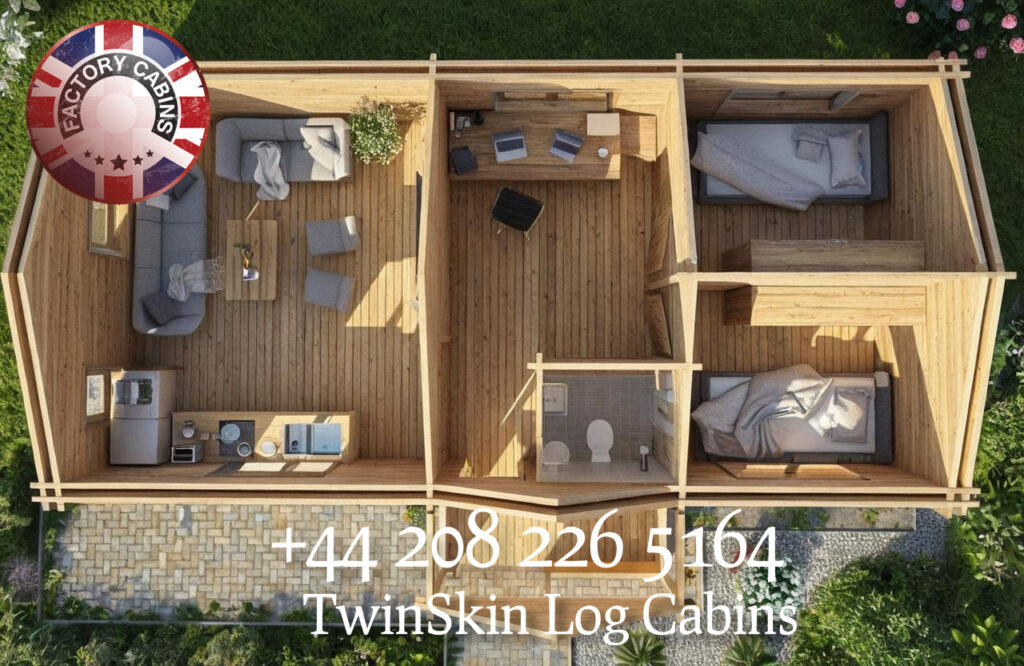
That means you can often install one without planning permission (though you should always double-check locally). Step inside, and you’ll see what that curve does—it feels open, light, and way bigger than it looks from outside. It’s the kind of building that adds to your garden, not just takes up space.
Built to Handle Anything: Winter-Cut Swedish Spruce Looks are great, but they don’t mean much if the building can’t handle the weather. That’s where we really pull away from the competition.
We don’t mess around with cheap, fast-grown timber. Every KI cabin starts with winter-cut, slow-grown Swedish spruce. Why is that important? Wood cut in the winter has less moisture and tighter grain, so it’s stronger, denser, and holds up better through years of British rain, wind, and snow. It’s just more stable—less likely to twist, warp, or rot.
Pair that with the strict standards in our Lithuanian factory, and you get a cabin that stays solid year after year. We also use thick 28mm floorboards and sturdy 19mm roof boards, all supported by the biggest purlins you’ll find in a log cabin.
The result? Every step inside feels secure, and you won’t hear those annoying creaks or feel the floor give like you do in cheaper models. This is a cabin built to last, inside and out.
The Twin-Skin Revolution: Real Comfort, All Year Round Here’s the thing—nothing beats the comfort you get from our modern KI Range and its twin-skin construction.
If you’ve ever tried using a single-skin cabin, you know they’re fine for tossing your stuff in during the summer. But in winter? Or the middle of a heatwave? Not so much, unless you’re ready to pay up for a retrofit.
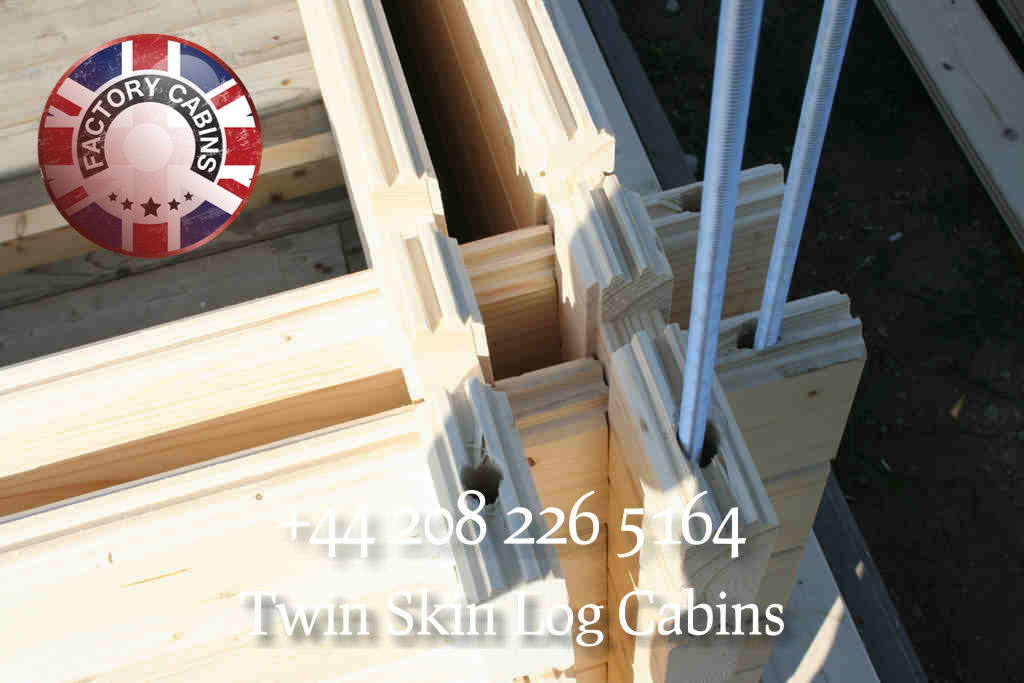
Our twin-skin KI cabins are built with thermal efficiency in mind. Two layers, with air trapped right between them, create a natural barrier that keeps the cold out in winter and the heat out in summer. You actually feel the difference. Energy bills drop, and your space stays comfortable—whether you’re working from home, sweating through a workout, or hosting guests.
The temperature inside holds steady no matter what’s happening outside. Plus, the double layers do a great job blocking out noise. You get a quiet, peaceful spot to focus or kick back. And let’s not forget strength and durability—these cabins hold up over the years, and they’re even designed with fire resistance in mind. It’s the kind of building that fits right into a future where net-zero living isn’t just a buzzword.
Premium Joinery: German Hardware and Glulam Craft Windows and doors make or break a cabin. We take that seriously, so we use glulam for all our frames. It’s a laminated timber that doesn’t twist or warp over time, unlike regular solid wood.
That means every window and door seals tightly and keeps working perfectly, year after year. Each cabin comes with tilt-and-turn windows—German hardware, 28mm toughened double glazing.
You get great ventilation, cleaning’s a breeze, and you don’t have to worry about safety. The doors? Just as solid. They use high-quality German fittings and thermally-modified timber for the outside, so they’re smooth to operate and keep the weather out for good. We pay attention to every detail.
Every joint, every fitting, is carefully crafted, not just slapped together. Our precision CNC machining makes sure everything fits perfectly, giving you a weatherproof, tight seal you just can’t get from mass-produced kits.
Bespoke Customization: Your Ideas, Our Expertise People think you have to sacrifice choice for quality. Not here. Because we build everything ourselves, right in our factory, you get way more options than you’d expect.
The KI Range isn’t one-size-fits-all. Need a cozy 2.5m studio? Or maybe a big 10m commercial space? We’ll make it fit your space, no problem. Want an extra window? Need to move a door? Extra insulation, special interior finishes? We’ve got you.
Other companies either charge a fortune for changes or just say no—we do it without slowing things down. And if you want a roof that’s hassle-free, we can finish it with EPDM rubber. It goes on fast, lasts forever, and you won’t have to think about leaks or repairs.
The Factory Cabins Promise: Real Value, No Middlemen
When you buy a KI cabin from us, you’re coming straight to the source. No fancy showrooms, no salespeople taking commissions, no middlemen jacking up the price.
You get a better deal, and the quality stays high. We don’t just sell you a shell and leave you hanging. If you want, we’ll handle everything—base prep, assembly, electrics, plumbing.
We’re all about long-term value. Cheap cabins look like a bargain upfront, but in a few years, you’re stuck with repairs or even replacement. The KI Range? It’s an investment that lasts. It adds real value to your property and keeps performing, year after year.
The Obvious Choice for People Who Want More There’s no shortage of flat-pack cabins and cheap imports out there.
But the KI Range stands out. With its curved design, winter-cut Swedish spruce, twin-skin insulation, and top-notch German joinery, you get a cabin that actually feels like a home—not just a box in your garden. Don’t settle for something that just keeps the rain off. Pick a KI cabin and get a space that inspires you, keeps you comfortable, and lasts. Cheap comes and goes, but quality sticks around.
Check out the full KI Range at Factory Cabins and find the perfect mix of style, strength, and sustainability for your garden.
Please send us an email to sales@factorycabins.com
All bespoke designs are welcome. PLEASE call 0208 226 5164
You must laugh when you see any company in the UK with a 28% sale or a 33% sale on now? So how much did their mass-produced bonfire material cabins really cost, and what are you getting for your money? It’s about time to wake up!
Let’s be real—when it comes to timber structures, the saying “Cheap is cheerful, but you buy cheap twice” hits the mark.
This old bit of wisdom says it all: there’s a huge difference between something built to last and something cranked out as fast and cheap as possible. If you’re thinking about getting a log cabin, a garden office, or maybe a camping pod, it’s easy to get lured in by the local shed reseller company’s deals.
But buying a bargain cabin from one of those places isn’t just a bad move—it’s asking for trouble. You don’t just risk your money; you risk your comfort and the life of the building. And honestly, you almost always lose. Here’s where things go wrong: the wood. Good manufacturers, the kind that care about lasting quality, use winter-cut, slow-grown Swedish spruce.
This stuff has dense growth rings, so it’s strong, resists rot, and shrugs off bad weather. The cheap cabins? They’re usually made from summer-cut timber that grows fast, leaving the wood with wide rings and lots of moisture. In the UK’s damp, unpredictable weather, that kind of timber doesn’t settle—it warps, twists, and cracks.
Give it a few months and your “new” cabin leaks, lets in draughts, and just looks rough. So really, you’re not buying a building. You’re buying yourself a headache (and a stack of repair bills).
And it gets worse when you look at how these budget cabins are put together. The construction is usually just not up to scratch for anything but storage. Twin-skin walls? Forget it. That means no proper insulation, so the place turns into a sauna in summer and a freezer in winter.
Not much use as an office or guest room. Real quality cabins come with glulam windows and doors, proper German hardware, tilt-and-turn mechanisms, and toughened double glazing. These aren’t “nice extras”—they’re essential for comfort, security, and keeping energy bills down.
Cheap cabins use flimsy joinery, bargain-bin hinges that rust in no time, and single glazing that breaks easily and does nothing to keep out cold or noise. Let’s talk about those “massive discounts” you see everywhere. “33% off!” Sounds too good, right? That’s because it is. No honest manufacturer can knock a third off the price of a real, high-quality cabin and still cover costs.
The materials—thermally modified timber, laminated beams, and precision fittings—just aren’t cheap. So if someone’s offering a steep discount, they haven’t suddenly become generous. They’re trying to offload a product that was never worth your money in the first place.
To cut costs that much, they skip every step they can. Instead of Swedish spruce, you get untreated pine with knots and who knows what else mixed in. Forget CNC machining for tight joints—they rough-cut everything, so you’re left with gaps for rain to sneak in.
No proper waterproofing, no real treatments, and the roofing is usually just thin felt that’ll need replacing before you know it. A 33% discount on a “new” cabin is basically a giant warning sign—the company’s just getting rid of stuff that doesn’t meet the basic standards. You end up paying full price for something that lasts half as long and needs twice as much work.
This all comes down to whether the building is actually “fit for purpose”. A cheap shed can hold your lawnmower, sure. But as soon as you try to turn it into a home office, guest room, or retreat, everything falls apart.
Try to insulate or heat it and you’ll get damp, black mould, and a real risk to your health. The structure shifts, and suddenly doors won’t close, windows stick, and the wiring (if they bothered) turns into a fire hazard.
By the time you realise you’ve been sold a dud, the company’s disappeared—or their warranty is so full of loopholes that you’re left with nothing. So, if you’re thinking about going budget on a timber structure, just know what you’re really buying: a pile of problems that cost more to fix than to avoid in the first place.
Look, going straight to the factory cuts out the middlemen and saves you money, but you’re not giving up quality. When you work with real pros, you’re paying for their skill, their precision, and solid materials that actually last. You want something unique? You’ll get it—maybe it’s a net-zero energy building or a custom timber frame.
With 28 mm toughened glass, thermally modified exterior doors, and weatherproofing that holds up when British winters get nasty, these cabins aren’t just about looking good; they protect your investment.
A cabin done right adds value to your property. Go cheap, and you’re stuck with an eyesore that drags your property down. Think about what you’re really paying for. Sure, a high-quality cabin costs more upfront.
But add up what you’ll spend replacing a rotting floor in two years, fixing a roof that blew off, or trying to heat a draughty box that leaks warmth faster than you can pay the bill. Suddenly, the “bargain” option is the most expensive mistake.
Real savings come from building something that lasts. If you use winter-cut timber, CNC precision, and top-notch hardware, your cabin’s going to stand strong for decades—dry, comfortable, and secure, year after year. Don’t let slick sales pitches or a nearby depot fool you. If a deal sounds too good, it is.
Timber physics and construction costs don’t leave room for massive discounts on genuine quality. Buy a dirt-cheap log cabin and you’re just asking for trouble.
That’s short-term thinking that leads to long-term headaches. Don’t fall into the local shed company trap. Put your money into a cabin that can handle rough weather, shows off real craftsmanship, and lasts. Bottom line: you get what you pay for.
Cut corners now, and you’ll pay for it later. Don’t make a dumb choice—pick quality, pick durability, and get a cabin that actually does what you need.
“Don’t Gamble with Your Garden. Choose Factory Cabins for Superior Quality & Direct Manufacturer Pricing.”
Please send us an email to sales@factorycabins.com
All bespoke designs are welcome.PLEASE call 0208 226 516
Twin Skin Log Cabins for Tough Access & The Roofing Face-Off: Felt Shingles or Steel Standing Seam Most people imagine their new garden building as a finished dream:
maybe a cozy Clock House log cabin tucked among the flowers, a quiet garden office, or a fancy granny annexe. What almost nobody thinks about?
Actually getting it into the garden. For so many homes in Kent and Sussex, just getting from the factory to your backyard can turn into a real headache. Old-school builds need big machines, wide paths, and often a crane.
But what do you do when your side passage is only 0.8 meters wide? Or there are power lines overhead? Or your garden’s hidden behind a row of terraced houses with no rear access at all? That’s exactly where twin skin log cabins save the day.
They don’t just keep you warm all year and look great—they’re built in a way that lets us squeeze them into places where other buildings just can’t go.
Once you’ve figured out how to get your cabin in, the next big question is the roof. We offer both classic felt shingles and sleek steel standing seam roof sheets.
Both work, but picking the right one matters for your wallet, your cabin’s style, and how long it’ll last. Let’s dig into why twin skin cabins are unbeatable for tricky access and help you decide which roof actually fits your needs.
Part 1:
The Access Headache—Why Regular Builds Don’t Work If you live in an older house in Canterbury, a terraced spot in Brighton, or a cottage with a driveway barely wider than a bike in Tunbridge Wells, you already know the pain.
You want more space, but your house seems to fight you at every turn. Why Modular and Brick Just Don’t Cut It Brick extensions need mortar, scaffolding, and huge deliveries of blocks and sand. Even “modular” garden rooms, which come in big sections, usually need a crane. And cranes?
They need space to set up, open sky above, and gates wide enough to drive a small truck through. If you’ve got: – Side passages under a meter wide – Trees, cables, or neighbors’ roofs hanging overhead – Slopes too steep for trucks – Protected land where no heavy machines are allowed …regular construction just isn’t going to happen. Most big companies will come out, take a look, and politely walk away.
They don’t have the people or the know-how for this kind of job. How Twin Skin Cabins Solve the Problem This is where we step in. Our twin skin log cabins, made from Swedish spruce, break down into smaller, easy-to-carry parts.
No crane. No concrete mixer. Just skilled hands and some muscle. We carry every piece—logs, insulation, wall panels, windows, roof tiles—through the tightest gaps. Sometimes, we’ve brought luxury cabins through front doors, down steep banks, or along alleys so narrow we had to turn sideways.
For folks in Kent and Sussex with tricky gardens, this isn’t just helpful—it’s the only real option. Part 2: Why Twin Skin Beats the Rest for Awkward Sites
You might be thinking, “With all these access issues, shouldn’t I just go for a cheap, single-skin shed?” Not a chance. Tough access actually calls for better quality, and here’s why twin skin is the top pick for cramped spaces.
1. Built to Last,
Even When Built by Hand Single-skin cabins need big, heavy logs to stay stable. Twin skin cabins use a frame-and-panel system (or a fancy interlocking one) that stays strong, even when we build it piece by piece. That way, we can put everything together in tight quarters without needing a huge open space to lay out big wall sections.
2. Year-Round Usability,
No Matter Where Your Garden Sits Let’s be honest—some gardens just aren’t easy to reach, and those spots usually get hit hardest by the weather. If your garden’s tucked away at the bottom of a steep hill, you’re probably dealing with constant damp. If you’ve got a courtyard boxed in by high walls, it’s likely cold and shady for most of the year. Now, if you put up a simple single-skin cabin in these conditions, you’ll regret it come winter.
The cold timber will quickly collect condensation and that garden room will basically be off-limits for months. But when you go for a twin-skin insulated cabin, you get a proper thermal barrier. It blocks out the damp, holds onto the heat, and suddenly you’ve got a garden room you can actually use all year—even if the microclimate in that part of your garden is less than ideal.
3. Boosting Property Value,
Even in Tight Spaces In places like South East England, where every square meter of garden is precious, you want any new building to actually add value. If your garden room is only comfortable during the summer, it won’t do much for your property price. But a BS3632-compliant twin-skin annexe? That’s a different story. You can use it as a home office or guest space, any time of year. Even if access is tricky, the end result is a high-spec space that genuinely adds equity.
4. Less Mess,
Less Disruption Old-school building methods in narrow plots are a headache—think muddy trenches and the noise from digging foundations. Log cabins are a lot easier on both you and your neighbors. They need lighter foundations—usually just screw piles or concrete pads you can carry in by hand. That means way less mud, less noise, and much less disruption, which is key if you live in a row of terraced houses in places like Hastings or Maidstone.
Part 3: The Roofing Showdown –
Felt Shingles vs. Steel Standing Seam Once you’ve put up the walls, the roof is the big deal for keeping out the weather. We offer two main options: Felt Shingles and Steel Standing Seam Roof Sheets.
Both get the job done, but they look and cost pretty differently. Here’s what you need to know.
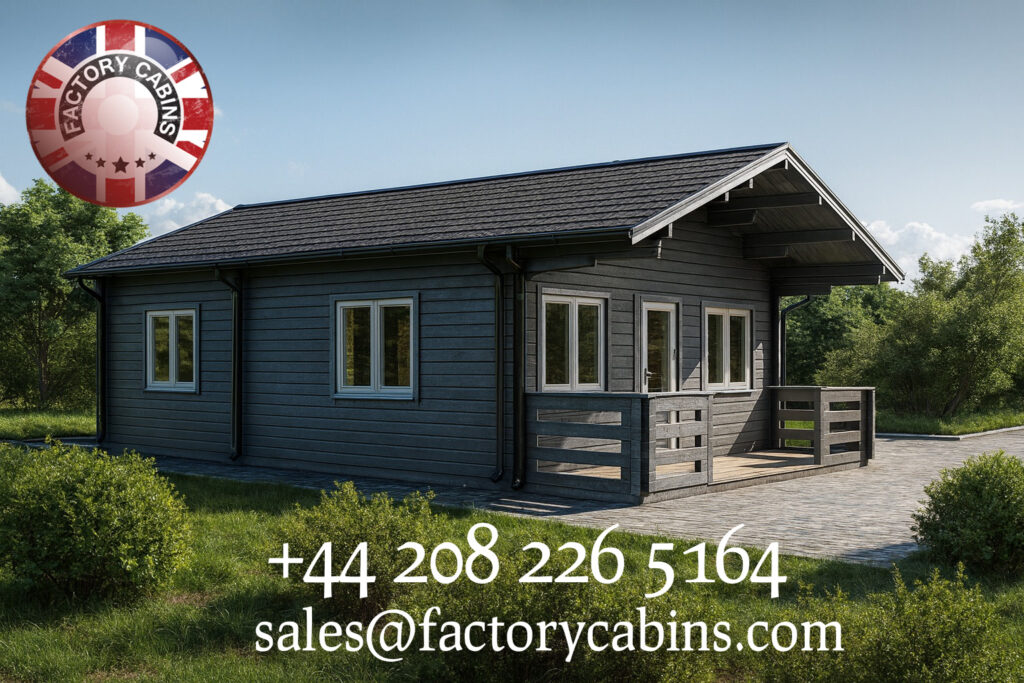
Option A: Felt Shingles (The Classic Look) Felt shingles are those small, overlapping tiles made from bitumen-soaked fiberglass or organic mat. They’re the go-to for traditional Clock House log cabins and old-school garden buildings.
The Look: Felt shingles have a rustic, textured style that fits right in with classic British gardens. You can get them in black, green, red, or brown, and they look a lot like slate or clay tiles, just much lighter. If you’re after a granny annexe or a garden office with a traditional vibe, this is usually what people pick.
The Cost: Felt shingles are easier on the wallet. Materials cost less, and they’re simple to install. If you need to keep the budget tight, this helps keep the whole project affordable.
The Lifespan & Maintenance: Here’s the catch—felt shingles last around 10 to 15 years before you’ll need to repair or replace them. They can get mossy in damp, shady gardens, and if they’re not nailed down well, strong winds can lift them right off. Best For: Traditional looks Tight budgets Places where getting onto the roof for repairs won’t be a pain
Option B: Steel Standing Seam (The Modern Choice) Steel standing seam roofs are made from long metal panels with raised seams that lock together. You’ll see them on modern buildings and high-end garden cabins. The Look: If you want sleek and contemporary, this is it.
The clean lines and smooth finish make any garden room look sharp. Plus, you can pick from loads of RAL colours, so it’s easy to match your windows or really make a statement.
The Cost: Steel standing seam costs more up front. The materials are pricier, and you need a specialist to install it so everything stays watertight. But it’s a solid investment in the long run.
The Lifespan & Maintenance: This is where steel really shines. Get it done right, and you’ll have a roof that lasts 40 to 50 years. It barely needs any upkeep—no moss, no leaks, and it shrugs off coastal winds. If your cabin is hard to get to or you never want to climb up there for repairs, this is a huge win.
Best For: Modern styles Long-term owners who want to do it once and be done Hard-to-reach roofs Windy locations (think Sussex by the sea)
Feature
Felt Shingles
Steel Standing Seam
Initial Cost
££ (Lower)
£££ (Higher)
Lifespan
10–15 Years
40–50+ Years
Maintenance
Moderate (Moss/Repairs
Low (Occasional Clean)
Aesthetic
Traditional / Rustic
Modern / Sleek
Wind Resistance
Good
Excellent
Installation
Standard
Specialist
Best Use
Traditional Cabins
Premium/Modern Builds
Part 4: Making the Right Choice for Your Project So, what’s the best move for your cabin? When you’re dealing with tricky access and have to pick a roof, here’s what we recommend.
1. Think About Future Maintenance Picture this: your cabin sits tucked away, maybe down a narrow path or squeezed in a corner of the garden. Ask yourself, “Will I be able to get a ladder here in ten years if I need to fix the roof?” If the answer is no, or if getting up there sounds like a nightmare, go with Steel Standing Seam. Sure, it costs more up front, but it gives you peace of mind. The last thing you want is a leak you can’t reach. Steel lasts for decades without fuss. But if you know you’ll have access and don’t mind occasional upkeep, Felt Shingles are a great pick. They’re easy on your wallet and really suit the traditional Clock House look.
2. Match Your Home’s Style Take a good look at your main house. If you live in a Victorian home with slate tiles, felt shingles in grey or black will blend right in. But if your house is more modern, maybe with metal or zinc details, steel standing seam just looks right—it feels like it belongs.
3. Budget vs. Long-Term Value You know the saying, “buy cheap, buy twice.” Felt costs less now, but steel outlasts it by decades. If you’re planning to keep your building for 20 years or more, steel actually works out cheaper over time. But if you just need a quick solution or want to keep your initial spend low, felt gets the job done.
4. Don’t Forget the Kent & Sussex Weather Coastal spots like Folkestone or Eastbourne get hit with salty air, which eats away at cheap metals. So, if you’re near the sea, make sure your steel roof is high-grade and built for marine weather. Inland, in places like Sevenoaks, you’ll see more moss on felt roofs because of the humidity.
Steel doesn’t give moss a chance—it sheds water too fast. Conclusion: Build Smart Where Space Is Tight Going for a twin skin log cabin is already a smart way to get around access headaches.
You get a warm, high-quality living space in places most builders wouldn’t even try. Even in the trickiest corners of Kent and Sussex, you don’t have to settle for second best. But don’t stop at the walls.
The roof you pick—felt shingles or steel standing seam—really decides how long your cabin lasts and how much work it’ll need down the road. Pick felt for classic looks and a lower price tag.
Choose steel for modern style, serious durability, and barely any maintenance, especially if getting to your roof will be a challenge. At Factory Cabins, we do more than just sell buildings.
We solve problems. Whether you need a bespoke Clock House log cabin squeezed through a tight alley or a garden office with a sleek steel roof, we know how to make it happen. Ready to get started? Reach out for a free site survey.
We’ll check your site, talk through your roofing options, and give you a clear, direct quote straight from the manufacturer. Let’s build something beautiful, accessible, and made to last.
All bespoke designs are welcome.PLEASE call 0208 226 516
Beyond Compromise: Why Your Next Insulated Log Cabin Should Come Direct from the Source FactoryCabins.com
For two plus decades, the British garden building market has maintained on the quiet, pure deception.
Behind the glossy brochures and “factory-direct” claims lies an uncomfortable truth: 98% of most log cabins sold across Sussex and Kent aren’t manufactured locally at all.
They’re mass-produced in anonymous Baltic factories, shipped by trucks, and rebranded, by UK, Irish middlemen who add 40–60% markups without adding a single thought, not all images and photos you see on the web truly represent exactly what you think you are purchasing, please just check out our blog.
Worse still, many of these suppliers are offering designs they never created and can never truly stand behind their integrity or longevity, as purchasing a log cabin, in whatever shape or size from a mass cabin manufacture producer, that offer always low-quality, mass-produced rubbish, that will 99.9% have missing parts, awful windows and doors, and manufactured using quick grown pine! FACT!
“We pioneered the interlocking log cabin designs that define the industry—and we continue to innovate with cutting-edge twin-skin solutions you can truly trust. Quality and integrity always come first.
There is a different path. One that honours craftsmanship, respects the customer’s intelligence, and delivers genuine value by cutting out the rebranding layers entirely.
This path leads not to a UK warehouse, but to Lithuania—where Factorycabins.com has been engineering precision interlocking log structures since before the term “log cabin” became a garden centre cliché.
From Brighton to Margate, to discerning homeowners are discovering that the finest insulated cabins for sale in Sussex and Kent don’t come from British soil—they come directly from the European source that invented many of the designs now copied across the internet. Like the clock house, and twin skin system, and so much more.
This isn’t about geography. It’s about integrity. When you buy direct from the original designers and manufacturers—not resellers—you receive more than a building. You receive accountability, authenticity, and engineering honed over years of genuine innovation and not forgetting, lower pricing.
The Design Legacy: How Lithuania Shaped the Modern Log Cabin Market
Before “log cabin” became synonymous with flimsy garden sheds, a quiet revolution was unfolding in the Baltic states.
While UK suppliers focused on importing basic timber kits, English -Lithuanian engineers—including our team at Factorycabins.com which is a group of English Guys—were pioneering the interlocking corner systems, precision-milled profiles, and structural innovations that now define quality log construction worldwide.
We were among the first European manufacturers to perfect the true interlocking log system—where each timber profile locks mechanically with its neighbour without relying on nails or brackets for structural integrity.
This wasn’t a minor refinement; it was a fundamental reimagining of how timber buildings withstand wind load, thermal movement, and decades of British weather. The tight-fitting saddle notch, the double-tongue wall profile, the self-aligning window rebates—all these features now commonplace online originated in workshops like ours, where engineers understood that a log cabin’s longevity depends entirely on joinery precision.
Today, scroll through any UK garden building log cabin websites and you’ll see strikingly similar designs: cabins with porches, the panoramic window studio, the L-shaped corner configuration with integrated veranda. clock house log Cabins, twin skin log cabins, and to manufacture a Twin Skin properly so that it moves as one, and shrinks as one, our first attempt at manufacturing a twin skin was very much like trial and error, and testing went on for about 4 months, till we understood, how joining two separate logs with notching could work, and last the test of time, this is where using the latest CNC machines, and common sense worked well together.
We don’t claim every design—but we do claim authenticity. When you order from Factorycabins.com, you’re not buying a copy. You’re acquiring the original engineering, manufactured by its creators, delivered without the markup of three distribution layers.
This matters profoundly for performance. A copied design loses nuance in translation. Wall thicknesses get reduced. Corner tolerances get widened for “easier assembly.” Insulation cavities get omitted to cut shipping weight. The original engineering intent erodes. But when you buy from the source—from the team that solved these challenges years ago—you receive the complete vision: every millimetre calibrated, every joint engineered for longevity.
Twin-Skin Technology: Perfected for British Climates
What transforms a seasonal novelty into a year-round living space? Insulation—but not the superficial kind added as an afterthought to single-skin walls. True thermal performance demands integrated engineering. This is where our Lithuanian manufacturing advantage becomes undeniable.
Since the ban on Northern Russian timber has come into effect our seasoned Spruce now comes from the Northern most Finnish-Swedish forests, Sweden, and Finland experiences continental winters far harsher than Britain’s maritime climate.
Our engineers design for -25°C—not for occasional frost. This rigorous standard creates twin skin log cabins that perform effortlessly across Sussex and Kent’s milder seasons while remaining comfortable during unexpected cold snaps.
Our twin-skin log cabin system 44mm + 44mm or 70mm + 70mm walls with a precision cavity filled with high-grade insulation delivers U-values as low as 0.18 W/m²K. To contextualise: standard UK building regulations for new homes require 0.30 W/m²K. Our garden cabins exceed residential standards because they were engineered for Lithuanian-Russian-Swiss-Finish-Swedish-Norwegian winters.
The physics is uncompromising.
Single-skin cabins—even at 70mm thickness—cannot match this performance. Timber alone provides limited insulation; beyond 44mm, additional thickness yields diminishing thermal returns while increasing weight, cost, and settlement risk.
Our twin-skin approach solves this elegantly: two structural skins separated by a dedicated insulation zone. Heat cannot bridge the cavity. Moisture cannot penetrate the vapour barrier which is attached to most quality insulation slabs.
The result is a building that stays warm in January and cool in July—with minimal energy input.
For homeowners in coastal Kent or the clay soils of the Weald, this isn’t luxury—it’s necessity. Condensation destroys timber from within. Mould compromises air quality.
Seasonal usability wastes your garden’s potential. Our cabins eliminate these failures at the design stage because we learned these lessons decades ago. What British suppliers now market as “innovative insulation” has been standard practice in our workshop since the early 2003.
Scandinavian Spruce: Sourced Responsibly, Processed with Precision
Timber quality separates enduring structures from disposable kits. While mass-market suppliers use fast-grown pine with high resin content and unpredictable shrinkage, we specify only slow-grown Scandinavian Spruce—sourced from FSC-certified forests in Sweden and Finland, then precision-milled in our Lithuanian facility.
Why spruce? Density and stability. Spruce’s tight growth rings—formed during harsh Nordic growing seasons—deliver superior dimensional stability compared to pine. When humidity shifts between Sussex’s damp autumns and dry summers, spruce moves minimally.
Pine warps. Spruce endures. This stability is non-negotiable for twin-skin construction, where alignment between inner and outer walls must remain perfect for decades. A warped log compromises the entire insulation system. We refuse that risk.
Our CNC machinery—calibrated daily to ±0.1mm tolerances—transforms this premium timber into precision components. Every notch, every rebate, every window aperture is milled to exacting specifications. This isn’t automated cutting alone; it’s automated craftsmanship. The same engineering team that designed our interlocking systems oversees production, ensuring digital precision serves structural intent. When your cabin arrives in Kent or Sussex, every log fits as intended—no forcing, no gaps, no “settling adjustments” required after assembly.
Glulam Joinery: Windows and Doors Engineered for Coastal Realities
A cabin is only as insulated as its weakest point. For most imported kits, that weakness is the glazing—thin single-pane units with plastic hardware that corrodes within months near Brighton or Margate’s salt-laden air.
Our solution: joinery-grade glulam (glued laminated timber) windows and doors, manufactured to German standards and fitted with toughened double glazing as standard. Glulam’s engineered layers counteract natural timber movement, maintaining perfect alignment through humidity cycles that warp solid timber frames.
Multi-point locking systems use stainless steel components resistant to coastal corrosion. Tilt-and-turn functionality—standard on every aperture—provides secure ventilation during summer storms or when leaving your garden office unattended.
These aren’t “cabin windows.” They’re the same specification used in Scandinavian residential construction. When you close one, you hear a solid seal—not a rattle. You feel smooth operation through seasons of use.
Most importantly, you experience genuine thermal continuity: the window’s U-value matches the wall’s performance, eliminating cold bridging at the most vulnerable junction. In an insulated cabin, this integration isn’t optional—it’s essential.
Direct From Source: Eliminating the UK Middleman Markup
Let’s address the geography question honestly: we manufacture in Lithuania. We do not operate a UK factory. And this transparency is your advantage.
UK-based “manufacturers” often function as importers—they buy container loads of generic cabins from Baltic factories (was a time 80% was ours), add their branding, and sell at inflated prices.
You pay for their showroom in Tunbridge Wells, their sales team’s commissions, their warehousing in Maidstone. None of this improves your cabin’s quality. It only increases your cost.
By ordering direct from Factorycabins.com:
You eliminate the importer’s margin: No UK company buying containers and rebranding
You eliminate the distributor’s markup: No regional warehouses adding handling fees
You eliminate the retailer’s overhead: No garden centre taking 50% to display a model
Instead, your investment flows directly into materials and craftsmanship. We handle logistics ourselves—shipping your bespoke cabin from our Lithuanian workshop to your property in Sussex or Kent with professional transport partners. Assembly can be arranged through vetted local teams who follow our precise protocols, or we provide comprehensive guidance for competent DIY installation.
This model delivers two benefits simultaneously: premium European engineering at prices that undercut UK-branded competitors. You receive the original design—not a degraded copy—without paying for British overheads that add cost without value. When suppliers claim “British-made,” ask whether they manufacture or merely import and rebrand. The distinction determines your cabin’s longevity.
Versatility Without Compromise: From Garden Office to Passive Income
What defines a building’s value? Usability across all seasons. Our twin-skin insulated cabins deliver this consistently—whether positioned on a coastal plot near Whitstable or nestled in the High Weald near Tunbridge Wells.
The Professional Garden Office Hybrid working demands genuine workspace—not a freezing shed you abandon each November. Our cabins maintain comfortable temperatures with minimal heating (typically 1.5kW suffices even in January). Position your desk to capture morning light through glulam tilt-and-turn windows. Run services through insulated cavities during installation. Create a workspace that enhances productivity 365 days a year.
The Holiday Let Investment Coastal Kent and East Sussex boast Britain’s strongest short-let markets. A high-quality insulated cabin often qualifies as permitted development—providing instant rental inventory without full planning permission. Our clients in Rye, Hastings, and Folkestone report earning £800–£1,500 monthly from cabins let year-round (not just summer peaks) thanks to genuine thermal performance. This is passive income resilience—impossible with single-skin seasonal structures.
The Multi-Generational Space Families evolve. Teenagers seek independence. Elderly parents require ground-floor accommodation. Our bespoke service creates cabins tailored to human needs: internal partitions with proper insulation, wet rooms with underfloor heating provisions, kitchenette integrations. These aren’t sheds—they’re functional living spaces enhancing family dynamics without costly home extensions.
Why Sussex and Kent Homeowners Choose Lithuanian Engineering
The Southeast presents unique demands: coastal corrosion near Margate, clay soil movement in the Weald, conservation area restrictions in historic towns. Success requires buildings engineered for resilience—not cosmetic appeal alone.
Lithuanian manufacturing delivers this resilience inherently:
Coastal durability: Stainless hardware and stable spruce withstand salt air better than pine alternatives
Structural integrity: Interlocking joinery resists ground movement better than nailed constructions
Thermal performance: Engineered for harsher climates than Britain experiences
Design authenticity: Original engineering—not degraded copies of our pioneering work
We understand UK planning nuances across 15+ district councils. We advise on permitted development rights specific to Kent and Sussex. We provide technical documentation accepted by local authorities. Geography doesn’t limit service—commitment does. And our commitment is to deliver source-direct quality to every UK customer who values authenticity over branding.
The True Cost of “British-Branded” Cabins: A Maidstone Case Study
Consider two homeowners in Maidstone seeking a 4m x 5m garden office:
Sarah buys a £3,800 “British-designed” cabin from a Tunbridge Wells supplier. Unbeknownst to her, it’s a generic Baltic import rebranded with a UK label. She pays £750 for assembly. By November, gaps appear at corners. Condensation damages her equipment. She spends £1,100 adding interior insulation (reducing usable space). After 24 months, window hardware corrodes; timber shows early rot. Total investment: £5,650 for a deteriorating seasonal structure.
David invests £8,200 direct from Factorycabins.com—Lithuanian-manufactured, twin-skin 44mm-44mm, delivered to his Maidstone property. From day one, the space remains comfortable year-round. No condensation. Hardware operates smoothly through two coastal winters. After three years, the cabin performs identically to day one—his primary workspace 365 days annually. Total investment: £8,200 for genuine utility.
Sarah paid a “British premium” for rebranded mediocrity. David invested in original engineering without middleman markups. His cabin costs less upfront than Sarah’s deteriorating structure will cost long-term—and delivers exponentially greater daily value. This pattern repeats across Sussex and Kent: the cheapest price today becomes the most expensive decision tomorrow.
Your Invitation: Experience Source-Direct Authenticity
We don’t operate showrooms in Brighton or Canterbury. We don’t employ commissioned sales staff. What we offer is more valuable: direct access to the engineers who design and manufacture your cabin. Full bespoke available.
We invite you to:
Review our design archive—the original interlocking systems copied across the internet
Request a bespoke quote based on your exact Sussex or Kent property requirements
Speak directly with our design team in Lithuania (fluent English speakers) to discuss integration with your site
Examine material samples shipped to your UK address before ordering
No pressure. No fabricated scarcity (“only 3 left!”). Just honest consultation about how authentic Lithuanian engineering can enhance your garden’s utility for decades.
Value Flows from Source to Site—Not from Branding to Buyer
The garden building industry thrives on obfuscation: hiding origins, inflating specifications, rebranding imports as “British.” This model serves suppliers—not customers. It creates a cycle of disappointment where structures fail quickly, forcing replacement rather than delivering decades of service.
We reject this entirely. By manufacturing twin-skin insulated cabins at the source—in Lithuania where interlocking log engineering matured decades ago—we deliver buildings that perform as living spaces, not seasonal novelties.
We can also manufacture a fully timber frame net zero version, which means, savings from day one.
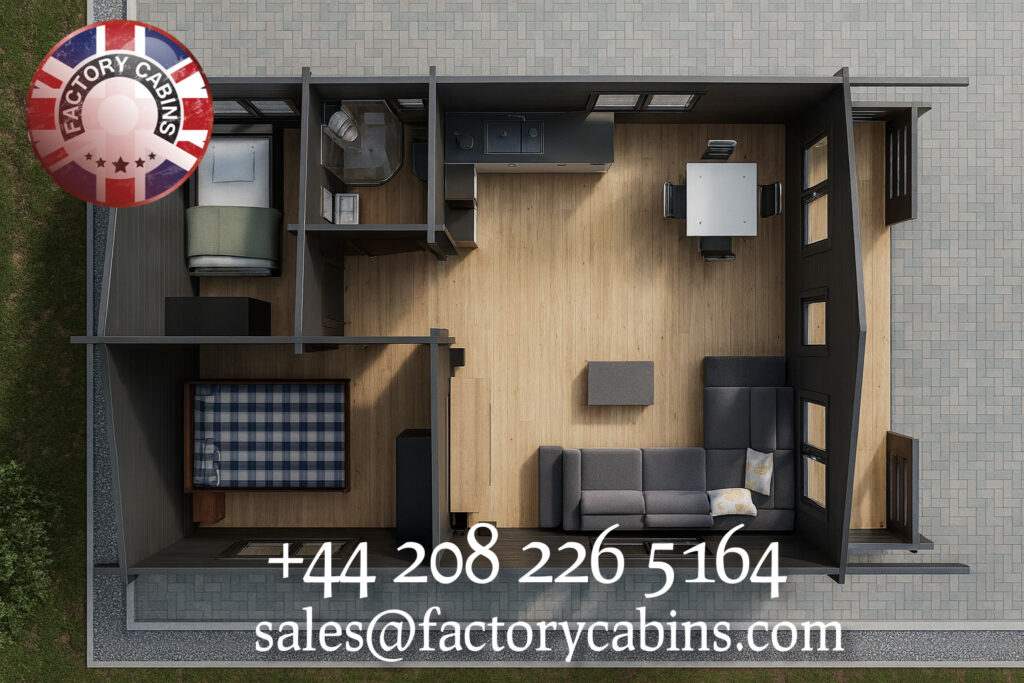
(( A compact net zero cabin timber frame —two bedrooms, bath, living space, kitchen—delivers exceptional ROI. Generate year-round passive income as holiday lets across Sussex and Kent. Minimal energy costs. Often permitted development. Rising demand for sustainable stays. Appreciates while larger properties stagnate. Small footprint, maximum returns: the smartest garden investment you’ll make.))
By selling direct to UK customers without middlemen, we make this quality accessible at honest prices.
This isn’t about nationality. It’s about authenticity. When you order a log cabin for sale in Kent or Sussex, you deserve to know its origins.
You deserve engineering integrity—not rebranded copies. You deserve materials specified for longevity—not for container optimisation. You deserve pricing that reflects manufacturing cost—not layered markups.
From Brighton’s seafront to Margate’s coastline, from the orchards of Kent to the hills of Sussex, your garden deserves better than compromise. It deserves source-direct engineering: twin-skin insulated cabins conceived and crafted by the pioneers of interlocking design, delivered without intermediaries, priced with integrity.
The finest cabins for sale in Sussex and Kent don’t carry British labels. They carry Lithuanian engineering—and the quiet confidence of knowing you’ve bought from the source, not the seller.
Ready to acquire an insulated log cabin engineered at source—not rebranded by resellers? Contact Factorycabins.com today for a bespoke consultation. We manufacture in Lithuania. We deliver across Sussex and Kent. We answer directly to you—the customer—not to middlemen. Let’s build something authentic together.
Please send us an email to sales@factorycabins.com